


December 30, 2024
Stronger production growth expected for global aquaculture next year, according to Rabobank report
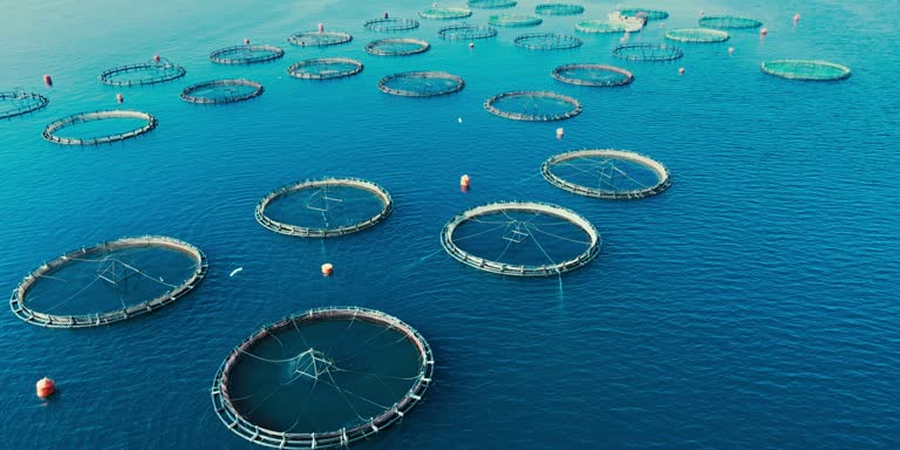
After a challenging 2024 marked by weak consumer demand in key markets, the global aquaculture industry is poised for stronger production growth in 2025, according to a new report from Rabobank in partnership with the Global Seafood Alliance (GSA).
Finfish production is projected to see the most robust expansion, while shrimp, which continues to face relatively low prices, is forecast to grow by just 2% year-over-year. Freshwater species such as pangasius and tilapia are predicted to lead the charge, with year-over-year growth of 7% and 5%, respectively.
Species with a strong European presence – including Atlantic salmon, sea bass and sea bream – are expected to see supply growth of 3-4%. Shrimp, while improving from a 1% growth in 2024, remains sluggish compared to historical growth rates.
However, survey respondents remain concerned about the market and economic conditions in 2025, with specific concerns about market prices, aquafeed costs, and market access. Lower feed costs and rising consumer demand are likely to bolster the sector, offering some relief to producers. But gains could be tempered by increasing tariffs and trade restrictions, which threaten to disrupt the industry's progress.
"Atlantic salmon production is expected to experience mild growth from 2024 to 2026, following two consecutive years of decline," said Novel Sharma, seafood analyst at RaboResearch. "Norway is poised to lead the growth, with year-on-year increases projected at 2.2% in 2025 and 5.3% in 2026, resulting in estimated outputs of 1.56 million and 1.64 million metric tons, respectively. This growth is contingent on stable biological conditions and improving harvest weights."
After a difficult 2024, Chile is expected to gradually return to a growth trajectory, with a 1.4% year-on-year production increase expected in 2025 and 3.2% in 2026. However, production volumes are unlikely to surpass 2020 levels before 2026.
"Despite relatively low prices, we expect global shrimp production growth will remain positive," said Sharma. After years of strong growth, shrimp production is slowing, with volumes projected to increase by only 1% year-on-year in 2024 and 2% in 2025.
Shrimp production in Latin America is expected to slow, with growth rates dropping to 2% in 2024 due to persistently low prices. However, growth is projected to rebound to 4% in 2025 as the oversupply issue subsides. Ecuador's shrimp production – the world's fastest-growing major aquaculture industry – is also forecast to experience a slow-down during this period.
In Asia, China and India are poised for modest growth in 2025, at 1.7% and 2%, respectively. Vietnam is expected to see stronger gains, with production forecast to rise by 4%, though the country continues to grapple with disease outbreaks and high production costs, which may limit its potential.
Freshwater species are expected to have the highest growth among farmed species in 2025. Pangasius production is projected to increase by 7% year-over-year, driven by rising demand from China, with Vietnam at the forefront. Global tilapia production is expected to surpass 7 MMT, marking a 5% year-over-year increase, fueled by strong growth in China and Indonesia.
Despite the optimistic outlook, the industry remains concerned about the market and economic conditions heading in 2025. Ongoing geopolitical uncertainties pose significant challenges.
"Seafood is the most-traded animal protein, with a larger trade value than all other animal proteins combined," explained Sharma. "(US President-elect) Donald Trump's presidential victory in the US could mean new import tariffs. This is especially significant for the seafood sector, as the US is the world's largest importer, relying on imports for over 80% of its seafood consumption. Moreover, the potential trade war is likely to involve China, the world's largest seafood producer, exporter, and re-processor."
According to survey results, market prices are once again the top industry concern heading into the coming year, followed by aquafeed costs and market access.
"This is understandable, as 2024 had some of the lowest seafood prices we have seen in many years," said Sharma. "Although demand has started to improve for many species, prices are increasing from a low point, and the improvement is tentative. Possible trade restrictions from the US and the uncertain recovery of Chinese, Japanese, and European import demand in 2025 are clear concerns."
- GSA


