


December 29, 2022
US researchers developing eco-friendly method for sustainable fish farming
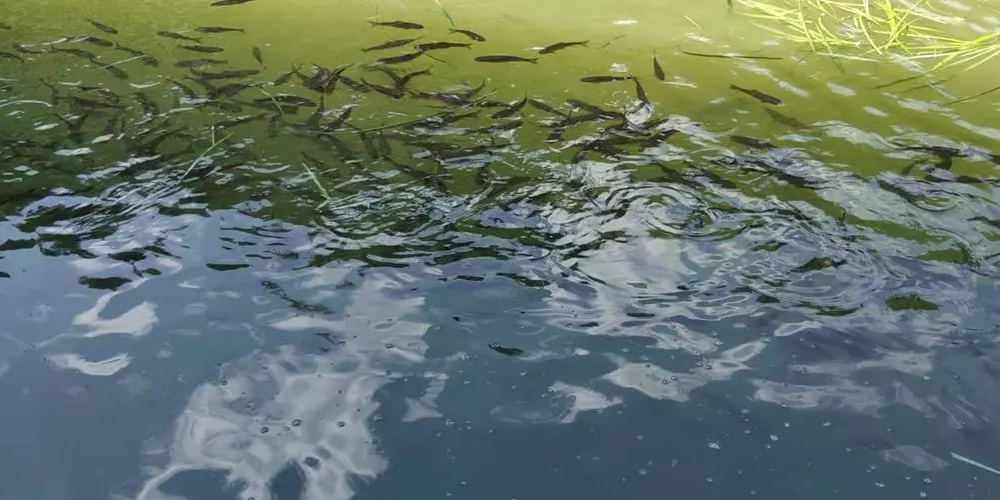
Researchers at the Conservation Fund's Freshwater Institute (TCFFI) in West Virginia, US, are developing an eco-friendly method for sustainable fish farming, through the use of recirculating aquaculture systems (RAS), US Department of Agriculture reported.
Caird Rexroad III, National Program Leader for the US Department of Agriculture's (USDA) Agricultural Research Service (ARS), said RAS are designed so that the water used to rear the fish can exit the system, be treated, capture waste, and then be restored to a quality to where it can be returned to the fish production system.
RAS involves reusing water in the production cycle, making it a growing technology for aquaculture for raising fish or other aquatic animals like Atlantic salmon. This makes it possible for these systems to be installed anywhere, increasing opportunities for local food production.
The most notable advantage of using RAS is that it allows farmers to manage the conditions in which fish are raised. By removing compounds that build up in the water and collecting and disposing of solid waste, fish farmers can control the quality of the water. Fish waste removal is easier and less expensive than draining the system and starting over with fresh water because less water is used.
RAS has many benefits, but experts are looking for ways to make it even better. Researchers have found that some fish mature sexually early, and that this causes their feed efficiency (the amount of food needed to make a salmon heavier) to decrease. As a result, when fish reach maturity, it may require more feed.
Male fish tend to exhibit early maturation the most. Fish's reproductive cycle is influenced by genetics, water temperature, photoperiod (the duration of daylight), and gender. Experts can reduce or completely avoid early RAS maturation by controlling these variables and making changes like lowering water temperature and photoperiod.
John Davidson, a research scientist at TCFFI, said they have been conducting research to characterise the ideal environment for various salmonid species, such as rainbow trout, and more recently, Atlantic salmon. They are still learning about the ideal circumstances and looking for ways to further cut down on the amount of water used in these systems.
In addition to early maturation, which has an impact on product quality, researchers are working hard to enhance flavour. Customers occasionally describe the taste of Atlantic salmon as being earthy or musty.
Davidson said he has been working on taste for more than a decade, creating remedies for off-flavor, through a procedure known as depuration. They are also currently investigating solutions to completely avoid and resolve the issue in the primary fish production system.
The partnership between ARS and TCFFI has fostered extensive, significant research on RAS and various facets of fish production, especially for Atlantic salmon. Together, researchers want to help fish farmers improve their management techniques and give consumers a high-quality product.
- US Department of Agriculture


