


December 28, 2022
Grants provided to create management strategies for proper antibiotic use in US cattle, swine
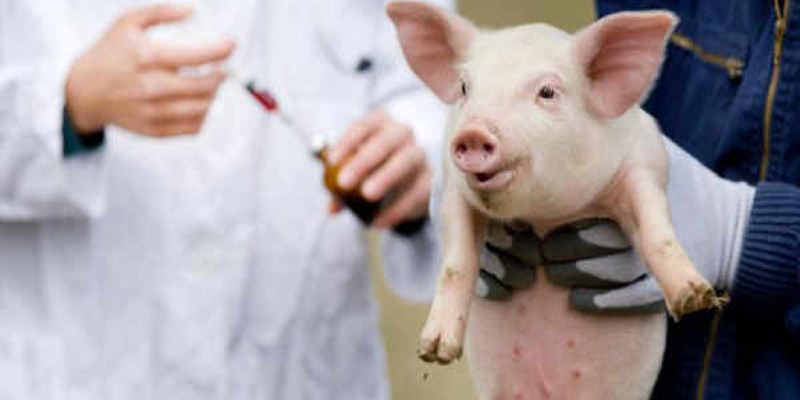
The International Consortium for Antimicrobial Stewardship in Agriculture (ICASA) has awarded nine grants to develop management strategies that improve judicious antibiotic use in US beef cattle and swine.
"These ICASA grant-funded projects are investigating novel and potentially high-impact solutions to promote targeted antibiotic use and advances in animal health and welfare," said Dr. Saharah Moon Chapotin, executive director of the Foundation for Food and Agriculture Research (FFAR). "The projects' high level of public-private industry partnership speaks to the need to accelerate antibiotic stewardship research to improve the health and welfare of beef cattle and swine."
Five of the projects address liver abscesses in feedlot cattle. The exact cause of liver abscesses is unknown. However, once abscesses form, they are highly susceptible to the Fusobacterium necrophorum (F. necrophorum) bacterium, resulting in major economic loss to producers due to impaired cattle performance and lower carcass value. The bacteria are currently controlled and prevented using antimicrobial drugs.
Recipients of the grants include:
- Dr. Raghavendra Amachawadi of Kansas State University (K-State) received US$125,000 to identify specific bacterial species in cattle liver abscesses beyond the primary species, Fusobacterium necrophorum, and determine their prevalence and involvement in abscess formation, especially in the under-studied hindgut segment of the gastrointestinal tract. This research could help identify new interventions to minimise the occurrence of liver abscesses in cattle. Micronutrients Corporation, Cargill Incorporated and Phibro Animal Health Corporation are contributing additional funding for a total US$280,000 investment.
- Dr. Rand Broadway of the United States Department of Agriculture's Agricultural Research Service (ARS) received US$85,700 to develop a minimally invasive model that induces liver abscesses and improves researchers' ability to study the development and mitigation of the abscesses, while reducing the time necessary to generate enough animals to study. West Texas A&M University (WTAMU), ARS and K-State are contributing additional funding for a total US$180,922 investment.
- Dr. Vinicius Machado of Texas Tech University (TTU) received US$97,400 to investigate how beef cattle immune systems react throughout the lifecycle of F. necrophorum. Dr. Machado's research is identifying potential pathways in which the bacteria subvert the hosts' defenses during the development of liver abscess to lay the foundation for the formation of novel approaches, such as alternative drugs, that can potentially replace antimicrobials in liver abscess control and prevention strategies. TTU is contributing additional funding for a total US$195,140 investment.
- Dr. Kristen Hales of TTU received US$125,000 to investigate the gastrointestinal location, concentration and movement of F. necrophorum and Salmonella enterica, as well as the other organisms that live in the intestines of cattle with liver abscesses. This first phase of Dr. Hales' research will inform a methodology to reduce F. necrophorum through a direct-fed microbial. TTU is contributing additional funding for a total US$250,000 investment.
- Dr. Kendall Samuelson of WTAMU received US$266,748 to develop a unique, repeatable method that induces liver abscesses in feedlot cattle to further investigate the relationship between acids in the rumen, the first chamber of a cow's four-chamber stomach, and liver abscesses. Dr. Samuelson is also developing a scoring system to evaluate rumen health, updating the current liver scoring system to characterise liver abscess prevalence and developing a benchmark between these factors for future study. WTAMU and Cactus Feeders are contributing additional funding for a total US$542,475 investment.
ICASA also funded a project that improves the collection, analysis and reporting of feedlot antibiotic usage data, which can potentially impact how corporations and regulatory agencies formulate policies on antimicrobial use in beef cattle.
Dr. Michael Apley of K-State received US$200,000 to develop a sustainable, practical system for individual beef producers to evaluate and report their antimicrobial usage in context of others across the beef feedlot industry. K-State is contributing additional funding for a total US$400,022 investment.
Additionally, ICASA awarded three grants to develop management strategies in the prevention and treatment of Mycoplasma hyosynoviae (M. hyosynoviae) in swine. This ubiquitous bacterium causes respiratory disease and lameness in pigs, contributing to economic loss and decreased animal welfare, and is a major driver of antibiotic use in swine production.
Recipients of the grants are:
- Dr. Tim Johnson from Purdue University College of Agriculture received US$140,001 to investigate using fecal microbiota, or stool, transplants to reduce post-weaning diarrhea and antibiotic use in swine. Post-weaning diarrhea is caused when bacteria invade the gut, which becomes weakened from the diet change, transportation and change in environment that occurs during weaning. Dr. Johnson is administering the fecal transplants though a feed amendment with freeze-dried fecal microbiota, a less labor-intensive method than traditional oral gavage and better suited for commercial settings. If effective, the results could be optimised for other animal species like poultry and cattle and be developed into proprietary feed additive-type technologies by the animal health industry. Purdue University and the National Pork Board are contributing additional funding for a total US$311,354 investment.
- Dr. Meghann Pierdon from the University of Pennsylvania (Penn) School of Veterinary Medicine received US$127,703 to identify factors that cause swine lameness to determine whether management factors like floor type, pen size and nutrition underlie common lameness problems. Little is known about the incidence and causes of lameness in swine. If lameness is caused by non-bacterial factors, alternative methods of prevention can be identified, reducing antibiotic usage. Penn and PIC, are contributing additional funding for a total US$268,493 investment.
- Dr. Maria Pieters from University of Minnesota (UMN) College of Veterinary Medicine received US$149,748 to identify the optimal time for vaccine application against M. hyosynoviae, which will result in significant prevention of lameness development in grow-finish swine and translate into reduced use of antibiotics for disease control. Newport Laboratories, Tyson Foods, Pipestone Veterinary Services, UMN and Boehringer Ingelheim are contributing additional funding for a total US$359,618 investment.
- FFAR


