


December 27, 2022
Changes in Spanish residents' fish consumption habits detrimental to environment, study notes
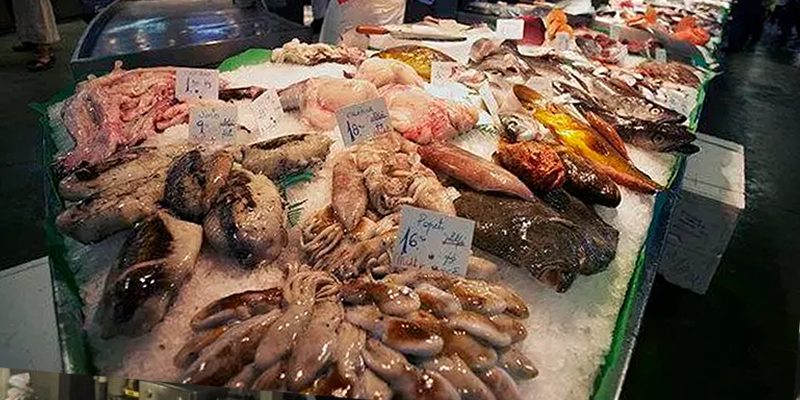
University of Alicante researchers Javier Atalah and Pablo Sánchez have recently carried out research on the eating habits of Spanish families where products from aquaculture are involved.
The study, titled "On the wrong track: Sustainable and low-emission blue food diets to mitigate climate change," has been published in the journal Frontiers in Sustainable Food System and presented last November in Cádiz during the 28th National Aquaculture Conference.
The study is based on the data of 12,500 families, collected between 1999 and 2021. Its conclusion is revealing, as the researchers have been able to observe a dip in consumption of traditional and nearby fish, such as sardine or anchovy, while there is a continuous rise of 'carnivore' fish from farms, such as gilthead sea bream, sea bass and salmon (which is consumed mainly canned).
Additionally, there is an increase in the consumption of canned tuna that has a great environmental impact through transport and packaging. At the same time, there is a progressive decrease in the consumption of bivalves such as mussel, which also comes from farms, and from which Spain is a leading producer.
These changes in consumption habits are detrimental to the environment, as Pablo Sánchez explained, since carnivorous fish from aquaculture, such as salmon, come from remote farms, which require a large amount of food produced from small pelagic fish. In contrast, bivalves are raised locally by feeding on the nutrients of their environment (phytopancton).
In this way, it is found that the carbon footprint (in terms of greenhouse gas emissions) is much greater in the breeding of carnivorous species in intensive farms that are located in distant places — both for their production and for the transport required.
Therefore, both researchers have concluded that it is necessary to generate consumer orientation policies to promote the purchase of aquaculture products with a low impact on climate change, such as bivalves. They are a healthy source of protein, rich in essential micronutrients, minerals and fatty acids — as Sánchez reported, while highlighting the low carbon footprint generated by this product.
This is an excellent opportunity for citizens to make a responsible choice and thus reduce the environmental damage related to food production systems; as such, Sánchez also highlighted that he would like to see this aspect taken into account more in the products that are bought in Spain, just as it happens in some countries where food is labeled by reporting the carbon footprint generated by their production.
According to Sánchez, people are on the wrong track while they have to consider the kind of fish consumed and at what cost.
The researcher also encouraged Spanish residents to seek conscious and responsible consumption during Christmas with the purchase, for example, of aquaculture products such as bivalves.
- Phys.org


