


December 19, 2022
Innovad's Ben Letor: Servicing global feed needs with a clear vision
An eFeedLink Exclusive Talk
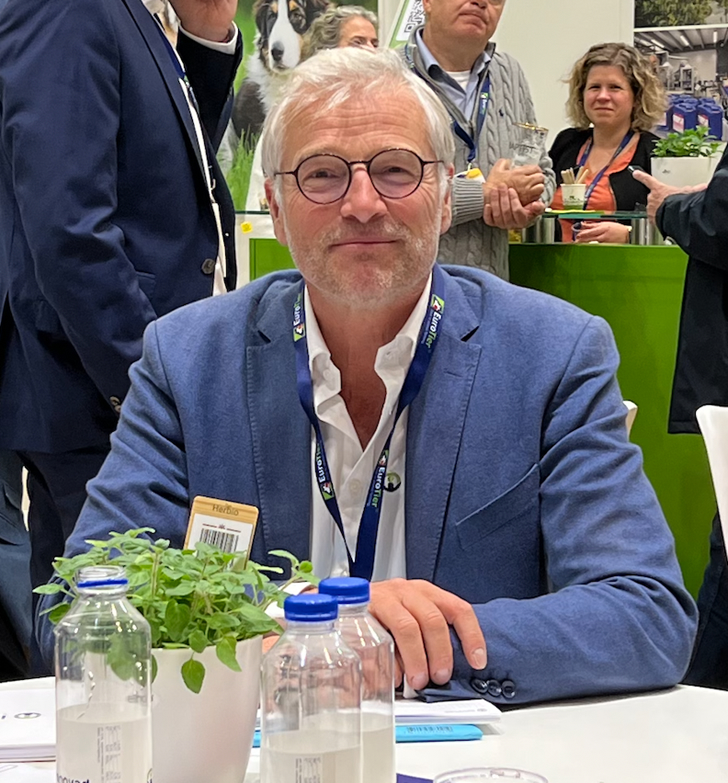
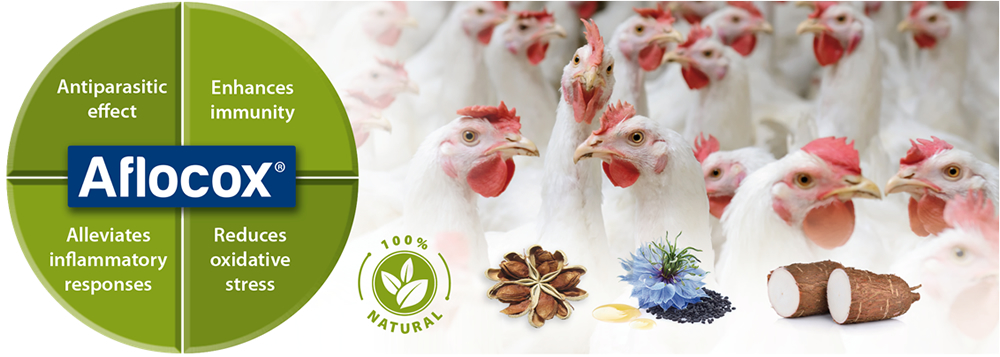
Innovad was at this year's EuroTier show in Hanover, Germany, to present a wide range of feed attractants and launch its new product, Aflocox, a 100% natural tool that mitigates anticoccidial resistance.
At the event, eFeedLink speaks to Ben Letor, chief executive officer and co-founder of Innovad Group, about the company's new offerings, adapting to challenges affecting the global feed and livestock sectors, and Innovad's sustained approach to mitigate costs and improve feed efficiency.
Please share about the evolution of Innovad from its founding until today. What are the key milestones in the development of the company?
Ben Letor: Innovad was founded in September 2010. We are a "people first" company, that values a relationship based on trust between a client and a supplier, and turns that into a partnership.
Private equity firms were interested in Innovad and can see that it has an interesting platform to develop further.
In March 2021, IK Investment Partners became majority shareholders and invested to further develop the company. We are almost two years in this new direction, and we continue to strengthen the values we stand for.
With a host of solutions and products to service the requirements of animal health and nutrition, how has Innovad distinguished itself from the competition?
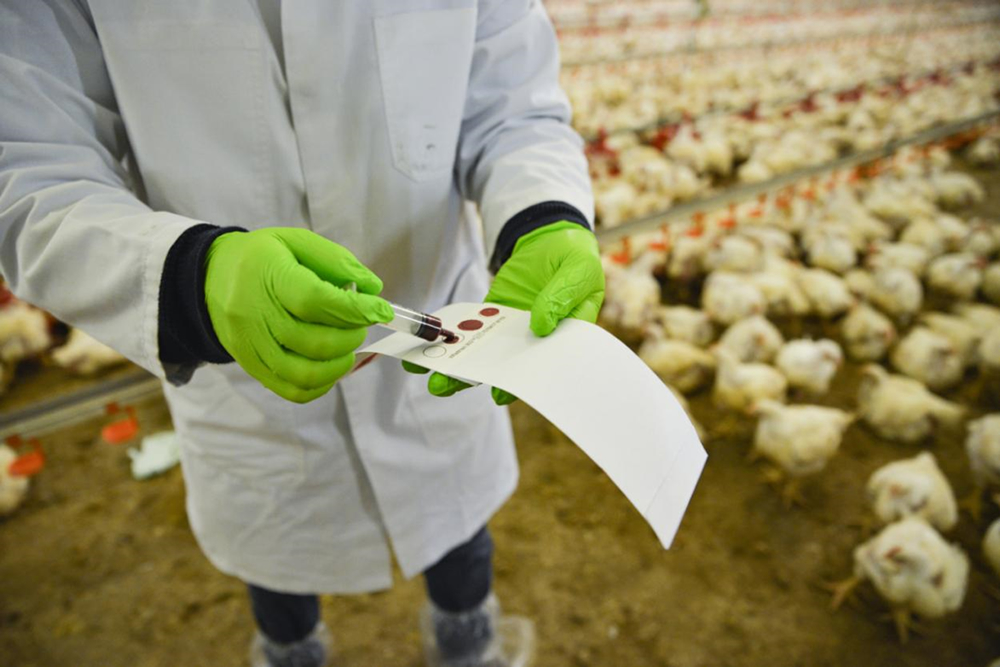
Ben Letor: You must have a clear vision. There are several toxin binders in the market, but Innovad has a unique selling point, which is a patented, diagnostic tool called Myco-Marker. Everyone else is talking about risk, but we are talking about blood analysis and measuring an impact that has an economical value. You need to demonstrate that you are a (market) leader as you have something that nobody has and that you have expertise on. And you need research for that; (Myco-Marker) is the culmination of a five-year research programme with a strong intellectual property.
Secondly, we want to be seen as an expert in chronic inflammation, not in gut health.
Why? Because chronic inflammation at the intestinal level is what leads to economic losses. You need to have a clear vision and message, but you need to be capable of having what it takes to deliver that differentiation point.
What can we expect in terms of Innovad's new product or service offerings to be presented at this year's EuroTier?
Ben Letor: At EuroTier 2022, we are launching Aflocox for the European market. Aflocox is already widely used in the United States.
How can Innovad's solutions offer a more sustained approach to mitigate costs and improve feed efficiency?
Ben Letor: We have a product dedicated to cost savings that is very successful right now, called Maxilys Plus; it allows producers to reduce the amount of fats involved in feed nutrient absorption. Thus, you can lower the cost of the final formula as you can reduce the amount of oil added to the feed with this optimisation tool. As a result, you are also maximising value. It is more cost-effective, especially as the solution is applied at the feed level.
All the products in our portfolio are about increasing performance and optimising performance from feed.
Feed needs to be better utilised. (With our products), producers will be able to reduce cases of diarrhoea loss, loose droppings, mortality and morbidity among their livestock, in turn also improving feed efficiency.
What is Innovad's approach to servicing its customers?
Ben Letor: We have a clear understanding of what service poultry integrators want, what product they need and the partnership we want to build with them.
Hence, our top customers are poultry integrators — those that raise their own chickens, own a feed unit and eventually have a meat unit. But they can also be one that is involved in the nutrition and raising of livestock. These are our preferred customers as we have a full service to offer to them.
We can not only save on feed costs by optimising formulations, but also by measuring and improving the performance and the health of animals.
Our vision is very clear: we need to target key integrators. To reach them, we need to have partners, either a local team or a distributor, that allow us to get in contact with those customers. And they're everywhere.
Based on different areas [of a country or region], we have planned a structure (for distributorship). For example, in India, we needed a distributor that covers 600 districts in the country. Our distributor there has 500 people reaching out to customers.
For bigger countries like China, we will require a much larger resource. But, at this point, we are only selecting two types of products that can make a difference in China. So, it is a surgical approach in a very large territory.
In other countries like Vietnam, we are going to cover all our lines and use a distribution system that allows us to be everywhere.
What lessons can the feed and livestock sectors learn from the pandemic, in regards, especially, to the impact on production and supply chains?
Ben Letor: The pandemic has taught us that we could no longer be so dependent on our supply chain, particularly, in the area of 'just-in-time' delivery and sourcing.
In that context, I would like to make an analogy to sailing. If the sea is calm and the skies are blue, you can do a so-so job and you will still be sailing. But when the seas are rough and the current is going against you, you need to make sure that everyone on the boat is working as a team. The production side at the bow, and the sales team at the stern — both sides need to be fully aligned.
Having external challenges, such as the pandemic, war, inflation and recession, is a great opportunity for any company to improve its game, to better communicate and to realign.
Our aim is to bring out the best of what the company can do and realise that there are a few things that need to be adapted in order to confront the issue — or else, end up as a sinking ship.
- Nicholas Yong, eFeedLink


