


December 13, 2022
Cambodia to explore solutions for declining domestic live swine prices
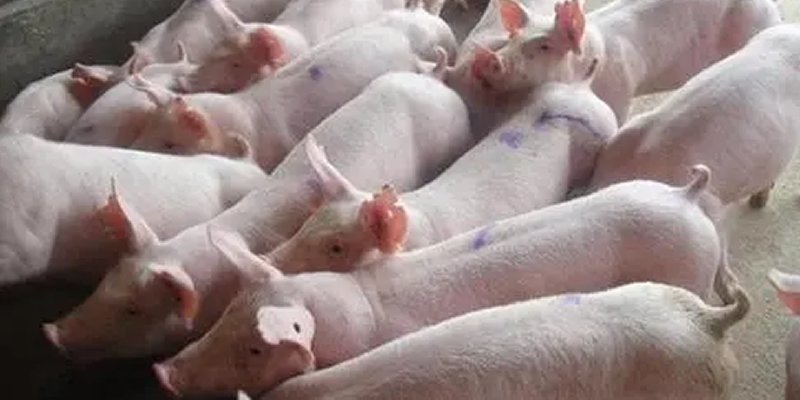
The Cambodian government will host an inter-minsterial meeting to explore solutions for declining domestic live swine prices in the past few weeks, giving local farmers hope for prices to return to sustainable levels, The Phnom Penh Post reported.
Aun Pornmoniroth, Cambodia's Minister of Economy and Finance, issued a letter on December 8 asking top officials from the commerce and agriculture ministries to attend and provide feedback at the meeting in order to reverse the live swine price decline that has occurred over the last two months.
The meeting will be hosted by the Economic and Financial Policy Committee (EFPC) General Secretariat and chaired by Finance Ministry Secretary of State, Phan Phalla, and comes in response to requests from the agriculture ministry and the Cambodia Livestock Raisers Association (CLRA).
Srun Pov, CLRA president, said a few weeks ago that live swine prices had dropped sharply in recent months, to an average of around KHR 7,000 (~US$1.70; KHR 1000 = US$0.24), or roughly half of what they had been a year earlier, and are lower than the average per-kg going-rates in Thailand and Vietnam, which are around KHR 13,000 (~US$3.15) and KHR 9,000 (~US$2.18), respectively.
Pov attributed the price drop to last year's rapid increases in swine production, which were fueled by government initiatives as the Kingdom dealt with the COVID-19 crisis. As a result, he said a large number of animals were left on farms.
Pov said that while the national average live swine price has now edged back up to around KHR 8,000 (~US$1.94) per kg, this rate needs to stay above KHR 10,000 (~US$2.42) for either small or large-scale farms to stay in business.
He noted that unregulated and illegal frozen pork imports have also significantly lowered the prices of locally raised swine, particularly in recent months.
Pov suggested that government intervention could be critical to ensuring the sustainability of Cambodia's pig production sector, and that it can ensure 100% food security domestically as well as fair amounts of export, in accordance with government policy.
- The Phnom Penh Post


