


December 10, 2025
Household leftovers not to be fed to pigs in Taiwan by start of next year
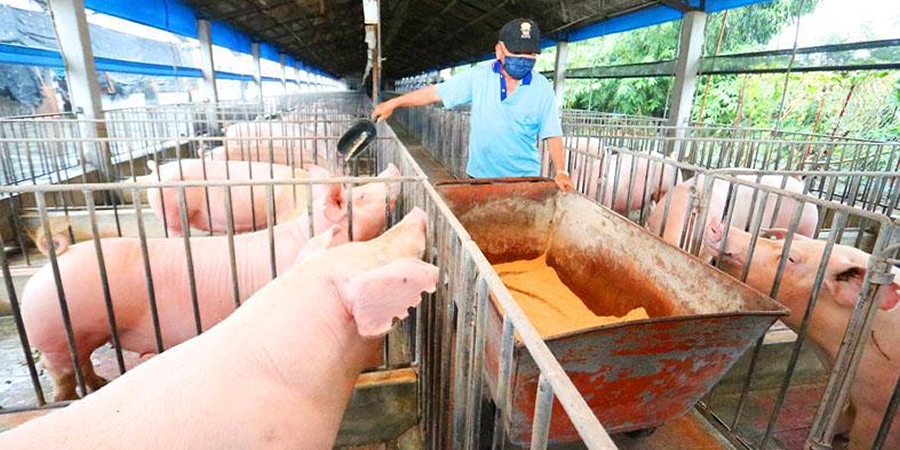
Starting on January 1 in Taiwan, household leftovers may not be fed to pigs in line with the policy of "raising pigs without kitchen waste" by 2027, the country's Ministry of Environment (MOENV) said on December 5, while black pig farmers launched a campaign to stop collecting kitchen waste until the end of this year.
The Cabinet on Thursday approved the policy to ban feeding pigs kitchen waste by the end of next year to reduce the threat of African swine fever following a controlled outbreak in October.
Minister of Agriculture Chen Junne-jih (陳駿季) on December 4 said that only 8% of pigs nationwide are raised on feed.
Pig farms would have to replace kitchen waste with feed to raise pigs within the next year, while local governments could roll out a local ban within the period if they consider it feasible in their respective administrative area, he said.
Regarding the increase in costs due to shifting to feed, Chen said that black pigs require about a year to reach maturity, while white pigs need only 180 days.
Black pigs are known to have better texture and are priced higher than white pigs, accounting for 12.7% of all pigs nationwide in 2019, Ministry of Agriculture data showed.
Most black pig farmers are unwilling to replace kitchen waste with feed given the higher costs, but newly developed high-protein feed could increase production efficiency by reducing the rearing period, Chen said, adding that his ministry would help market black pig brands to raise their prices and help hog raisers cope with increased costs.
To align with the policy, the MOENV said it would first ban feeding pigs leftovers from households or food stands from January 1, while kitchen waste from other places, such as restaurants, schools, supermarkets or food processing plants, would still be allowed next year.
About 1,100 tonnes of the 1,384 tonnes per day of kitchen waste banned from being fed to pigs would be processed into fertiliser or biomass fuel from next year, while the other 284 tonnes would be incinerated or buried, it said.
The total capacity of kitchen waste recycling and repurposing facilities is expected to be raised to 2,119 tonnes per day by the end of 2027, which would be sufficient to process all leftovers from households or food stands, the MOENV added.
All pig farmers would be required to install a system using artificial intelligence to monitor farm temperatures and situations in real-time, while their kitchen waste vehicles must all be equipped with GPS, it said, adding that legislation on the issue would be completed by the end of this year.
Meanwhile, about 200 black pig farmers attended a meeting of the New Taipei City Swine Association to discuss the new policy. They decided to immediately stop collecting kitchen waste until the end of this year and let the government handle the extra leftovers.
Association president Huang Ching-wen said that raising black pigs on feed instead of kitchen waste would not only results in a more than 10-fold increase in costs, but would also change the flavor of black pork.
Many black pig farmers have invested millions in kitchen waste steaming equipment, and are willing to install real-time monitoring equipment as required by the government, he said.
The government should not implement the ban simply because of an African swine fever case identified at a white pig farm, Huang said.
The permanent ban on feeding pigs kitchen waste is unacceptable and unfair to law-abiding black pig farmers, who account for 8% of all pig farmers nationwide and would be seriously affected by the policy, he said.
- Taipei Times


