


December 3, 2025
Egypt's national strategy seeks to improve local cattle, buffalo breeds
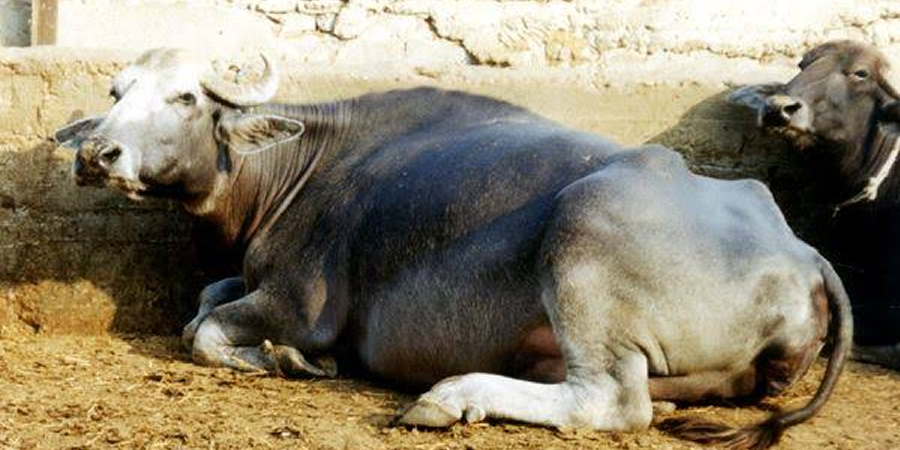
Egypt has launched its National Livestock Development Strategy to improve local cattle and buffalo breeds, localise high-yield dairy and meat breeds adapted to Egyptian conditions, increase milk and meat production to achieve self-sufficiency, reduce import gaps, and support small breeders and farmers.
The investment plan also targets adding one million head of livestock in 2025/2026, while expanding poultry and fish production to reach self-sufficiency in white meat and fish, and raising red-meat self-sufficiency to 60%.
The number of livestock in Egypt, including cattle, buffalo, sheep, goats, and camels, rose to 8.1 million head in 2024, up from 7.6 million in 2023, reflecting a 6.7% increase.
Sharkia is the most productive governorate in Egypt, with 1.3 million heads, accounting for 16% of the country's livestock in 2024. Behira governorate followed with 1.24 million heads or 15% of the country's livestock.
The number of slaughtered livestock reached 4.4 million head in 2024, up from 4.2 million in 2023, marking a 3.6% increase. Cattle accounted for 30.8% of total slaughtered animals, buffalo at 15.2%, sheep and goats at 51.8%, and camels at 2.2%.
Meat production from slaughtered animals rose to 754,000 tonnes in 2024, up from 650,000 tonnes in 2023, an increase of 16%. Of the total output, beef represented 57.3%, buffalo meat at 29%, sheep and goat meat at 10.5%, and camel meat at 3.2%.
Estimated raw milk production rose to 6.6 million tonnes in 2024, up from 5.7 million tonnes in 2023, representing an increase of 15.7%.
At the public slaughterhouses, a total of 1,486,245 skinned hides were processed, including 719,921 from cows, 248,364 from buffaloes, 441,647 from sheep, 14,093 from goats, and 62,220 from camels.
The total poultry population reached approximately 1.65 billion birds, with around 1.92 billion birds slaughtered, producing about 2.41 million tonnes of poultry meat.
Annual egg production reached 16.6 billion eggs in 2024, up from 16.4 billion in 2023, representing a 1.4% increase.
- Arab Finance For Information Technology


