


November 27, 2025
Scientists study conditions crucial for producing red algae in discharge water from RAS salmon farms
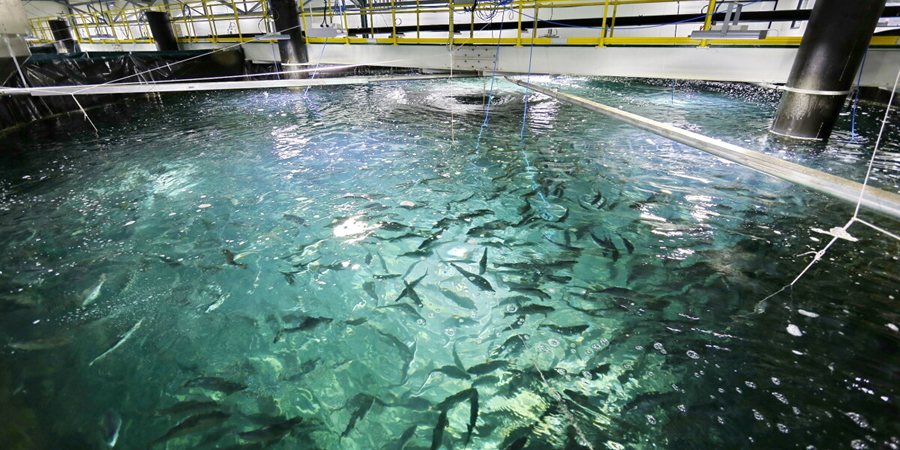
Scientists of Norwegian food research institute Nofima have investigated the necessary conditions to successfully produce dulse — a red algae that has a relatively high value compared to other macroalgae — with good growth rates and nice colour in the discharge water from land-based salmon production using recirculated water systems (RAS).
"I think this could be a win-win for both salmon producers, new businesses and the environment", said senior scientist Philip James.
In the trial, discharge water from SalMar's land-based facility was used to grow dulse. The research results show that dulse grew best on 50% discharge water from RAS from this facility. That is compared to seawater, 25% and 100% discharge water from RAS.
Results show that a dilution rate of 50% gave the highest removal efficiency of ammonia and nitrate for this facility. However, for phosphate removal between 25% and 50%, RAS water was most efficient.
Dulse grew equally well in salinity ranging from brackish water to full seawater (equivalent to 10-32 grams salt per kilogramme seawater).
The results show that for every kilo of fish feed used in RAS salmon farming, 257 grams of dulse could be produced. With Norway's land-based salmon industry consuming around 100,000 tonnes of feed annually, the nutrients in discharge water could provide everything needed for a substantial seaweed industry.
"This underlines the potential for both macroalgae cultivation and utilising RAS nutrients in discharge water as a valuable resource" James said.
In follow up projects, the scientists will also be testing dulse grown in discharge water from RAS water for nutritional benefits as well as any potential harmful compounds.
"We did compare land-based and sea-based production in our last trial in 2025 and have samples away for biochemical comparison now," James added. "We will now move onto a full comparison of nutrients and PTEs, colour and taste between Palmaria grown at sea versus in discharge water in 2026."
Nofima is working together with the Norwegian University of Life Sciences (NMBU) and SalMar as project partners.
- Nofima


