


November 22, 2024
Hybrid flow-through systems poised to revolutionise salmon farming
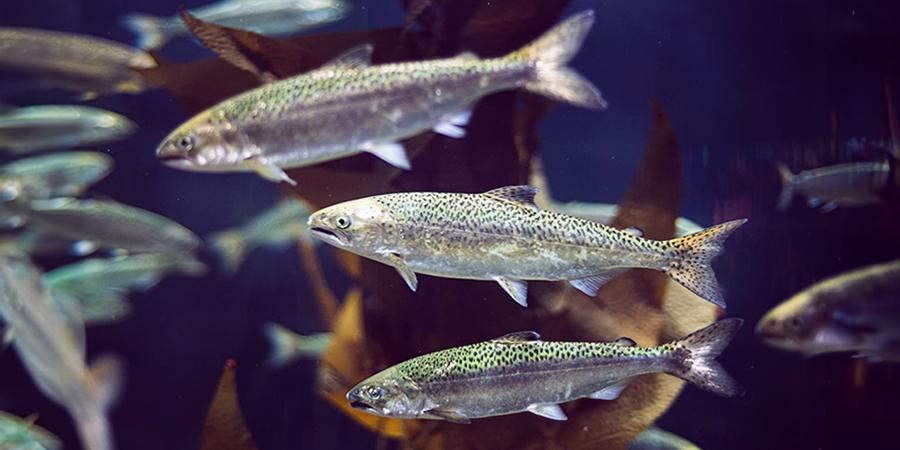
Hybrid flow-through systems (HFS) are emerging as a promising solution to critical challenges in the aquaculture industry, particularly in salmon farming.
These systems offer significant advancements in biosecurity, sustainability, and production efficiency. However, widespread adoption will depend on substantial investment and regulatory support, according to a new report by RaboResearch.
The report highlights the growing interest in hybrid flow-through systems as a practical response to increasing global demand for salmon. This technology enhances production while minimising disease risks and environmental impacts. It positions itself as a potential game-changer in the seafood industry, addressing longstanding issues in traditional salmon farming methods.
"The limitation of the current, marine cage-based industry is the inability to sufficiently grow supply," said Gorjan Nikolik, senior analyst – seafood for RaboResearch. "Despite being highly technically advanced, Norwegian salmon farming experienced increasing levels of mortality in both 2023 and 2024."
The rising mortality rates are linked to treatments for sea lice, which damage the protective layer on salmon scales, leaving the fish susceptible to bacterial infections and jellyfish stings. Hybrid flow-through systems mitigate these challenges by moving farming operations to contained onshore basins. This method effectively excludes most pathogens, reduces the need for medications, and improves fish health, leading to faster growth rates and better feed efficiency.
"Early data shows feed-conversion ratios of 1.1 on HFS farms compared to an industry average of 1.3," said Nikolik. "These results, combined with a survival rate of 97% compared to 83% for the net pen industry, suggest that biological performance on HFS farms is superior."
The improved biosecurity provided by hybrid flow-through systems results in a higher percentage of superior-grade fish, which fetch higher prices in the market. Additionally, HFS farms have a reduced environmental footprint. They prevent pathogens from contaminating surrounding waters and significantly lower the risk of fish escaping into the wild.
"Nitrogen levels will be greatly reduced with HFS technology, as the key sources of nitrogen from traditional farms are collected at the bottom of the tank and not released with the water exiting the farm," said Nikolik.
Despite these benefits, hybrid flow-through systems require more energy compared to traditional methods. Producing one kilogram of salmon using HFS technology consumes between 1 and 8 kWh of energy, depending on the system, whereas marine-based salmon farming has negligible energy use during its marine stage.
"The bottom line is that the good price and the lower biological cost of production outweigh the higher energy cost and should lead to improved profitability," said Nikolik. He also stressed that for HFS systems to achieve meaningful sustainability improvements, they must be powered by renewable energy sources. "Fortunately, all the current projects we are aware of (in construction or planned) have renewable energy as a source."
Widespread adoption of hybrid flow-through systems will require significant financial investments and legislative frameworks to support their implementation. While Norway and Iceland are leading the way with projects under construction, expansion into other regions such as Chile, the United States, and Canada will depend on increased funding and regulatory backing.
"Our estimates are that the projects currently operating and under construction will need between EUR 2 billion (US$2.1 billion) and EUR 3 billion (US$3.1 billion) of capital between 2024 and 2030 for their existing plans," said Nikolik. He added that an even greater investment would be required to realise the potential of conceptual and permitted projects. "HFS technology has the potential to transform the salmon farming industry, provided that the necessary capital and legislative frameworks are in place."
- Global Seafood Alliance


