


November 20, 2019
BioMar at event in Portugal highlighting sustainable stewardship of oceans
At the Sustainable Brands Oceans event in Porto, Portugal, on November 19, Alexandra Cousteau, an environmentalist and advocate for the world's oceans, launched her Ocean 2050 campaign outlining the blueprint for restoring abundance to the oceans.
She has partnered with companies including BioMar to activate projects designed to create a blueprint for the oceans by 2050. During the event, she outlined a plan for how industry can use the ocean while also protecting it.
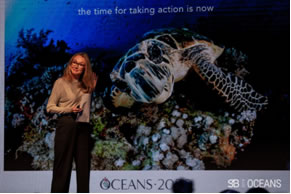 Cousteau highlighted the growing and farming of seaweed which offers opportunities to create a sustainable food source for both humans and animals. In fact, many strains of seaweed are able to absorb and capture carbon and several nutrients that are bi-products of aquaculture farming.
"Our oceans have so much to give and we are underutilising them. We can farm aquaculture offshore and plant various strains of macroalgae that are full of vital nutrients, but of course, this all needs to be done in a responsible manner. BioMar with its drive towards sustainability and its research development capabilities and partnerships are well positioned to set a sustainable agenda targeted to restoring abundance to the oceans", said Cousteau.
BioMar along with IBM Food Trust, Kvarøy and Tellspec presented a seafood case study and talked about how the digital age is affecting consumer product choices. The companies have offered digital solutions that promote transparency of information to maintain trust and, in some cases, prevent fraud.
"With our new Discover tool, we now offer full transparency so consumers can make informed seafood choices and gain trust in the product. The tool highlights amongst other things, nutritional value, the origin of feed ingredients and the environmental impact of aquaculture production," said Vidar Gundersen, Sustainability Director at BioMar
High level delegates at the conference helped to underscore the importance of oceans and aquaculture as part of the solution to climate mitigation. To ensure the responsible use of the oceans, several NGOs including Greenpeace, WWF and Oceana, are in attendance and discussed the need to create marine protected areas for at least 30% of oceans by 2030.
"In today's world for companies to be known as sustainable, simply following the regulations is no longer enough. We are seeing more and more companies committing to an ambitious sustainability agenda. One example is the krill industries voluntary measures to protect breeding areas for the penguins in the Antarctica," said Frida Bengtsson of Greenpeace Nordic.
In March 2018, Greenpeace launched its Protect The Antarctic campaign calling for the krill industry to maintain marine protection in the Antarctica. Aker BioMarine, BioMar and several UK retailers worked together with other stakeholders on the process and, in less than three months, the krill fishing industry agreed to set up voluntary measures to protect critical areas for breeding penguins. This way the area became protected while they work on an agreement as the regulation process could take several years.
- BioMar


