


November 14, 2025
African corn faces a drought crisis, but innovative solutions are emerging
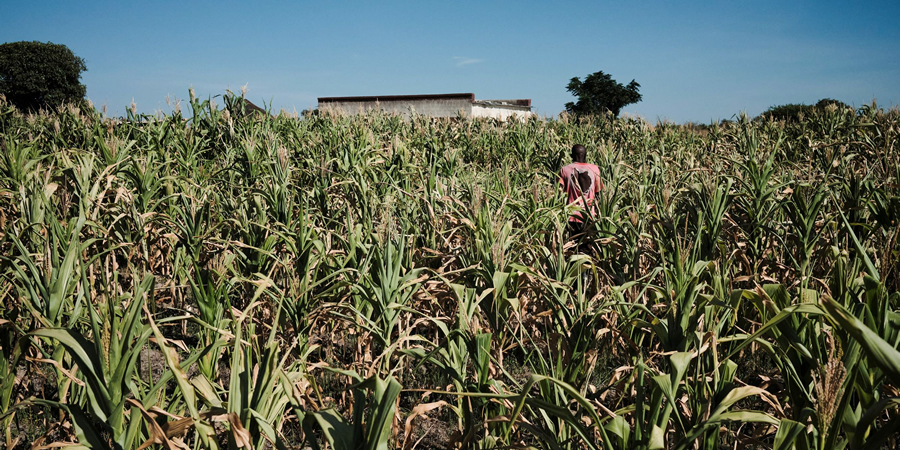
Corn is Africa's largest cereal crop, cultivated on more than 40 million hectares of farmland across the continent.
To Wawira Njiru, corn is the taste of home.
"When I was a kid, my favourite food was ugali — still is," she says. Ugali is the staple food of Kenya, a thick polenta-like porridge made from ground cornmeal, and served with stewed beef and vegetables.
It's popular through Eastern and Southern Africa, too. "I've travelled to a couple of countries, like Zambia recently, where they say, it's not food without their version of ugali," says Njiru.
Her love of food inspired her to launch Food4Education in 2012. The Kenyan nonprofit began serving school meals to just 25 children, and has since scaled to dish up lunch for 600,000 kids across Kenya.
It's hardly surprising that corn is the continent's most widely grown crop, grown across around 40 million hectares on the continent.
But corn is in trouble.
Corn requires a lot of water to grow. Most of Africa's 33 million smallholder farms are rain-fed, providing an unreliable and inconsistent amount of water.
Climate change is making this worse: in the past decade, severe droughts have devastated crops. Between 2020 and 2023, the Horn of Africa — which includes Kenya, Ethiopia, and Somalia — experienced six consecutive rainy seasons with no rain, one of the longest and most severe droughts on record according to the UN. Across East, Central and West Africa, an estimated 111 million people face food insecurity, primarily due to climate change and conflicts, according to the World Bank.
The average corn yield in Africa is just 2.1 tonnes per hectare, compared to 5.9 globally and 11.1 in the US, the world's biggest corn producer.
To meet demand, Africa imports around US$50 billion of food annually, predominantly cereals. But global events, like the Covid-19 pandemic and Russia's attack on Ukraine have interrupted the supply chain, driving up costs.
"We had times where corn was twice as much, or three times as much, per bag," says Njiru.
"We've seen a lot of volatility when it comes to price shocks caused by climate change, the lack of a structured market, and demand versus supply," says Njiru. "In other parts of the world, shocks happen, but you don't see as much adverse effects."
With corn providing a significant portion of the total calorie intake for millions of people on the continent, its volatility leaves Africa's food security in question — but people like Njiru are looking for alternatives, to future-proof the continent's food system.
First domesticated in Mexico over 9,000 years ago, corn was first brought to Africa in the 16th century.
With higher yields, corn began to replace indigenous crops — which was later reinforced by colonial policies.
But while corn's yields exceed indigenous crops under optimal conditions, monocultural farming practices (the cultivation of a single crop) have degraded the soil, and climate change — particularly drought — is throwing its dominance into question.
With higher yields, corn began to replace indigenous crops — which was later reinforced by colonial policies.
But while corn's yields exceed indigenous crops under optimal conditions, monocultural farming practices (the cultivation of a single crop) have degraded the soil, and climate change — particularly drought — is throwing its dominance into question.
"Most of those neglected species are much more nutritious than the ones we have right now," says Elouafi.
But switching to indigenous grains isn't an automatic win. Unlike many other countries in Africa, Ethiopia's staple crop is teff; yet its yield is low due to degraded soil and a lack of productive seed varieties, and the nation still faces severe levels of malnutrition and hunger.
That's why the focus is not just on replacing one monoculture with another, but diversifying food production in Africa — where currently, corn, rice and wheat make up 60% of all the calories consumed — to help mitigate the impact of climate change and provide nutritional value, says Elouafi.
Nutritional quality is a key concern for Food4Education, says Njiru.
"We serve a fortified porridge: the base is corn, and then it's fortified with sorghum and millet," which adds more fibre, says Njiru.
While the nutritional composition is important, another aspect is pricing: maintaining consistent, low costs for the meals — which cost around 30 cents each — is key, says Njiru.
But switching from corn to these indigenous grains requires greater availability and a sustainable supply chain. Sorghum is Africa's second most grown cereal by quantity, but the majority of this produce goes to beer production.
"If we try to buy sorghum at the scale that we're at, we'd be competing with a beer company," says Njiru. "The cost and availability is one of the challenges that we have to think about."
To help meet its growing demands for produce — around 100 tonnes per day — Food4Education sources 80% of its ingredients from cooperatives and smallholder farmers, which make up 70% of Africa's food supply.
"When we think about school feeding, we see it as a full economy in itself," says Njiru, adding that one of the company's first suppliers used to deliver batches of ingredients on the back of a motorbike; now, it takes 65 trucks. Food4Education's model and scale provides reliable demand for crops like sorghum and millet, which tend to be less popular for cooking due to their bitter flavours and perception that they are less modern than corn.
Bigger changes are happening, too. In May 2025, the Kenyan government announced it would include sorghum, millet, pigeon peas, and green grams (mung beans) in the National Grain Reserve. Previously dominated by corn and wheat, this move aims to improve food security, promote climate-smart agriculture and diversify the national food system.
Despite being a non-native plant, corn is deeply embedded in many African culinary traditions and national diets.
That's why some are looking at ways to optimise corn yields instead.
Through the International Corn and Maize Improvement Centre (CIMMYT) in Mexico, CGIAR has been breeding stress-tolerant corn varieties specifically for the African market for 15 years, targeting drought and disease-resistant qualities.
In 2016, it began distributing drought-tolerant corn (DTM) varieties, says Elouafi. So far, more than 150 DTM varieties have been released and commercialized through local seed companies. In 2024, around 205,000 tonnes of certified seed were planted on 8.4 million hectares, benefiting around 60 million people across 20 countries.
CGIAR estimates that on average, the DTM varieties produce an additional 500 kilograms (1,102 pounds) more grain per hectare.
Other seed variants make the plants more resistant to disease and pests, like fall armyworm, while others boost nutrition, including a variety that has higher levels of vitamin A. Seed production has become a major business on the continent. According to AGRA (formerly known as the Alliance for Green Revolution in Africa), in 2006, just 20 private seed companies produced around 2,000 metric tonnes of seeds; but funding, research and favourable policy changes meant that by 2023, certified seed production by local startups hit 358,312 metric tonnes.
The Technologies for African Agricultural Transformation (TAAT) toolkit — developed by the International Institute of Tropical Agriculture and African Development Bank (AfDB) in collaboration with CGIAR — launched in 2018.
The initiative works across multiple aspects of agriculture, from farmer training and technology demonstrations, to developing supply chain and regulatory frameworks, and across its first and second phases reached 25 million farmers and increased crop yields by an average of 69% (including by 50% for corn), resulting in 62 million metric tonnes of food.
"It was an amazing outreach in terms of bringing technology to farmers and increasing productivity and wellbeing of farmers," says Elouafi, adding that CGIAR is exploring a third phase of the program that can "go beyond that and accelerate adoption of technologies in Africa."
Agroecology, also known as regenerative agriculture, is another farming approach which "mimics natural systems" and can help restore degraded lands, says Chris Macoloo, the regional director for East Africa at World Neighbors, an international NGO that provides training and educational programs to empower communities to tackle issues like hunger and malnutrition.
"Industrial agriculture has resulted in disempowering people, the death of our soils, and made people indebted to other food systems in the West, instead of developing things from within," says Macoloo. As much as 65% of Africa's cultivated land is degraded, and the continent loses an estimated US$4 billion worth of soil nutrients each year.
By replicating processes from natural ecosystems, agroecology can boost productivity while reducing reliance on chemical fertilizers. For example, planting peas, which are rich in nitrogen, with other crops, can naturally fertilize the soil; in Malawi, a project that planted corn with legumes increased yields by up to 38%.
While Elouafi agrees that agroecology is "the best way forward," she adds that it takes time to build up microorganisms in the soil, so governments need to think about incentives for farmers. "They might produce less in the first three to four, maybe five years, so you need to pay the farmer for that delay of high productivity so that they continue those practices," she adds.
Elouafi estimates that via technologies like TAAT, Africa "can increase its productivity by five to seven times," but the "huge investment gap" creates an issue. While organizations like AfDB, the World Bank and AGRA have provided billions in funding, collaboration with the private sector is vital, she says: "Unless they are in, we cannot achieve zero poverty, or at least, reduce malnutrition."
The Renewable Energy and Energy Efficiency Partnership (REEEP) is doing just that: the Austria-based nonprofit works with the private sector to design programmes to expand solar-powered solutions, including for agriculture.
One technology that has become increasingly popular is solar-powered irrigation systems, says Kumbirai Makanza, a senior specialist for renewable energy finance at REEEP. Irrigation systems can provide consistent water, which is particularly important for crops like corn.
"It allows (farmers) to have security against climate change," says Makanza. "We've also seen, it's an opportunity to introduce a second crop, a rotational crop, instead of maybe only wait for the rainy season once in a year."
Njiru is also seeing a change in the way that farmers are approaching their crops, from crop rotation to more investment in technologies like solar irrigation. Many of the cooperatives she works with offer advisory services to help farmers boost yield, or access tools and financing they need to increase their harvest.
Food4Education is planning to expand its farm-to-fork model into more countries in the coming years, including Zambia and Ethiopia, where it will have an opportunity to experiment with different menus, and build new agricultural networks that she hopes can provide food security for school meals into the future.
"When I think about food systems and food security, the word that comes to mind is resilience," says Njiru. "When we talk about corn, when we talk about any other crop — what can provide people food consistently, and the nutrients that they need consistently?"


