



INDUSTRY NEWS
The US lobster industry and the Vietnamese pangasius have found salvation in the China market. The former is made alive as the demand for lobster in the world's second-largest economy has spread from Beijing to the second- and third-tier cities, while's pangasius Vietnam has found a market as it continues to suffer from a European backlash over the fish's bad reputation.
SALVATION IN CHINA
Chinese boost US lobster industry…
China's growing market is giving a great boost to the US lobster industry, whose established base is the state of Maine.
"When you take flight from Boston to China, probably there are Maine lobsters in the cargo", Annie Tselikis, Maine Lobster Dealers' Association executive director told People's Daily.
"Nowadays the market is not only in Beijing or Shanghai, but also expands to second- and third-tier cities", she added.
Tselikis said the US lobster industry has seen tremendous export growth to China in recent years.
In 2010, China made up less than 1% of all US lobster exports. Six years later in 2016, the percentage jumped to 14%, a figure that involves 17 million pounds with a market value of US$136 million, according to data cited from the US National Oceanic and Atmospheric Administration and US Department of Commerce.
Compared with lobsters from Australia or New Zealand, Maine lobster prices have made the market in China competitive as modern logistics have made it possible to ship lobsters to China from Maine within 30 hours.
Maine began looking at Asian markets in 2008 when it was hit by a financial crisis.
In 2012, Maine witnessed a record-high lobster haul, and prices dropped to $2.69 per pound. This led the industry to turn to the global market including China.
Last year, Maine had another record-high harvest, and this time, according to Tselikis, the price was stable enough to "keep all happy".
…Vietnam pangasius, too, amid persistent EU backlash
Suffering from a backlash in the EU due to bad publicity, Vietnamese pangasius has found a market in China -- Hong Kong, which imported US$247.4 million worth of the fish during the first eight months.
China accounted for 21.3% of the total export value, up 43.9% over the same period last year, according to the Vietnam Association of Seafood Exporters and Producers (VASEP).
VASEP said that in the first eight months, Vietnam's pangasius shipments to some big potential importing markets such as Brazil, Mexico, Colombia and Saudi Arabia also recorded remarkable increases of 63.9%, 26.4%; 2.5% and 5.4% respectively over the same period last year.
Exports to the US and the EU fell by 6% and 21.7% respectively year-on-year during the first eight months.
According to VASEP, Vietnam's pangasius exports to the EU have not shown any positive signs. Exports to four single markets within the 28-nation bloc - the Netherlands, the UK, Germany and Belgium - decreased by 3.6%, 4.9%, 19.8% and 0.2% respectively over the same period last year.
Vietnam has struggled to promote pangasius, whose image has suffered because of what it claimed is a smear campaign waged through mass media, particularly in the EU. In the EU, Vietnam pangasius must compete with tilapia products from China.
Vietnamese pangasius suffered a backlash, especially in Spain where a damaging exposé aired on Spanish television in January. As a result, the Carrefour supermarket chain ceased selling Vietnamese pangasius.
Alfons van Duijvenbode, VASEP' Dutch consultant, said that European consumers had a bad impression of Vietnamese pangasius due to what he said was wrong information in social media.
IN HUZHOU CITY
China has world's first crab farm to earn BAP certification
A Chinese aquaculture farm raising hairy crab has been granted the Best Aquaculture Practices (BAP) certification, becoming the world's first crab farm of any kind to earn the distinction, the Global Aquaculture Alliance (GAA) has announced.
The Zhejiang Aoling Aquatic Seeding Technology Co. Ltd. hairy crab farm is located at Huzhou city, Zhejiang province. The crab is sold live domestically, mainly through the Internet.
"We are excited about bringing hairy crab into our BAP programme," said GAA Vice President Steve Hart. "What makes this even more exciting is that this is the first BAP-certified species that will be marketed live, directly to Chinese consumers".
He said buyers will receive a box of live crab with the BAP logo on the packaging, thus promoting responsible aquaculture directly to consumers.
Hairy crab (Eriocheir sinensis) is a medium-sized burrowing crab native to the rivers and estuaries of eastern Asia. It is named for its furry claws, which resemble mittens, and therefore is also known as Chinese mitten crab.
Hairy crab is a delicacy in eastern Chinese cuisine, particularly in Shanghai and Jiangsu province.
In addition to aquaculture feed, there are now 15 types of farmed seafood represented in the BAP programme - Arctic charr, barramundi, channel catfish, crawfish, golden pompano, hairy crab, mussels, pangasius, rainbow trout, salmon, sea bass, shrimp, steelhead trout, striped bass and tilapia.
So far, there are a total of 1,737 BAP-certified facilities in 31 counties and six continents, including 392 processing plants, 1,072 farms, 173 hatcheries and 95 feed mills.
BAP is the world's most comprehensive third-party aquaculture certification programme, with aquaculture standards encompassing environmental responsibility, social responsibility, food safety, animal health and welfare and traceability.
It's also the only programme to cover the entire aquaculture production chain - processing plants, farms, hatcheries and feed mills.
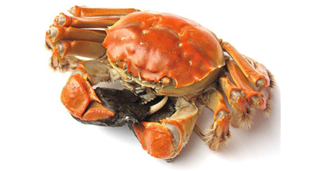
Hairy crab or Chinese mitten crab
IMPORTS REMAIN BACKBONE OF INDUSTRY
EU fish catches down 4.6%, imports up 2.4% in 2016 - study
Fish catches in the EU have decreased, while fish imports have gone up, according to the 2017 Fishfish Study of the AIPCE-CEP, the association of EU fish processors and traders.
The study said that the total catch of all fish species in the EU was down 4.6% to 4.762 million tonnes in 2016.
Imported volume in 2016 increased 2.4% to 9.2 million tonnes, and the share of imports was slightly up at 64%.
The report said that in fact, imports remained the backbone of the finfish industry.
As fish catches went down and imports increased, EU fish exports were down 4.2% to 1.927 million tonnes in 2016.
The study showed that salmon was the No 1 species by live weight, but tuna and cod both reached above 1 million tonnes, which was significant in global terms.
Total market supply increased to 14.4 million tonnes, as the net consumption of fish in the EU increased 0.6 kilogramme per capita to 24.5 kg/capita in 2016.
INITIAL €400,000 GRANT AID FUND
Ireland launches new support for seafood firms' innovation
Ireland has launched a new R&D fund to support Irish companies' innovation in the seafood sector and help grow the €850-million (US$987.28-million) industry in line with government targets.
The launch took place at the West European Fish Technologists Association's 47th annual conference in the Aviva stadium in Dublin earlier this month.
The four-day international conference and networking event brought together over 143 experts representing 50 of the top-performing Irish and international seafood research-and-development institutes to discuss and gain valuable insights into new innovative technologies to add further value to seafood businesses.
The Bord Iascaigh Mhara (BIM), Ireland's Seafood Development Agency, is providing an initial 100% grant aid fund of €400,000 ($464,515) in 2017 toward research and development to support innovation and the development of new technologies that would benefit the seafood sector.
With sales valued at €939million ($1.09 billion) and representing 5% of total food and beverage exports, Ireland's seafood sector has been earmarked by government as a key area for growth and investment.
The agri-food sector, with seafood as a key sub-sector, has the potential to grow exports to €19 billion ($22.065 billion) per annum by 2025, an 85% increase from the current three-year average.
"The government's 10-year vision for the agri-food industry set out in Food Wise 2025 has not only identified the wealth of opportunities for seafood producers but also the role increased research, development and innovation can play in harnessing the export growth potential in this sector. By bringing value added products to the consumer, we could grow the seafood sector and larger agri-food sector by 85%", said BIM CEO Jim O'Toole.
"Through the launch of the new research and development scheme for seafood producers and our facilitation of access to research and development insights for seafood companies, BIM is addressing the gap between translating research into commercial products", he added.
During the fund launch, Agriculture, Food and the Marine Minister Michael Creed said, "The hosting of such a significant international event (international conference) further strengthens Ireland's position as a global seafood leader. Bord Iascaigh Mhara has demonstrated how the objectives of the government's Food Wise 2025 strategy can be met through collaboration with technical leaders in this space from countries such as Norway and Iceland.
Creed expressed the hope that companies would take advantage of the grant aid for R&D to continue producing products that would put Ireland on the map as an important seafood producer in the global supply chain.
"This fund will continue to support the seafood sector into 2018 and beyond and will be crucial to helping the industry realise its potential", he stressed.

ANTI-PATHOGENS
Bacteriophages as alternative to antibiotic use in farmed fish
The use of bacteriophages, or phages, has been found to be an effective alternative to the use of antibiotics to fight the pathogens responsible for the diseases affecting farmed fish, according to a European project coordinated by the Spain-based research firm AZTI.
The project - participated in by researchers from Biopolis S.L. (Spain), the University of Aveiro (Portugal) and the Aguacircia Aquaculture company (Portugal) - evaluated the impact of the use of phages on the environmental and intestinal bacteria communities of the fish.
A bacteriophage is commonly defined as a type of virus that infects bacteria. The word literally means "bacteria eater," because bacteriophages destroy their host cells.
The use of natural bacteriophages does not affect the health of fish and consumers.
The results obtained from the study showed that the use of these organisms, which infect and destroy bacteria, reduces the environmental impact of fish farms and increase their profitability by lowering mortality in the early stages of the breeding process.
It was also shown that it did not modify the marine bacteria population in the tanks on the fish farm or in the river where the fish farm is located, so it has zero impact or very limited impact on the bacterial ecology.
Aquaculture, which provides over 50% of the world's supply of fish and seafood, faces problems derived from the development and rapid transfer of bacterial infections in the fish farms. The most common treatment to prevent such infections is the use of antibiotics.
However, despite the call for responsible use of antibiotics, their prolonged use in aquaculture has led to the development of resistant bacteria. Many of these antibiotics are non-specific as they act not only against the problematic pathogen but also against other bacteria naturally present in the environment, which may modify natural populations and present an important risk for the environment.
All this has led to the search for alternative solutions to the use of antibiotics to fight the constant threat of bacterial infections, particularly in the early stages, when vaccination is not possible and the maintenance of the bacterial ecosystem is vital.
'FAILURES ARE ROUTINE'
Scottish farmed salmon slammed over sea lice issue
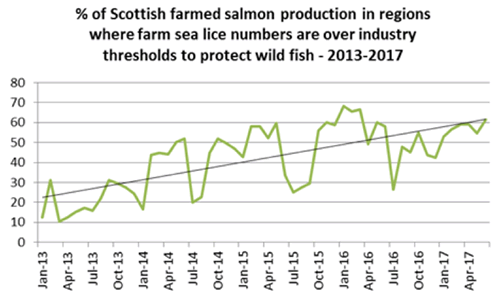
Sea lice numbers are running out of control for extended periods in much of the Scottish salmon industry, and failures by individual farms to operate with lice numbers below the Scottish government's trigger levels are routine, according to the UK charity Salmon & Trout Conservation (S&TC), citing uncovered information.
"Many of the individual farms' sea lice numbers, which have long been hidden within regional aggregated 'averages' published by the industry, are far worse than we envisaged. Sea lice numbers on farmed fish across much of the industry are of epidemic proportions", said Andrew Graham-Stewart, director of S&TC Scotland.
S&TC Scotland said it had received its information on the gravity of the sea-lice situation after the Scottish Information Commissioner formally decided that concerned Scottish Ministers had unlawfully tried to withhold information naming fish farms that had breached Scottish government trigger levels for the numbers of adult female sea lice on farmed salmon.
The Scottish government's new trigger levels have been set at three adult female lice per farmed salmon—which would need a "site-specific escalation plan" to reduce lice numbers—and eight adult female lice per farmed salmon, at which point an enforcement action may be ordered to harvest early, reduce biomass or cull out a farm.
S&TC said these levels "are very considerably more generous" to the fish farmers than the industry's own longstanding Code of Good Practice's (CoGP) sea lice treatment levels of 0.5 or one lice per fish, depending on the time of year.
Guy Linley-Adams, Solicitor to S&TC Scotland, said that the data that the Scottish government "didn't want anyone to see" showed that "salmon farms have been permitted to operate with breathtakingly high lice numbers for weeks or months on end".
"To date, no meaningful enforcement action, such as the ordering of culls or immediate reductions in fish-farm biomass, has been taken against serial offenders", he claimed.
One of the key findings from the published data is that the list of the farms that breached the 3 and/or 8 trigger levels included farms from all the large fish farming companies and most smaller ones.
According to S&TC, the upward trend in failure of salmon farms to control sea lice and stay below the CoGP threshold of 1 or 0.5 adult female sea lice per farmed fish continues.
Guy Linley-Adams urged the Scottish Ministers to "rethink radically their approach to the salmon farming industry and to end their unconditional support for the industry in the face of this and other equally shocking environmental data now being revealed about its performance".
67 IN FIRST 3 QUARTERS
US refuses entry to 17 antibiotic-laced shrimp imports in September
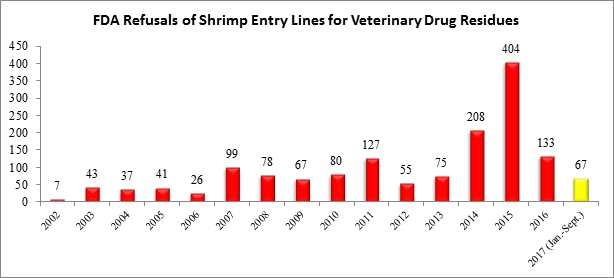
In the first three weeks of September, the US rejected 76 seafood entry lines, of which 17 (22.4%) were of shrimp for reasons related to banned antibiotics.
According to the Southern Shrimp Alliance, the US Food and Drug Administration (FDA) reported refusing 67 entry lines of shrimp for reasons related to banned antibiotics during the first three quarters. These were substantially below the refusal levels reported in 2014, 2015 and 2016.
The FDA also said there were additional seafood entry line refusals in August, including two Vietnamese shrimp and one Chinese shrimp refusals for reasons related to banned antibiotics.
Earlier the FDA reported that from Aug. 1 to 25, three of the 172 (1.7%) total seafood entry line refusals were of shrimp for reasons related to banned antibiotics. These three were from Vietnam, China and Hong Kong.
For June and July, the FDA reported no entry line refusals for shrimp contaminated with banned antibiotics.
WORTH US$2.3B
Vietnam shrimp exports up 21% in first 8 months
Vietnam's shrimp exports in the first eight months amounted to US$2.3 billion, up 21.3% over the same period in 2016, according to the Vietnam Association of Seafood Exporters and Producers.
Although the export rise was mainly attributed to increased demand from major importing markets, it came along with a 4.2% enlargement of the area for shrimp farms (estimated at over 679,000 hectares) and 21.4% year-on-year hike in yield (over 363,000 tonnes).
Shipments of whiteleg shrimp accounted for most of the total shrimp exports during the eight-month period at 64.2% (from 60.4% in January-August 2016), while black tiger shrimp accounted for 24.5% (from 31.4%). Marine shrimp took up 11.2% (from 8.2%) of the total shrimp exports.
Sales of whiteleg shrimp hit $1.2 billion, up 29%, while those of black tiger shrimp reached $605.9 million, down 5% over the same period last year.
The top 10 importers of Vietnamese shrimp were (in order) the EU, Japan, China, the US, South Korea, Canada, Australia, ASEAN, Taiwan and Switzerland.
Cited data from the Vietnam customs showed that in the first eight months, the EU's shrimp imports from Vietnam reached $483.6 million, up 30% year-on-year.
The US dropped to fourth place among the leading Vietnamese shrimp importers during the first eight months. Shrimp exports to the US, valued at nearly $416 million, were down 4.4% over the same period in 2016.
Due to the good demand from Asian markets - including Japan, China and South Korea - and the EU, Vietnam's shrimp exports in 2017 are expected to total $3.4 billion, up 6% compared with 2016.


