


November 12, 2025
AI technology boosts production of China's favourite meat
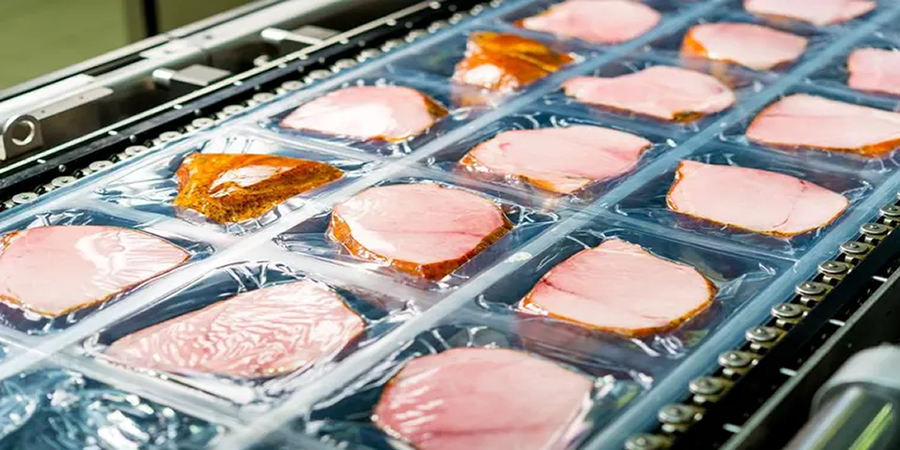
Pork, China's most popular meat, represents an industry valued at around US$185 billion each year.
Although huge processing plants are significantly automated, machines still struggle with tasks that require precision, flexibility and fine judgment — from cutting and trimming to packaging and quality control.
According to experts in the sector these gaps have slowed processing and limited the industry's ability to scale efficiently.
"Pork cuts have complex structures in which fat, muscle and bone are tightly fused," explains robotics scientist, Lei Cai, who heads the Henan Institute of Science and Technology's School of Artificial Intelligence in Xinxiang City, Henan province. "This technological lag in the butchering of pork reduces efficiency and yield."
Over the past decade, Cai has led a team to refine the automation of butchering. Using powered autonomous robots through artificial intelligence, his team has developed a fully automated line with multi-scale sensors for flexible, precise cutting and customised packaging.
One technology developed by Cai's team helps meat-cutting robots find rib edges hidden under layers of tissue and fat for precise cuts.
The researchers have developed a deep-learning system that sharpens blurred X-ray images of pig carcasses. The approach enhances faint details, restores the boundaries between muscle and bone, and maps the skeleton to generate precise cutting lines. In trials, it accurately traced muscle–bone boundaries with more than 94% accuracy.
To further enhance the robots' recognition skills, they developed a ‘dual attention' system that combines ‘spatial attention' and ‘channel attention' — teaching the AI both where to look in an image and what features to focus on, explains Cai.
When paired with U-Net — a well-known image analysis model — the approach outperformed existing methods in segmenting pork carcass images, even in instances of images with visual noise, such as those showing fascia and other organic matter.
The researchers also tackled another challenge for cutting robots: the variation in texture and density of pork meat. Without the ability to adapt to these differences in meat across a carcass, cuts become rougher, meat quality drops, and blades wear out more quickly.
To address this, Cai and his colleagues developed an AI model that teaches robots to adjust their force and angle in real time, based on the meat's shape and density. Combined with a second meta-learning AI model — a 'learning-to-learn' system that allows robots to transfer and adapt skills to new tasks with very little training — the robots can refine their skills and retain these cutting patterns for long-term use.
Cai and his team's technology has led to the development of China's first fully autonomous robotic production line for pork processing. "Compared with existing processing lines, it has boosted production efficiency by more than 35% and reduced meat processing loss rate by 20%," he says.
These technologies have now been implemented in more than 30 meat-processing and automation enterprises in China, including the Beijing Institute of Automation and Qingdao Jianhua Food in Jiaozhou City, Shandong province.
Cai's team is now working to further boost the robot precision and expand use to areas such as agriculture and logistics. He hopes these robotic technologies will help deliver "a more efficient, sustainable, and safer future for the low-carbon transition of pork processing, and eventually for broader intelligent manufacturing sectors."
- Nature


