


November 10, 2023
1 million chickens in Minnesota, US to be culled amid bird flu outbreak
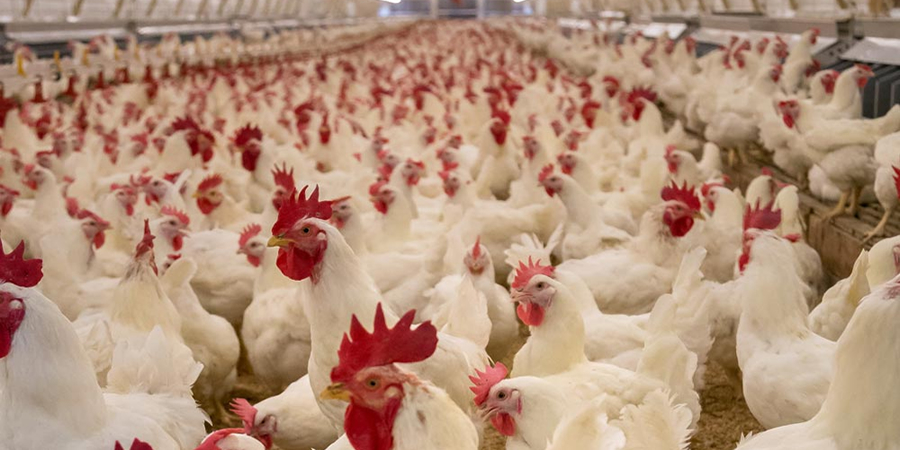
In response to the confirmed presence of highly contagious bird flu at a Minnesota, United States egg farm, authorities have declared that close to 1 million chickens will be culled to contain the spread of the virus, as announced by the US Department of Agriculture (USDA), ABC News reported.
The affected farm, located in Wright County, Minnesota, has reported the detection of the highly pathogenic avian influenza virus. Additionally, smaller flocks in South Dakota and Iowa have also tested positive. Standard protocol dictates that when the virus is identified on a farm, the entire flock is euthanised to prevent further transmission to neighbouring farms.
Alongside the Minnesota case, the USDA disclosed plans to cull approximately 26,800 turkeys on a farm in McPherson County, South Dakota, and nearly 17,000 birds on two farms in Iowa's Clay County.
The poultry and egg industry has been grappling with a bird flu outbreak since the previous year, witnessing the slaughter of nearly 58 million birds in 2022, primarily chickens and turkeys, to curb the virus's impact. This mass culling significantly contributed to higher egg and turkey prices. Notably, the Minnesota farm marks the first instance of bird flu detected in an egg-laying operation this year.
Although the toll in 2023 has been comparatively lower than the previous year, with around 3.4 million birds culled, efforts to prevent contact between domestic birds and migrating wild birds have been intensified. The state of Minnesota has lost over 5.5 million birds since the onset of the outbreak, while Iowa, with numerous large egg farms, has been the most severely affected, witnessing the culling of more than 16 million birds.
Over the past month, several cases have been reported, primarily at turkey farms in Minnesota, South Dakota, and Iowa, coinciding with the migration of wild birds south for the winter. The virus, easily transmitted through the droppings of wild birds or direct contact, can potentially affect any farm.
- ABC News


