


October 30, 2025
Vietnam sets sights on developing seafood by-product industry
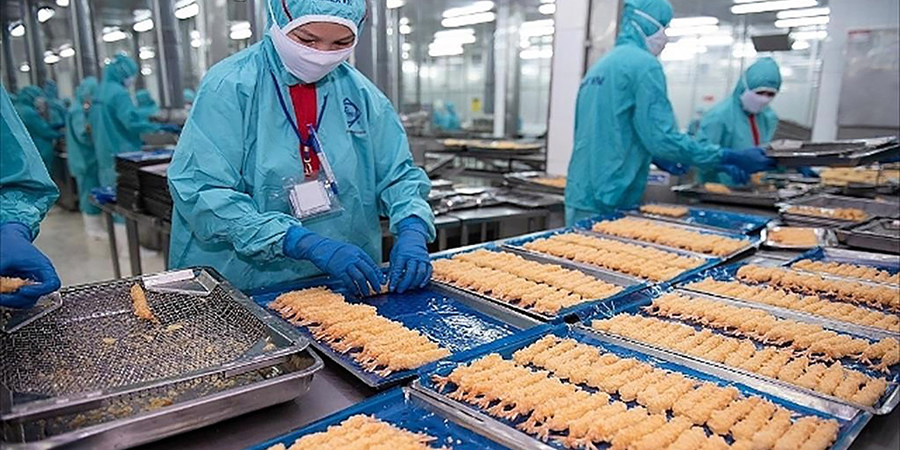
As a leading global seafood producer and exporter, Vietnam is exploring ways to transform seafood byproducts into high-value products.
This aims to enhance the sector's sustainability and profitability and contribute to a circular economy.
In Ho Chi Minh City, various enterprises have successfully utilised this potential. Nguyen Thanh Loc, director of Phuc Loc Co Ltd in Tan Hai Ward said the company buys approximately 60 tonnes of byproducts daily from fishing vessels and factories. It produces 4,000 – 5,000 tonnes of fishmeal yearly, earning revenues of ₫72 billion- ₫90 billion (US$3 million to US$3.9 million).
"With more capital and technology, we could raise protein content to 64% and lower fishmeal imports by 140,000 tonnes annually," he added.
Meanwhile, Tu Hai Co Ltd in Phuoc Tuang started exporting cleaned, dried fish to Japan at US$10 per kilogramme (kg), bringing in ₫10 billion (US$379,700.00) to ₫12billion annually (US$455,640.00).
"Demand is high, though supply is restricted. It appears to be the start of a promising new business," said Quoc Tuan, chief executive officer of Tu Hai Co Ltd.
On a broader scale, the Southern Research Institute for Marine Fisheries used mixed crab species to create crab paste and chitosan powder. Chitosan, a raw material for healthcare and agriculture, sells up to US$1,000 per kg.
Beyond industrial uses, seafood byproducts are being converted into artistic tourist souvenirs. Restaurants and processing facilities produce tonnes of shells nightly.
Hai Lan Co Ltd in Ba Ria ward gathers and recycles shells into souvenirs, artwork and jewellery. Items sells for prices ranging from ₫ 40,000 (US1.52) to ₫ 20 million (US$759.40) each.
The company recently signed a memorandum of understanding with OSB Investment and Technology JSC, Alibaba's authorised agent in Vietnam. The agreement is to market its shell-based products on Alibaba's e-commerce platform, broadening their global reach.
Environmental consciousness and creativity are also motivating young people. Nguyen Le Minh Châu, a student at Vung Tau High School submitted a model "Workshop for Handmade Shell Products in a Beach-Themed Coffee Shop" to the Ba Ria-Vung Tau Seafood Innovation Contest. The concept permits visitors to make their own shell-based items in a workshop setting while having drinks in a space adorned with appealing shells.
According to forecasts from the agriculture and environment sector, in the near future, shrimp heads alone could yield approximately 490,000 tonnes of food products. Pangasius offcuts and stomachs could provide 100,000 tonnes and fish oil could provide 100,000 tonnes.
Shrimp shells yield 146,000 tonnes of animal feed, while fish heads, bones, and entrails could supply an additional 900,000 tonnes annually.
Other byproducts such as shrimp shells and fish skin or swim bladders, could be processed into high-value items for pharmaceuticals, cosmetics and other industries.
By 2030, shrimp products are forecast to reach 650,000 tonnes worth US$80 million to US$100 million. Pangasius byproducts are projected at 1.3 million tonnes, valued at US$500 million.
Pham Thi Na, deputy director of the Ho Chi Minh Department of Agriculture and Environment noted that processing byproducts could create tens of thousands jobs. It could also enhance Vietnam's seafood reputation and relieve environmental pressure from food processing waste.
Pham Quoc Huy, director of the Southern Research Institute for Marine Fisheries emphasised that converting byproducts into resources necessitates treating it as a strategic industry, rather than leaving it to spontaneous market.
Beyond fishmeal and fish oil, global trends now involve extracting peptides and enzymes, and manufacturing biodegradable materials and packaging from shrimp shells and fish skin.
Supportive policies, green financing and stronger collaboration between businesses, scientists and authorities could transform seafood waste into blue gold.
This would boost Vietnam's marine economy, protect oceans, and elevate the global profile of its seafood industry.
At present, seafood byproducts—chiefly shrimp shells, crab shells, fish skin, bones and organs—total approximately one million tonnes per year, with over 90% in solid form.
Incorrect disposal can cause environmental pollution, particularly in tropical regions.
Currently, the processing value of these byproducts is around US$275 million annually, considerably lower than the estimated US$4 billion to US$5 billion.
- Borneo Bulletin


