


October 24, 2025
New US campaign promotes pork as beef and poultry prices climb
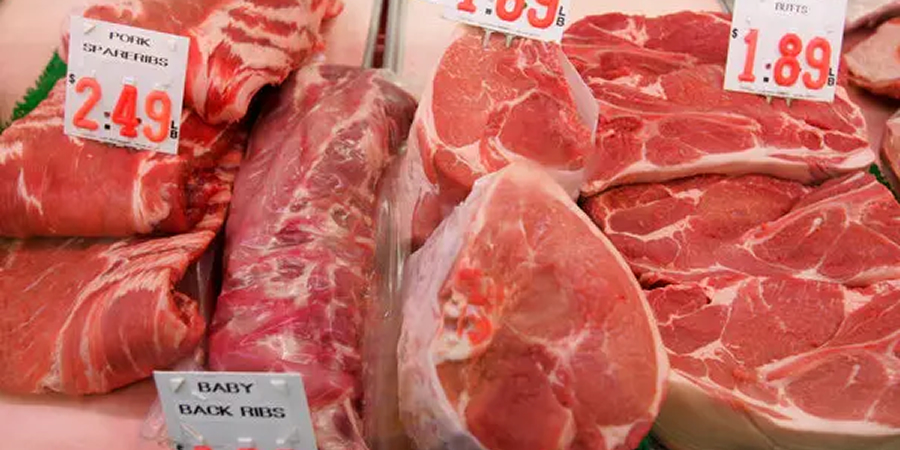
A new nationwide US marketing campaign seeks to showcase pork's rich variety of flavours and attract a broader range of consumers.
The Pork Checkoff launched its first national marketing campaign in almost seven years on May 6, and it's coming amid high beef and fluctuating poultry prices.
The campaign, "Taste What Pork Can Do," is taking a new approach to the checkoff's former marketing by highlighting all pork products, not just fresh meat.
"We have 111 nuanced flavours," said Patrick Fleming, the checkoff's vice president of domestic market growth. "Really, when you look at the portfolio of flavours that pork provides, it is something that is truly unique and differentiates us from our brethren, as bacon, ham, sausage, prosciutto, pepperoni, ribs, pulled pork, pork chops. Hundreds of different flavours, hundreds of different eating occasions."
Consumer segmentation research, started in 2022, identified the need for a new marketing strategy. The traditional pork consumer is aging, Fleming said, taking with them an affinity for fresh pork products.
Meanwhile, Generation Z and millennials consume pork, but they favour the processed form, Fleming said, especially in the party-favourite charcuterie board. With the new campaign, the checkoff thinks it can use the existing interest as a segue into fresh pork sales.
"What we want to do is keep it top of mind so consumers think about pork whenever they're thinking about a meal occasion," Fleming said. "So that's really the important change because, right now, we tend to be the third choice."
The campaign's digital format uses targeted advertisements for selected audiences, of which the checkoff chose three from their segmentation research
The "culinary adventurer," who is willing to explore recipes, the "confident meat eaters," who can and want to cook traditional proteins, and the "mindful choice makers," who are looking for health-conscious options, were selected as the groups most likely to be persuaded to change habits and buy pork.
"Not that the other four aren't important, but if you're trying to make an impact on consumer purchase and really change attitudes, you have to somewhat focus on where we have the ability to move the further, farther, fastest," Fleming said.
The other identified segments are individuals looking for quick meals, the budget-conscious buyer, families passing cultural recipes onto the next generation and those limiting meat in their diet.
Non-digital marketing is being done on the state levels. The Pennsylvania Pork Producers Council is spreading the "Taste What Pork Can Do" message with retail marketing and in-person engagements — primarily with nutritionists — in addition to digital advertising, said the council's Executive Director Courtney Gray.
The council's efforts also take a localised approach, like the council's partnership with Penn State athletics and their tailgates. Using the college's logo on ads and targeting that can reach individuals who have visited Happy Valley recently, Gray said, the council is pushing advertisements for pork's role at tailgates.
The Pennsylvania council is targeting the entire northeast corridor — including high-population areas like Baltimore and Trenton, New Jersey.
The national campaign's success will be measured by sales metrics across retail and food service in addition to consumer perception of pork. The latter is measured with periodical in-person surveys.
"We want to make sure we're changing hearts and minds about people's perceptions of pork," Fleming said.
In Pennsylvania, Gray doesn't have retail data for the campaign's success so far, but she said traffic to the council's digital recipe library has increased 48% since May.
Marketing is going to continue for the foreseeable future, Fleming said, but this campaign is currently written through the checkoff's three-year plan. Over that time, the pork industry hopes to drive home one unified message: "Taste What Pork Can Do."
"Most consumers need to see a tagline at least seven times before it really sticks," Gray said. "So when we have the ability to align with a more broader-reaching national tagline, we opted to do that."
The past several years have been turbulent for beef and chicken prices.
As highly pathogenic avian influenza infection rates ebb and flow with wild bird migration, the industry is facing shortages, and consumers are seeing higher prices.
Just earlier this year, egg prices in the Mid-Atlantic were up near US$8 and US$9, and some hit double digits, as layer houses saw disproportionately high infections.
Those prices have settled, but the same cannot be said for beef, which is only getting more expensive.
In May 2024, Derrell Peel, an Oklahoma State University ag economics professor and Extension agent, told Lancaster Farming that a depleted heifer inventory — the lowest since 1950 — would mean beef prices would need to get higher before they came down.
They've done just that.
From August 2024 to August 2025, the all-fresh beef retail price increased 12.6%, said Lee Schulz, an Iowa State University economist. Comparably, pork prices increased 2.2%, broiler composite increased 1% and inflation was 2.9%.
Do these prices mean pork can capitalize on meat-eating consumers? So far, no.
"A lot of the research has shown that that cross-price elasticity relationship has weakened over time," Schulz said, "so it probably takes a wider spread in those prices for consumers to maybe switch between some of those proteins."
Prices between beef and pork and beef and chicken are the widest they've been according to US Department of Agriculture data, Schulz said, yet retailers aren't seeing large numbers of substitutions.
Consumers are substituting within proteins — buying ground beef instead of steak — more frequently. Schulz also noted that less beef is available, so some consumers do have to substitute across proteins, and with the continually tightening beef supply, forced substitutions will continue, but the wide price spread has not yet forced a noticeable change in budget-conscious, cross-protein changes.
While pork is not currently in the economic highs of beef and poultry, it's had its own recent hardships and isn't at its healthiest either. The swine industry is recovering from what Schulz called "some of the worst economic conditions in the pork industry ever," from late 2022 to 2024.
The industry's costs were over 50% higher in 2023 than they were in 2020, which led to tight margins, Schulz said. Disease pressures and lower hog weights didn't help.
"I think you've seen overall restrain from producers from an expansionary standpoint," Schulz said.
So how can pork capitalise? It comes down to marketing, Schulz said.
"What the pork industry can do is impact consumers' tastes and preferences," Schulz said.
He said that, evidenced by the lack of substitutions across proteins, consumer priorities reach beyond budget, valuing convenience and cooking methods of certain meats over others.
These are some of the marketing points the "Taste What Pork Can Do" campaign is making, and Fleming is confident that now is a good time for pork.
"We have availability. We have affordability. We have a lot of things happening in the pork industry, and we have flavour, which is what consumers have always come back to us time and time again for," Fleming said. "So it really is an opportunity for the pork industry to reestablish our base, build some excitement for the products that we produce and really build our consumer base for the future."
- Lancaster Farming


