


October 24, 2024
FAO conducted training on greenhouse gas inventory for livestock sector in Zimbabwe
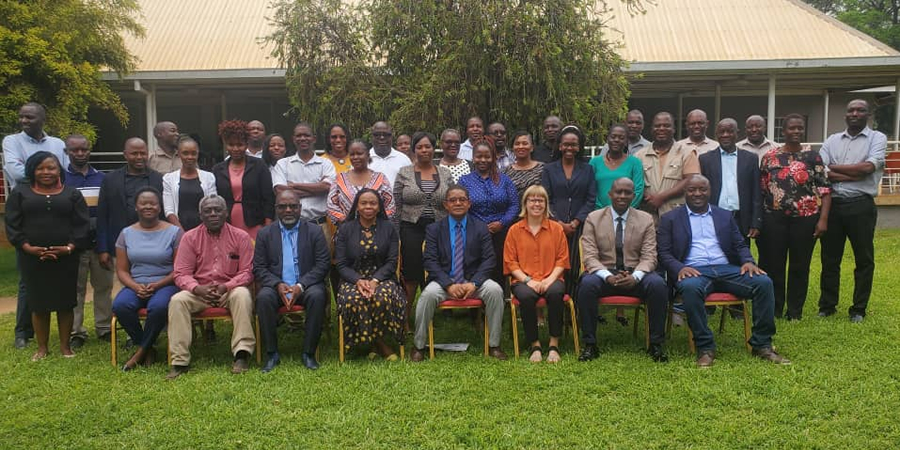
The Food and Agriculture Organization of the United Nations (FAO), in collaboration with Zimbabwe's Ministry of Lands, Agriculture, Fisheries, Water and Rural Development and the Ministry of Environment, Climate and Wildlife, recently facilitated a hands-on training on greenhouse gas (GHG) inventory, as well as mitigation and adaptation measures in the livestock sector in Zimbabwe.
This initiative is part of the FAO Flexible Voluntary Contributions (FVC) sub-programme, which aims to support member states in raising ambition in national climate actions by integrating livestock-specific mitigation and adaptation interventions.
Bringing together 45 national experts, the workshop enhanced participants' understanding of climate-smart livestock practices. It improved their ability to identify mitigation and adaptation options while strengthening the capacity of Zimbabwe's technical experts in preparing and reporting livestock emissions in GHG inventories using the Tier 2 methodology of the Intergovernmental Panel on Climate Change (IPCC) Guidelines.
The workshop also provided participants with hands-on skills to assess GHG emissions from livestock and identify options for methane mitigation.
"The training comes at the right time as our livestock struggles with the impacts of climate change," said Andrew Chamisa, director of the Department of Livestock Research in the Agriculture Ministry. "The training increased the capacities of national experts and professionals in analysing our livestock production systems and integrating livestock into national climate action. Ultimately, the workshop contributed to Zimbabwe's efforts to achieve a low-emission, climate-resilient livestock sector."
This hands-on training was a follow-up on key recommendations from the previous phase to strengthen the capacity of institutions, extension services, and key stakeholders to address climate change in the livestock sector. The first phase was held in November 2023 in Zimbabwe.
The second phase of the hands-on training was designed to equip the participants with the necessary skills to improve their contributions to the national reporting requirements under the Enhanced Transparency Framework (ETF) of the Paris Agreement.
"FAO applauds actions taken by the Government of Zimbabwe to enhance national climate actions through methane mitigation and increasing resilience of the livestock systems as well as enhancing the productivity and incomes of farmers and producers," said FAO Livestock Policy Officer Aimable Uwizeye. "Together, we can ensure a better future for the livestock sector with better production, better nutrition, a better environment, and a better life – leaving no one behind."
The workshop included a field visit to Chinhamo's beef cattle breeding farm.
Participants observed climate-smart livestock production and discussed the practice's contribution to reducing GHG emissions and increasing resilience to climate change.
Chinhamo produces Simmental beef cattle for breeding and meat. The farmer preserves cultivated and natural forages through baled hay, and corn and sorghum silage. He implements feeding practices according to the animal's needs and adopts breeding cycles based on the seasons to improve weaning weights and reduce mortality.
At the end of the workshop, participants reflected on their learning outcomes and highlighted the need for improved livestock activity data to assess GHG emissions from the sector properly. They understood the need to enhance data collection to reflect better local livestock production practices in the GHG inventory for livestock, FAO said. Specific GHG mitigation strategies for the livestock sector can be developed when moving to a higher-tier GHG inventory methodology.
Participants further highlighted the need for continued education and raising awareness of multiple stakeholders on the important role of livestock in climate change and the opportunities to provide climate solutions while improving national livestock production.
FAO will continue to work with the government of Zimbabwe to enhance livestock climate action and assess GHG emissions and mitigation potential of the livestock sector using the FAO Global Livestock Environmental Assessment Model (GLEAM).
- FAO


