


October 22, 2025
EU confronts lasting challenges as US-China soybean rivalry redefines global trade
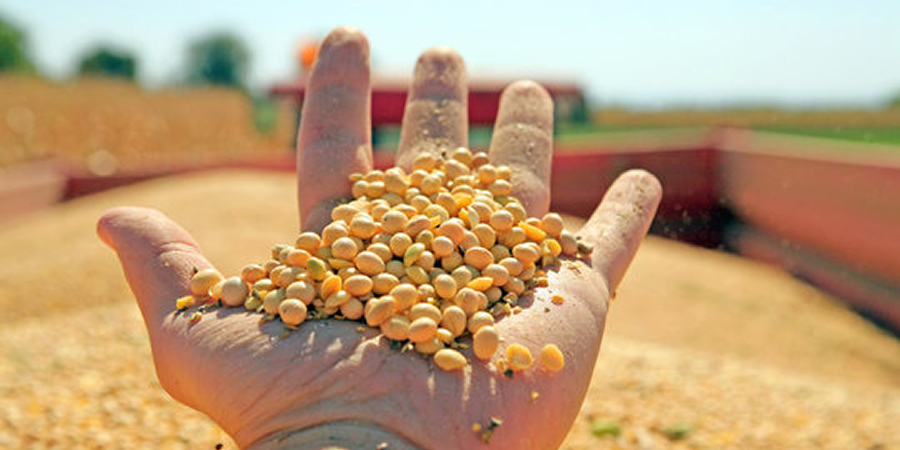
China's suspension of US soybean imports may send a wave of cheap supplies to Europe, but the short-term benefit could deepen the bloc's long-term reliance on a narrow set of exporters.
As the US-China trade war escalates, Beijing has cut off imports of American soybeans, shifting its sourcing to Brazil. The move has left US soy growers – many based in Republican strongholds – with a massive surplus, as exports to China collapsed from €10 billion (US$11.63 billion) in 2024 to zero in 2025.
Under the new trade framework agreement with Washington, Brussels committed to facilitating imports of American soybeans. The current US oversupply allows the EU to do so at low cost – much as it did in 2018, when China first hit back against US steel tariffs by targeting American soybeans.
The EU is heavily dependent on soybean imports for its livestock industry. Between July 2024 and June 2025, it has bought 14.5 million tonnes of soybeans and 20.1 million tonnes of soybean meal (a by-product used for animal feed), mostly from the US and Brazil.
But while European farmers may benefit from cheaper soy now, the trend "can become a bad move in the long run," said Olivier Antoine, a French researcher and author of a book on the geopolitics of soybeans.
Lower import prices are likely to hurt the EU soybean sector, which already struggles to compete internationally, with yields that remain far below those of global competitors.
In France, for example, "soybean production averages one tonne per hectare, compared with 3.5 tonnes per hectare in Brazil," Antoine noted.
While Beijing has shown it "can say no to the US," the bloc remains "structurally dependent" on a handful of soybean exporters in North and Latin America, Antoine argued, pointing to the bloc's meat-heavy diet built on imported soy.
"Europe's meat consumption simply wouldn't exist without soy," he said.
Europe's reliance on soybeans dates back to the post-Second World War era, when imports – first from the US, later from Brazil – helped fuel the continent's expanding livestock industry.
China is also heavily dependent on soy, purchasing 60% of global production to feed its livestock sector. But Beijing "has transformed a structural weakness into a geopolitical strength," Antoine explained.
The penetration of Chinese investments in Latin America is a key factor. In the aftermath of the 2018 crisis, China not only diversified its soybean imports but also "expanded the New Silk Roads into South America," investing in key companies "at every stage of the supply chain." As a result, "they now wield considerable influence in the industry."
To create jobs and


