


October 18, 2024
Kemin's Dr. Justin Tan: Promoting a brand in the digital era
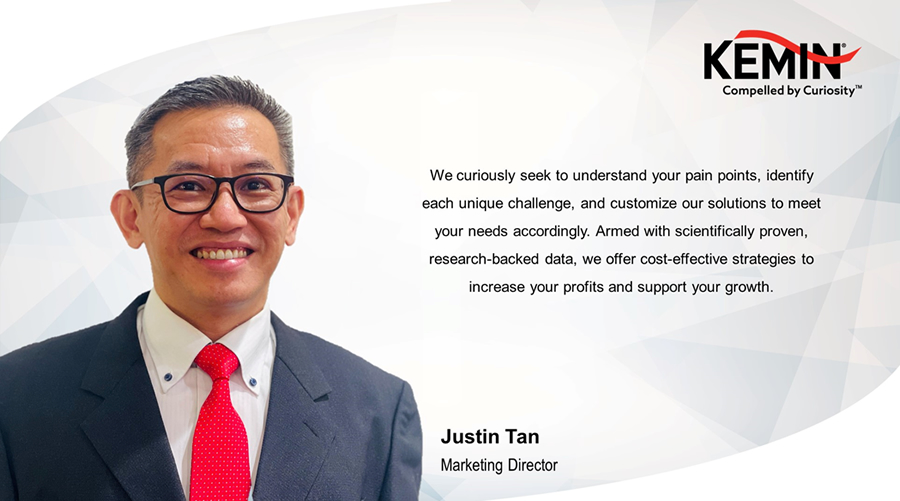
Kemin Animal Nutrition and Health - Asia Pacific sees Dr. Justin Tan, its marketing director in the region, as "instrumental in driving Kemin Asia's marketing initiatives to new heights".
Considered an esteemed leader known for his strategic vision and innovative approach, Dr. Tan plays a crucial role in transforming Kemin Asia's business model "from product-centric to customer-centric" through "data-driven, targeted customer segmentation, and solution-based marketing tactics to foster stronger client relationships," Kemin said.
eFeedLink speaks to Dr. Tan as he unveils the strategies and approaches to drive Kemin's projection of its brand.
Kemin operates in a competitive market. What marketing strategies are introduced to differentiate Kemin's products and services from competitors?
Dr. Justin Tan: We would focus on a multifaceted marketing strategy emphasising storytelling and brand consistency to elevate Kemin's market position in a competitive environment. This approach ensures a coherent image across all platforms, leverages our local presence, and fosters deeper customer connections. Through storytelling, Kemin also communicates the benefits of a partnership with us and showcases the strengths of our extensive solutions portfolio.
At Kemin, we consistently stay ahead of market trends and maintain relevance in our solutions. Our commitment to innovation and adaptability in our products and services set us apart as leaders in many fields of study.
In addition to our focus on innovation, we stay relevant to our partners by understanding their pain points and developing targeted, holistic solutions. Kemin's culture of actively seeking feedback from our partners drives the innovation of solutions and services to align with their needs.
Close collaboration with our partners and sales teams is essential for creating a seamless customer journey. Furthermore, we leverage CRM data for targeted segmentation and personalised marketing efforts. This strategic approach aims to enhance customer satisfaction and work towards solidifying our position as a trusted partner.
To stay competitive in the market, we are also unwavering in our commitment to optimising the cost structures of our solutions, ensuring the long-term sustainability and mutual cost-efficiency of both Kemin and our partners' businesses.
In summary, Kemin's marketing strategy, anchored in storytelling and brand consistency, elevates its market position by fostering deep customer connections and showcasing the strengths of its solutions. By leading in innovation and understanding our partners' needs, Kemin ensures relevance and industry leadership. Through close collaboration and targeted marketing, the customer experience is enhanced, establishing Kemin as a trusted partner. Additionally, optimising cost structures guarantees sustainability and competitiveness, securing Kemin's edge in the market.
With digital transformation reshaping industries, how do you intend to leverage digital marketing channels and technologies to enhance Kemin's market reach and customer engagement?
Dr. Justin Tan: Digital transformation is paramount in engaging customers and the sales team. By educating customers through digital platforms before they enter the sales funnel, we cultivate a well-informed customer base. Kemin achieves this by integrating our marketing efforts across all channels, ensuring a consistent and impactful presence. This includes crafting compelling content for social media, personalised email campaigns, and optimised search engines to boost visibility and communication.
By leveraging advanced digital technologies to analyse data from our CRM systems, we ensure that every customer interaction is meticulously tailored and highly personalised. This strategic approach not only enhances the clarity and impact of our digital marketing efforts but also significantly improves the overall customer experience.
We focus on digital customer engagement by developing innovative ways to serve and engage customers online. This includes webinars, technical training, social media campaigns, videos, and promotions. These efforts are designed to strengthen customer interactions and continue our digital transformation.
In essence, a robust digital presence and advanced marketing strategies are vital in today's competitive landscape. They enable businesses to connect deeply with their audience, build lasting brand awareness, and drive meaningful engagement.
Moreover, digital marketing empowers businesses to adapt swiftly to evolving audience preferences, reaching customers through diverse channels and devices. By continually refining our digital strategies, Kemin strives to maximise its online impact, drive sustainable growth, and achieve long-term success in the digital era.
To enhance brand advocacy and market credibility, what strategies do you propose to deepen Kemin's engagement with key stakeholders, including suppliers, distributors, and industry influencers?
Dr. Justin Tan: Engaging stakeholders effectively is crucial for the success of any project. At the heart of this process lies a variety of strategies and methods designed to gather valuable feedback and foster meaningful interactions.
Surveys, for instance, allow us to collect insights from stakeholders, while focus groups and interviews provide a more intimate setting for understanding specific concerns and perspectives. Meetings and collaborative events with key opinion leaders and our partners offer opportunities for face-to-face engagement, enabling stakeholders to ask questions and share their views directly. Workshops and advisory panels further enrich this dialogue by inviting stakeholders to contribute to the decision-making process and provide guidance on project impacts.
Designing and implementing engagement activities requires careful coordination with our communication plan. Monitoring engagement activities, integrating feedback, and adapting the plan are essential for continuous improvement. By tracking metrics such as survey response rates, social media engagement, and event attendance, we can refine our approach and ensure that our stakeholder engagement efforts remain effective and impactful.
In essence, a mix of digital and traditional engagement methods enables Kemin to build strong relationships with our stakeholders and drive project success. We focus on collaborative partnerships, transparent communication, educational initiatives and corporate social responsibility collaborations to deepen Kemin's engagement with key stakeholders to enhance brand advocacy and market credibility. Kemin's engagement strategy with our stakeholders not only enhances stakeholder satisfaction but also positions us as a responsive and innovative organisation in the eyes of our stakeholders.
Sustainability is increasingly important to consumers. How would you integrate sustainability initiatives into Kemin's marketing strategy to resonate with eco-conscious customers and align with corporate values?
Dr. Justin Tan: We recognise the growing importance of sustainability to consumers and the need to integrate it into our marketing strategy. Kemin's commitment to reducing our carbon footprint and safeguarding natural resources is reflected in our ongoing sustainability initiatives.
Internally, we support a clean-energy transformation at our locations to minimise environmental impact. We also promote more sustainable solutions for water use and contribute to sustainability efforts within our supply chain. We are focused on identifying and reducing our waste streams globally and collaborating with customers and suppliers to find low-waste packaging solutions and reach net zero greenhouse gas emissions by 2050.
Kemin's integration of Life Cycle Assessment (LCA) initiatives is a strategic step towards evaluating and improving the environmental impact of our products from production to disposal. This approach promotes transparency and continuous improvement, aligning with our sustainability goals and demonstrating our commitment to environmental stewardship.
Externally, we are reducing waste at Kemin locations worldwide by replacing single-use plastics with more sustainable options. We support and contribute to the sustainability efforts of our customers and work with relevant organisations to drive change.
We engage with eco-conscious customers through transparent communication about our shared sustainability goals and progress. Kemin also organises educational campaigns and seminars to exchange knowledge about sustainability and how Kemin's solutions may contribute to a healthier planet with our partners. These initiatives align with Kemin's corporate values, building trust and loyalty among eco-conscious customers.
What do you anticipate will be the biggest challenges and opportunities for Kemin's marketing strategy in the next two to three years?
Dr. Justin Tan: Looking ahead to the next two to three years, we anticipate a landscape filled with both significant challenges and promising opportunities for our marketing strategy.
Staying abreast of rapidly changing consumer behaviors will be challenging, especially in a rapidly evolving digital landscape. Greater investments in analytical tools can help Kemin stay ahead and align with industry trends. There will also be challenges in differentiating Kemin's brand in a crowded digital space. Highlighting Kemin's unique selling propositions and delivering personalised customer experiences will be vital for Kemin to keep a competitive edge in the market.
Kemin's recent rebranding leaves many opportunities for more customer-centric events, branding initiatives for business alignment and knowledge sharing. Additionally, leveraging Kemin's scientific expertise and continuing to innovate will be necessary for driving transformative opportunities in a growing marketplace.
With an increasing global emphasis on sustainability, Kemin can capitalise on this societal shift by aligning more of its products and services with a focus on sustainably transforming lives. We also see significant opportunities for further development in customer-facing digital transformation initiatives to enhance customer interactions.
- eFeedLink


