


CORPORATE NEWS
COMMITMENT TO AQUACULTURE INDUSTRY
Alltech Coppens Aqua Centre becomes animal feed maker's 4th bioscience centre

Alltech has announced that its world-class Alltech Coppens Aqua Centre (ACAC) in the Netherlands will become an Alltech bioscience centre.
For more than 15 years, the ACAC has carried out practical and applicable research within the field of aquaculture. In 2017, US-based Alltech invested heavily in the facility, which will now become its fourth bioscience centre. This centre will be home to an expanded team of aqua researchers dedicated to quality, innovation and the development of new applications in aqua feed.
As part of the ACAC's progression to a bioscience centre, Dr. Philip Lyons will be taking on a new role as a global aquaculture research manager to help coordinate research activities at the new centre with Alltech's ever-expanding global research programmes.
"Alltech's bioscience centres are laboratories that maintain close ties to nearby universities to maximise interaction with academic researchers, share equipment and allow students in Master of Science and Ph.D. programmes to work in an industry lab setting," explained Dr. Karl Dawson, vice president and chief scientific officer at Alltech.
"There are more than 120 scientists working in our bioscience centres around the world. By becoming a bioscience centre, the ACAC allows for Alltech to address, research and solve aquaculture industry issues. The centre will interact directly with many of our 28 research alliances and will focus on activities with the six alliances who directly work in aquaculture."
Research and development represent the cornerstone of business at Alltech Coppens, and being adaptable to market trends and pursuing innovation in research positions Alltech Coppens to be ready with diets to fit every farming situation.
"Key aquaculture research areas include developing novel tools for evaluating nutritional responses and defining strategies for utilizing alternative feed ingredients and nutrients," Dawson said.
"We are also carrying out research into nutritional approaches for enhancing disease resistance and health as well as optimising mineral nutrition and enhancing fat digestibility. We are also responding to market demand for new strategies for improving product quality and minimizing the environmental impact of aquaculture in general", he added.
In addition to supporting and evaluating Alltech Coppens feed formulation initiatives, the new bioscience centre will actively focus on beneficially altering fat digestion, optimising mineral nutrition, and developing novel nutritional approaches for reinforcing gut health and preserving product quality while minimising the environmental impacts of aquaculture. It is expected that this centre will be the site for both basic and applied research as well as serving as a site for graduate student and intern training activities.
As Alltech's newest bioscience centre, the ACAC joins the ranks of the Alltech European Bioscience Centre in Dunboyne, Ireland; the Alltech Centre for Animal Nutrigenomics and Applied Animal Nutrition in the US; and the Alliance Laboratory in Beijing, China.
PERFORMANCE, PROFITABILITY, SUSTAINABILITY
AB Vista research explores 'triple benefit' of phytase for tilapia producers
Two new studies to be presented by AB Vista at the Latin American & Caribbean Aquaculture (LACQUA18) Congress late this month demonstrate that phytase offers tilapia producers a threefold benefit, affecting performance, profitability and sustainability.
The trials, conducted in partnership with the Federal University of Parana in Brazil, showed that the addition of 2,000 FTU/kg of Quantum Blue phytase to tilapia diets resulted in improvements across nutrient digestibility and retention, as well as mineral status and feed conversion rates.
The studies also indicated that such performance benefits impacted positively on feed costs and environmental welfare which, as Alexandre Barbosa de Brito, AB Vista LAM technical manager explained, is of significant interest to producers:
"Strategies for reducing feed costs - which can account for 60% of total production expenditure—and minimising ecological damage are becoming increasingly important in the fish industry. The effect of phytase represents benefits for both: the improved mineral status spares 0.25% of available phosphorus, reducing production costs, whilst the increased retention of nutrients results in lower levels of water pollution", De Brito said.
Outlining the related mode of action of the enzyme, De Brito further explained:
"Quantum Blue breaks down the phytate found in plant-based ingredients, releasing phosphorus that otherwise would not be available. In addition, calcium ions are released, which are usually linked to the phytate molecule—and therefore are unavailable for absorption.
"In addition, it was demonstrated throughout these recent trials that phytate affects endogenous secretions by the animal, and reduces the digestibility of various nutrients in the intestinal lumen of the animals, which can be attenuated by the addition of phytase."
The research will be presented during the 4 p.m. session on Oct. 25 at LACQUA, which will take place in Colombia from October 23 to 26.
UK-based AB Vista is an animal nutrition technology company whose products and services span the poultry, swine, ruminant and aquaculture sectors. It has regional offices in the US, Brazil, Singapore, Spain, India, China, Germany and Finland.
AB Vista is part of AB Agri, the agricultural division of Associated British Foods, one of Europe's largest food & retail companies.
IN GUAYAQUIL, ECUADOR
Cargill inaugurates 'most modern' feed plant for shrimp
Cargill formally opened what it describes as the world's most modern shrimp feed plant in Guayaquil, Ecuador, on Oct. 11, creating the potential for significant growth in the country's aquaculture sector.
Cargill's investment of around US$65 million creates 150 new jobs and enables the creation of 500 related positions—boosting the local economy and bringing nutrition technology and services to the shrimp industry.
With this plant, Cargill will be producing 165,000 tonnes per year, around 20% of the 800,000 tonnes of feed that the Ecuadorian market demands currently. Ecuador is the world's fourth-largest shrimp producer, according to Global Aquaculture Alliance data.
"The plant we are opening…offers the most leading-edge technology currently available for the production of shrimp feed", said Ángel Gómez, general director of Cargill Aqua Nutrition for Latin America North. "This helps Cargill deliver on its promise of guaranteeing the best production and service to our customers".
The Vice President of Ecuador, Mrs. María Alejandra Vicuña, attended the inauguration ceremony, formally kicking off production of two lines of feed, one under the Purina brand, the other under Aquaxcel.
"Cargill's investment in Ecuador also allows us to help the country and its people thrive through the production of goods and services," added Gómez. "Today we are showing our commitment to supporting the development of Ecuador's shrimp industry by maximizing the country's export potential."
Cargill has over 50 years' experience in global feed production, with operations in 40 countries.
28 DRYER CUSTOMERS PARTICIPATE
Geelen Counterflow holds 'dryer & cooler' training in Netherlands
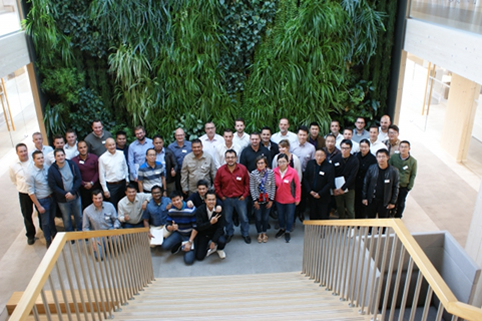
In early October a record number of 28 dryer customers from around the world participated in Geelen Counterflow's Dryer & Cooler Training 2018. Dryer customers from Ecuador, Peru, Japan, China, Thailand, Indonesia, Nigeria, Denmark, France, Serbia and Poland learned how to optimise their counterflow dryers for extruded aquafeed for best efficiency, uniformity and lifetime.
This was the 11th year Geelen Counterflow organised this training. During the three-day training, participants go back to school to learn about the thermodynamics of drying and cooling, relative humidity, dew point temperatures, wet bulb temperatures, mollier diagrams, enthalpy, sorption isotherms, diffusion coefficients, radiation and convection, among others.
The training days always start with theory, and in the afternoon participants follow four different workshops about dryer process calculations, dryer controls, air systems and process measurement. In addition to learning about the thermodynamics, subjects include sanitation, condensation control and sustainability.
Evening programmes are filled with social activities. There are also plenty of networking opportunities with colleagues from around the world. Over the years more than 200 dryer customers have followed this course. The next Dryer Training for Geelen Counterflow dryer customers will take place in Haelen, the Netherlands, in October 2019.
AVAILABLE IN MEXICO, THAILAND
INVE Aquaculture introduces new plant-based shrimp hatchery product

INVE Aquaculture has unveiled its latest product, a plant-based water conditioner that protects shrimp larvae and post-larvae against stress and health threats.
Sanocare® FIT is a phytochemical mixture that has been engineered to enhance (post)-larval robustness during culture, and to suppress vibrio levels during transportation of post-larvae from the hatchery to the nursery or farm.
As health booster during the hatchery cycle, Sanocare® FIT stimulates the production of heat shock proteins in L. vannamei larvae and post-larvae, INVE Aquaculture said. These proteins act as a first line of defense mechanism and constitute one of the most important survival strategies of cold-blooded animals when they are exposed to abiotic stress and pathogenic micro-organisms.
INVE Aquaculture believes that (post-)larval quality and robustness lie at the core of successful shrimp hatcheries worldwide.
It added that during extensive stress tests, considerably higher survival of L. vannamei post-larvae was observed when using Sanocare® FIT during the culture.
"The application of Sanocare® FIT during hatchery trials at Fitmar (Mexico) resulted in remarkably higher survival and growth at the end of the grow-out cycle. This first experience convinces me to incorporate Sanocare® FIT in Fitmar's standard hatchery protocol", said Fernando Marino Pinzón Miranda of Fitmar Proveedora de Larvas, SA De CV – Mexico.
As vibrio suppressor during transportation, application of Sanocare® FIT in the transportation water notably controls the vibrio load in the water and in L. vannamei post-larvae. The use of Sanocare® FIT during transport results in a 100-time lower V. parahaemolyticus count in shrimp post-larvae as compared with transport without Sanocare® FIT.
"The application of Sanocare® FIT during transport prevents vibrio-induced stress in shrimp post-larvae and thus gives them the best start upon stocking in the ponds for further growth", said Eddy Naessens, INVE Aquaculture's product manager of shrimp hatcheries.
Sanocare® FIT can be used directly in the culture water during the hatchery cycle of shrimp, thereby increasing the robustness of the animals. Furthermore, Sanocare® FIT can be added directly to the transportation water to suppress the vibrio levels during transfer of post-larvae from the hatchery to the nursery or farm.
The product is currently available in Mexico and Thailand.
2 AQUA TECH SUPPORT MANAGERS NAMED
Lallemand Animal Nutrition reinforces global aquaculture team
Two new aquaculture experts have joined the Lallemand Animal Nutrition team to support a rapidly growing market, it was announced. François Cellier and Khuong Duy Nguyen have both been appointed as aquaculture technical support managers, based in France and Vietnam, respectively.
Cellier holds a MEA in aquaculture from Cnam-Intechmer in Montpellier, France. Prior to this he obtained a professional license in aquaculture technics and farm management in Quimper and Sète, France. He has practical experience in aquaculture production and using/testing technologies across species including shrimps, fish and shellfish in Asia, Europe and Oceania. He will provide technical and marketing support on tropical aquaculture globally.
Nguyen holds a master's degree in aquaculture majoring in aquaculture health management from the Laboratory for Aquaculture and Artemia Reference Center, Faculty of Bio-Engineering, Ghent University, Belgium. He has studied aquatic pathobiology at Can Tho University in Vietnam. NGUYEN brings valuable experience in shrimp farming research, especially in bioremediation and health management. He will oversee shrimp research and development trials and contribute to developing the Lallemand Animal Nutrition aquaculture business in Vietnam.
Lallemand Animal Nutrition aquaculture activities took off in 2009 with the first and only probiotic authorized by the EU as a feed additive in fish and shrimp feeding. Over the past decade, the company has grown its technical expertise and commercial presence around Europe, Asia, Middle East and Americas with strong R&D commitments.
Lallemand aquaculture solutions include functional ingredients such as probiotics and yeast derivatives, as well as bioremediation solutions for ponds.
WORLD'S LARGEST CLOSED CAGE
Cermaq begins new closed containment system in Horsvågen
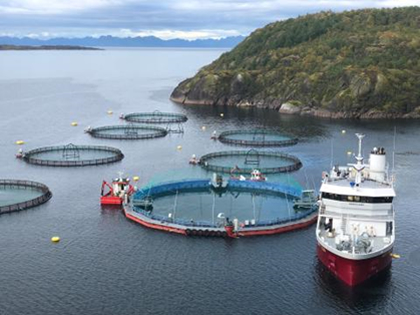
Leading salmon producer Cermaq has started production at its new closed containment system in Horsvågen, Norway, as it pursues to lead in technology development that contributes to sustainable food production.
In late September, Cermaq transferred smolt into the new facility to signal the start of operations in the new closed containment system, the company's first step toward developing closed farming technology.
The closed containment system is built to provide maximum biosecurity and fish welfare. Water is pumped into the pen from 13-meter depth, preventing sea lice from entering the pen. The tarp wall is made of strong and flexible composite, which minimizes escape risk. This is the world's largest closed cage using flexible walls.
"We have been working on this project for a long time, and we are happy that we now are ready to put fish into the pen", said Frode Holmvaag, manager of Seawater Nordland in Cermaq Norway.
"This is new technology to us, and it will be very interesting to follow the growth and development of the fish in the new containment system".
The new closed containment system, which has been constructed in partnership with Botngaard AS (which has long experience with constructions for the aquaculture industry) and Serge Ferrari, is certified for locations with a significant wave height of two meters, and can be used at most existing sea sites.
"The delivery and start-up of the closed cage in Horsvågen mark a milestone for Botngaard and our development program for closed cages. We will now work together with Cermaq and our industry partners to further improve the technology and daily operations of the cage", said Magnus Stendal, system delivery manager in Botngaard.
Serge Ferrari, world leader in innovative flexible materials, has developed the membrane wall that makes the containment system flexible and safe.
"After six years spent on R&D on various topics such as non-toxic formulation, as little elongation as possible and excellent lifetime, Serge Ferrari has come up with a new membrane dedicated to flexible closed cages: our Biobrane Aqua 2050. This highly secure fabric gives security against fish escape, more than ever", said Gabriel Faysse, market manager environment and energy at Serge Ferrari.
CERMAQ PHOTO
NEW CEO IN NORWAY NAMED
Nordic Aquafarms founder takes helm of US operations

Nordic Aquafarms CEO and founder Erik Heim has moved to Maine, USA, as of October 1 to head Nordic Aquafarms in the US, where it is developing one of the largest RAS (recirculating aquaculture systems) farms in the world. The US is the single largest consumer market for salmon.
"We have been through an amazing journey in building up Nordic Aquafarms in the Nordics. Now we must ensure good execution of our corporate plans and our large undertaking in the US. I am looking forward to dedicating my time to establishing Nordic Aquafarms in the US and working with Bernt Olav (Røttingsnes)", said Erik Heim, referring to the new CEO in Norway.
Heim is taking charge of US operations as president of Nordic Aquafarms Inc., a 100% owned subsidiary of Nordic Aquafarms AS in Norway.
Røttingsnes took over the helm of Nordic Aquafarms Norway, also on Oct. 1. He was previously CEO in Seagarden Group AS where, over the last five years, he has developed Seagarden to become a leading supplier of marine ingredients. He holds a Master of Business and Economics degree (Siviløkonom) from Norwegian Business School.
"I am looking forward to start working with the highly competent team in Nordic Aquafarms to fulfill the company's strategy and to position Nordic Aquafarms as a leading player in the development of land-based salmon farming", Røttingsnes said.
The company's board chairman, Lars-Henrik Røren, said the strengthened top management team now in place had the capacity to execute Nordic Aquafarms' ambitious growth strategy on both sides of the Atlantic. "We can now move forward with the confidence that we will meet the expectations of shareholders, authorities and the capital markets", he added.
Nordic Aquafarms is also starting up Norway's first commercial land-based salmon farm in Norway, Fredrikstad Seafoods, at the end of this year. Nordic Aquafarms is likewise a majority shareholder in Sashimi Royal, the world´s largest land-based producer of Yellowtail Kingfish.
The company has significant expansion plans in Norway and the US.
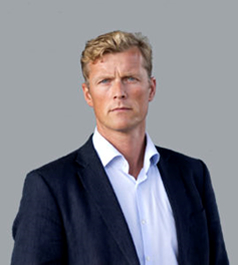
Bernt Olav Røttingsnes, new CEO in Norway
Nordic Aquafarms Photo: Haakon Nordvik


