


October 15, 2024
New Zealand aquaculture leaders call for regulatory reform and investment
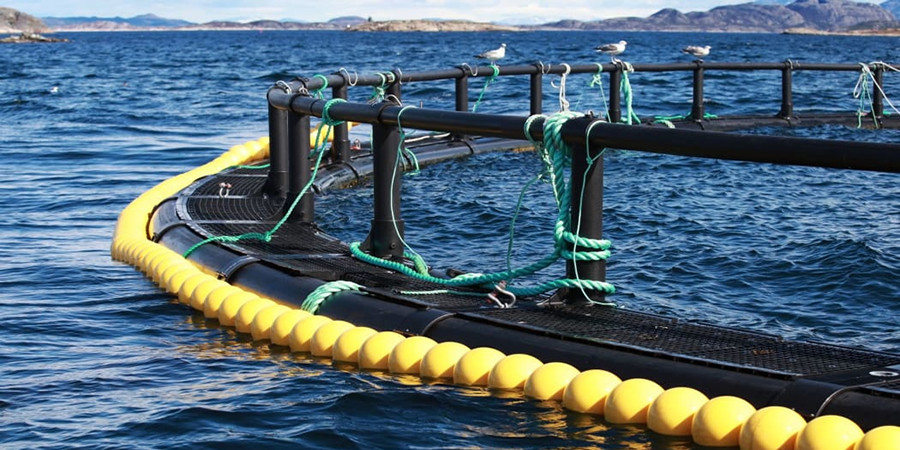
New Zealand's aquaculture sector is facing challenges in its growth, hindered by bureaucracy and limited access to the marine estate, according to industry leaders, as the sector works towards achieving the government's target of NZD 3 billion (US$1.8 billion) in annual sales over the next decade, RNZ News reported.
Speaking at the Aquaculture New Zealand conference, Carl Carrington, CEO of NZ King Salmon, highlighted the vast potential for growth. He pointed out that only 0.01% of New Zealand's 430-million-hectare marine economic zone is currently farmed.
Carrington underscored the difficulties in accessing marine areas for farming. He cited the company's Blue Endeavour project, which aims to farm salmon in the Cook Strait, as an example. The project took nine years and NZD 9 million (US$5.4 million) to navigate the consenting process.
The aquaculture industry currently generates NZD 760 million (US$462 million) in revenue annually, largely from the farming of mussels, salmon, and oysters. Around three-quarters of this revenue comes from export earnings. Carrington noted that despite this, the sector's contribution remains minimal compared to its potential.
He emphasised the profitability of salmon farming, stating that it generates returns 16,000 times higher than sheep and beef farming per hectare. However, he also pointed out that the production levels of the salmon sector have seen little movement over the past decade.
The Blue Endeavour project is expected to play a significant role in achieving the sector's NZD 3 billion (US$1.8 billion) goal. The 12-hectare farm aims to produce 10,000 tonnes of salmon per year, potentially contributing an estimated NZD 350 million (US$213 million) in export earnings. This would more than double the company's current production.
The pilot farm, consisting of two 55m diameter pens, is expected to be operational by mid-next year, with salmon harvests projected to begin in 2030.
Carrington acknowledged that the government had taken steps to reduce regulatory hurdles. He presented Minister for Oceans and Fisheries, Shane Jones, with the NZ King Salmon “Commercial Thinking Belt" for his efforts in addressing regulatory challenges.
Jones was commended for his work on the Resource Management (Extended Duration of Coastal Permits for Marine Farms) Amendment Bill. Passed in August, the bill granted New Zealand's 1,200 marine farms an additional 20 years on their permits. Carrington noted that this move had already saved NZ King Salmon close to NZD 2 million (US$1.2 million).
In response, Jones acknowledged the government's efforts to address the bureaucracy but highlighted the need for external investment to reach the NZD 3 billion (US$1.8 billion) target. He noted that with the government's current fiscal position, funding was unlikely to come from public sources.
Jones argued that industries like aquaculture, mining, and infrastructure required a pragmatic approach to financing. He stressed the importance of finding mutually beneficial solutions to secure capital for large-scale marine farming projects.
Jones also warned that if New Zealand failed to generate consistent economic surpluses, the country risked becoming impoverished. He will be travelling to Singapore later this month, where there is interest from stakeholders and investors in New Zealand's food sector.
The minister also touched on the need to balance environmental concerns with development. He suggested that New Zealand's identity should not be tied solely to environmental preservation and that marine farming could provide an opportunity for both environmental stewardship and economic growth.
Volker Kuntzsch, CEO of Cawthron Institute, and Mark Piper, CEO of Plant and Food, shared ambitious plans to grow the aquaculture industry to NZD 10 billion (US$6.09 billion) over the next decade.
Kuntzsch highlighted the potential for science and innovation to drive growth. He emphasised that value-added growth wasn't just about farming larger areas or shifting from commodity to niche markets. He noted the importance of New Zealand's capabilities in science, with Cawthron employing 280 specialists in fields ranging from micro-algae ecology to blue tech.
Kuntzsch believes that attracting significant investment—both local and international—will be essential to reaching the NZD 10 billion (US$6.09 billion) goal. He suggested that an annual investment of NZD 100 million (US$60.9 million) in aquaculture-related science and innovation would be sufficient to drive growth, noting that Fonterra spends a similar amount on research.
Nelson mayor Nick Smith echoed the importance of the aquaculture sector to the region. Nelson has faced its toughest winter in 20 years, and the region's economy has struggled, ranking at the bottom of ASB's regional economic scoreboard for three consecutive quarters.
Smith argued that export-led growth, particularly from aquaculture, was key to lifting the region out of its economic challenges. He called on both central and local government to create a conducive regulatory environment, be open to international investment, and support the development of infrastructure and training in the sector.
He emphasised that the future of Nelson and New Zealand is closely tied to the growth prospects of the aquaculture industry.
- RNZ News


