


October 12, 2022
Kemin's Science Optimized Savings Programme: An effective way of managing feed costs in uncertain markets (Part 1)
An eFeedLink Exclusive Talk
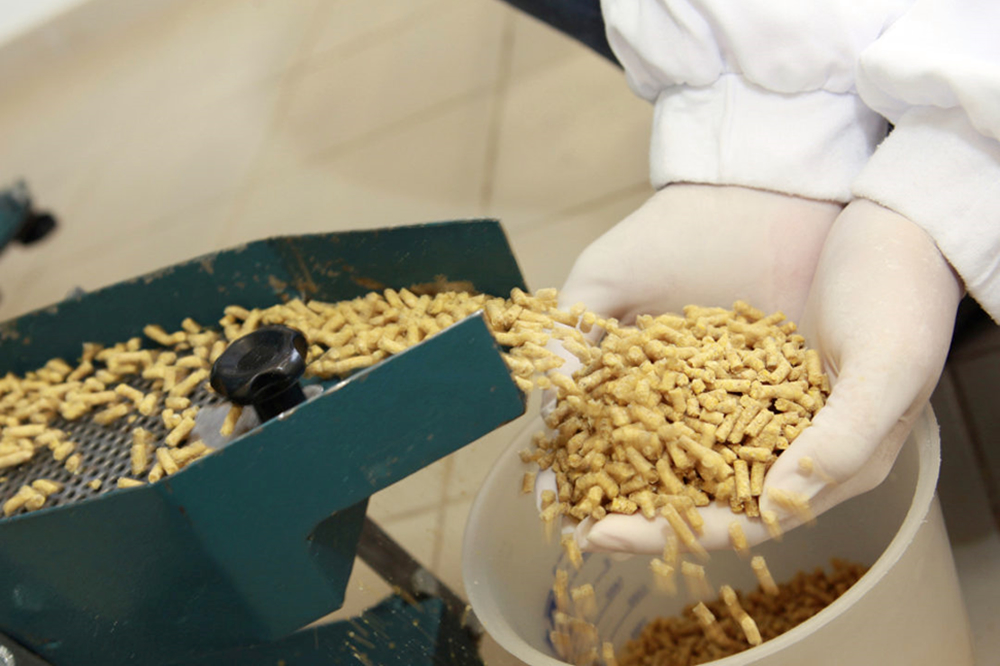
Supply chain disruptions have exacerbated a perplexing situation for global feed, and in the past years, the COVID-19 pandemic and the war in Ukraine have only rattled international trade further.
High feed cost is increasingly the recurring theme of the challenges faced by feed and livestock producers. And while the world fears a food crisis with the ongoing conflict in Eastern Europe, several countries also raised the export barriers to control supply, much to the dismay of local producers struggling with costlier feed costs.
In the context of keeping production costs in check, how does Kemin's Science Optimized Savings (SOS) programme benefits producers in the Asia-Pacific?
Representatives from Kemin Animal Nutrition and Health, Asia Pacific — Alex Wu, head of animal nutrition; Kin Ken Chew, head of feed quality and technology; and product manager Hung Tran — speak to eFeedLink about how SOS can help customers to navigate the various complexities in feed production, ensuring a process that is both cost-saving and sustainable.
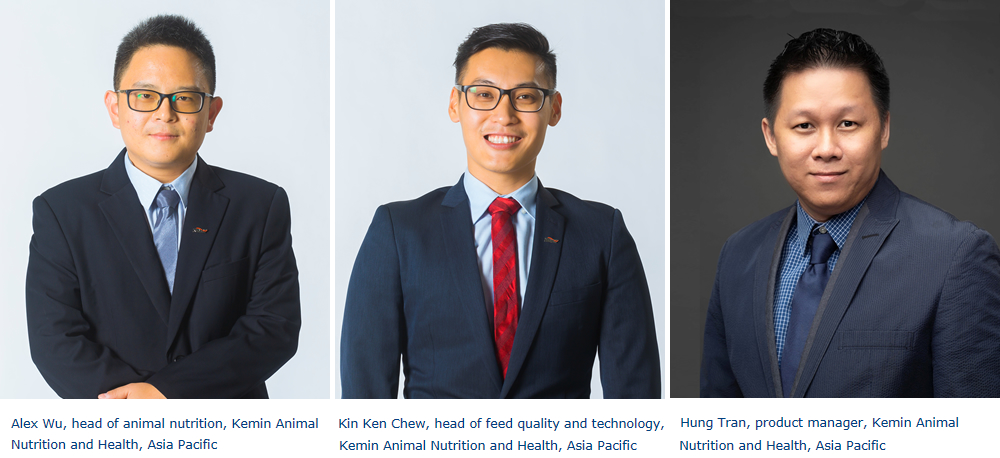
Alex Wu: Basically, SOS is a science-optimised savings programme. It started last year as the cost of raw materials started soaring, and it has exacerbated this year due to many factors, including the war in Ukraine, disruption in the supply chain and heightened fuel costs. So we thought we should provide a continuation of the SOS programme in order to help our customers cope with these difficult times and protect their margins.
The SOS programme aims to help livestock producers minimise feed costs while supporting optimal animal performance. The initial programme launched last year focuses on feed formulation cost optimisation with the feed enzyme technology – KEMZYME™ and bio-emulsifier - LYSOFORTE™.
However, when we stepped back and looked at the bigger picture, feed cost also comprises the feed production cost. This was why we revamped our programme to SOS 2.0 this year to include the feed milling efficiency improvement programme, millSMART™, to provide our customers with a comprehensive solution to optimise the savings not just from the feed formulation but also from the feed production cost perspective.
How would SOS help customers to cope with the various challenges in feed production and formulation, considering factors such as high feed costs, tight feed supply and loss of profitability?
Kin Ken Chew: As Alex has briefly shared, the SOS 2.0 programme focuses on two key areas to protect our customers' shrinking profit: feed production and feed formulation costs.
This year, feed production also significantly impacts the already high feed cost due to the headwinds of workforce shortages and escalation in energy costs. Kemin's millSMART programme could help to alleviate this high feed cost impact by improving the milling efficiency. With the adoption of the millSMART programme, the feed millers can achieve greater throughput and lower energy consumption for pelleting, which would help to reduce the overhead and electricity costs for feed production.
Alex Wu: From the feed formula perspective, we have our feed enzyme technology, KEMZYME, and bio-emulsifier, LYSOFORTE, to help our customers reduce feed costs by maximising the nutrient utilisation in the raw materials and reducing the anti-nutrients.
When the animals cannot fully digest the nutrients in the raw materials, it can lead to wasted nutrients. Studies have shown that the undigested proteins in some common raw materials such as corn, soybean and wheat can range from 20% to 30%. This is where KEMZYME Protease can help improve the protein's digestibility and minimise wastage.
Hung Tran: Variability is another critical challenge our customers face when it comes to ingredients in the animal nutrition sector. Based on our Customer Laboratory Services’ (CLS) meta-analysis, oil quality could vary widely. For instance, palm oil's apparent metabolised energy (AME) ranged between 6,300kcal/kg and 7400kcal/kg. A difference of 900kcal/kg makes a big difference.
With fat and oil digestibility directly impacting their metabolisable energy value, LYSOFORTE, a biosurfactant from Kemin, provides a solution to ensure efficient fat absorption in animals, thus reducing the variability and maximising the benefits from every drop of oil in the diet. This is where we can help our customers to lower the feed cost by making them more precise in their nutrition.
What would you say is the sustainable component of SOS in helping livestock and feed producers achieve sustainability in their operations?
Alex Wu: It was reported that carbon emissions from livestock farming accounted for about 65 teragrams of nitrogen per year. Asia stands out as a hotspot for nitrogen emissions from livestock as two-thirds of this emission is from Asia.
All these could lead to grave consequences, such as the loss of plant diversity. Also, there is nutrification leading to excess algae growth. These things can have a detrimental impact on our planet.
SOS offers a solution in the form of the latest protease enzyme technology. For example, the dietary addition of Kemin's KEMZYME protease reduces the daily excretion of nitrogen by three grams per peak and significantly alleviates nitrogen emission.
KEMZYME protease and Xygest™ HT are the latest generations of intrinsically thermostable xylanase, which can be used to facilitate reduced protein diets in monogastric animals.
Due to this combined effect that releases around 5% to 6% of digestible amino acids, these can be weaved to become one of the most important and powerful strategies in the quest for sustainable animal protein production.
Due to the oligosaccharides generated by Xygest HT and the prebiotic effect it offers, it also helps improve litter and foot-pad quality in broilers, thus improving flock health and overall animal well-being.
Kin Ken Chew: The other area of sustainability SOS can contribute to is the feed milling process with the millSMART programme. Feed milling is a highly energy-intensive process, especially the pelleting process. It is estimated that 60% of the energy consumed in producing pellet feed is from pelleting.
millSMART programme can help to reduce friction during pelleting. As a result, the millSMART programme could lower the electricity consumed in the pelleting process by 5% to 15% and cut the carbon footprint.
The other aspect of the millSMART programme that can contribute to sustainability is minimising feed loss during production. During the feed production process, it is common to have a process loss of 0.5% to 1.5%. This process loss can be even higher if it also factors in the loss during storage and transportation. The millSMART programme could effectively help to recover this process loss.
Another component of sustainability is business sustainability. In the past two years, we have witnessed the COVID-19 pandemic, supply chain disruptions and the Great Resignation. millSMART can be operated automatically with the applicator system. This can reduce the reliance on labour for dosing and minimise the disruption resulting from workforce shortages.
Hung Tran: On lipid nutrition, Kemin's LYSOFORTE supports the animal to digest fats better, especially saturated fats or oils, thus allowing customers to get the most energy from fat and oils in their diet. We provide customers with a matrix value application that can be tailored to their particular fat or oil type. LYSOFORTE's matrix value can increase the nutritional value of oils, thereby saving nutritionists between 6kg to 10kg of oil per tonne of feed, depending on the oil type. As a result, this contributes directly to the sustainability of the business.
- Terry Tan, eFeedLink


