


October 1, 2025
Review finds market failures in Australia putting chicken supply and prices at risk
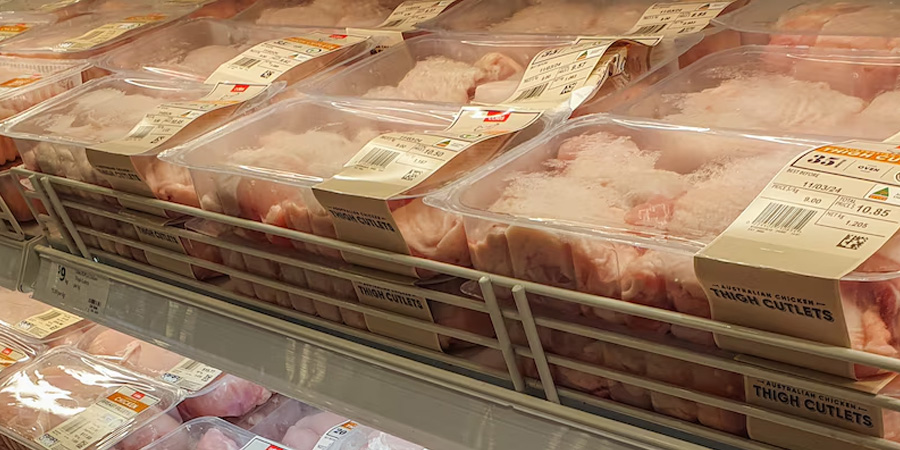
An independent review has found that market failures are driving farmers out of the chicken industry, threatening meat supply and raising costs for consumers.
Systemic power imbalances, stifled investment and a lack of transparency have created a market "more concentrated than the supermarkets", according to the interim findings from the Australian Chicken Meat Industry Review.
Chicken growers say it is recognition of longstanding market power abuse that has led to an exodus from the industry.
But processors have denied there are issues, telling the review relationships are strong and positive.
Meanwhile, Australia's competition watchdog says a mandatory code of conduct, similar to what is in place in the horticulture industry, could help address the issues.
Chicken is the most eaten protein in Australia, with the equivalent of 54 kilograms per person consumed in the 2024-25 financial year.
But without change, the review said the A$4.2 billion (US$2.76 billion) poultry industry faced stalled investment and an exodus of growers, which would affect supply and raise consumer prices.
Australian Competition and Consumer Commission (ACCC) deputy chair Mick Keogh said that would lead to declining productivity.
The federal Department of Agriculture, Fisheries and Forestry commissioned the review from its research division, the Australian Bureau of Agricultural and Resource Economics and Sciences (ABARES), in February.
ABARES executive director Jared Greenville said, unlike most agricultural industries, Australia's chicken meat production was vertically integrated — meaning one entity controlled the entire supply chain.
"As a grower, you own the sheds and your farm, but around that the integrated producer [processor] owns the chicken the whole way through," he said.
"They're [the processor] responsible for the genetics, the hatching, they deliver you day-old chicks, they control the feed, the medicine, and then they pick them up and they process them at the other end."
By comparison, cattle producers own the animals they raise and can choose who to sell them to, whether that is other graziers, feedlots, meatworks, exporters or direct to retailers.
Dr Greenville said two companies, Baiada Poultry and Inghams Enterprises, supplied about 70% of the country's chicken meat.
Between April and August, ABARES consulted growers and processors on the health of their relationship, finding what the review described as "distinct and opposing views".
The processors, it said, considered the relationships to be "strong and positive" and that growers were content with their commercial arrangements.
By contrast, growers raised concerns about a lack of influence, citing fears of punitive measures and retribution if they sought better contract conditions.
"We found on balance … growers across the country were saying there's issues that really stem from the concentrated nature of the market."
The result, the review found, was an imbalance in bargaining power that led to harmful practices that undermined market efficiency, such as processors being able to stop growers from selling their farms.
It found contracts with unreasonable terms and conditions trapped growers into renewals, prevented competition and failed to specify compensation or dispute resolution mechanisms.
The Australian Chicken Meat Federation, which represents processors, did not respond to a request for comment.
But the Australian Chicken Growers Council said the review confirmed what many had known for a long time — that the industry was not working properly.
"What we really want to see is a move away from 'take it or leave it' contracts, which growers often find themselves in at renewal."
New South Wales Farmers' principal economist Samuel Miller said the review found current protections were also failing.
"They can't defend themselves in court, collective bargaining isn't working, so more needs to be done," he said.
"It's got to have protections for good faith dealings, it's got a eliminate unfair contract terms ensure that contract price increases reflect input costs.
"And address the commercial retribution for attempting to negotiate or challenge these processors on their contracts."
ABARES has sought feedback on the interim findings, with submissions open until October 24.
-ABC News


