


September 30, 2025
Global think-tank raises concerns over Bunge-Viterra merger
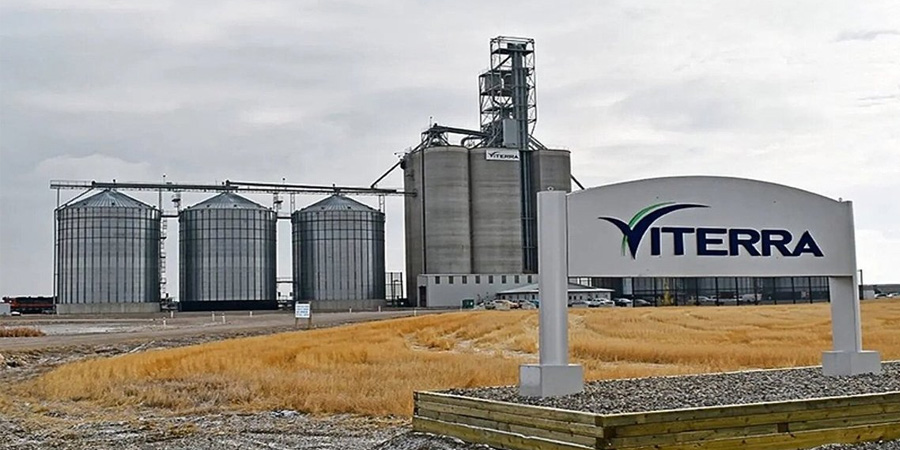
A global think-tank says the merger of Bunge and Viterra in Canada will cost other grain exporting countries at least US$2.5 billion annually.
It urged an inquiry into the global grain trade and investigation of "cartel-like activity" of some traders.
The BRICS Competition Law and Policy Centre in Moscow, Russia released its report in Cape Town, South Africa on September 12, saying it used vertical analysis to examine relationships at different levels of the grain market supply chain to come to its conclusions, rather than the traditional, horizontal antitrust analysis.
BRICS member states, including Brazil, Russia, India, China, South Africa and others, established the centre, which according to its website, has a goal of advancing competition regulation to address global imbalances.
The centre did not reply to a request for comment on its latest research.
The report, "From Fields to Futures: Competition, Financialisation and Digitalisation in Global Grain Value Chains," said the concentration of market power in the hands of a few major players is concerning. It specifically listed ADM, Bunge, Cargill, Louis Dreyfus and some others.
It examined four elements of economic power held by major traders, including financial embeddedness and interconnection between commodity trading and financial capital, links between corporate groups operated by traders, digital platform ownership and extensive vertical integration.
The report said these elements put together create control over the entire value chain.
The Bunge-Viterra deal highlights concentration occurring in the grain industry.
"The fact that the merger was approved, mostly unconditionally, by all competition authorities that reviewed it is indicative of limits in the current approaches to assessing mergers of this scale," it said.
It also said analysis focused on local market shares and national markets with no attention paid to what happens further down the chain.
Using a Canadian study that found that the export basis at the Port of Vancouver would rise about 15% because of the deal, the BRICS authors said applying that to 20% of the volume would cost Russia and Brazil an extra C$2.5 billion (US$1.79 billion) each year.
University of Saskatchewan agricultural economist Richard Gray, who was among the authors of the Canadian study, said this is "plausible."
That study found Canadian farmers could lose about CS$770 million (US$552.92 million) per year.
He said governments have become reluctant to regulate mergers, and Canada should amend its competition policy to consider the markup at each point in the supply chain.
The merger was completed earlier this year, but the BRICS study suggests a large-scale market analysis to develop co-ordinated antitrust response measures, including a BRICS grain exchange to serve as a single platform with more transparent pricing.
- The Western Producer


