


September 21, 2023
Bangladeshi government permits four companies to import eggs
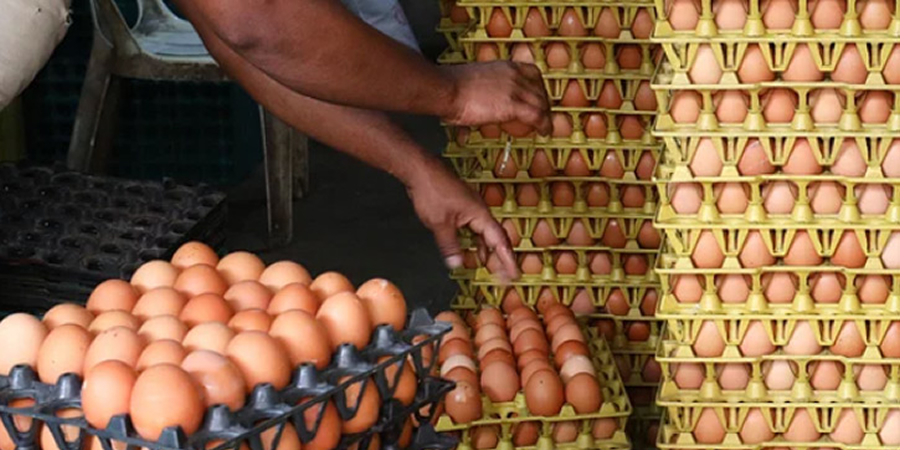
The Bangladeshi Ministry of Commerce has permitted four companies, Mrs Mim Enterprise, Tiger Enterprise, Prime Energy, and Arnob Trading, to import eggs in a bid to address rising local market prices, The Business Standard reported.
These companies are exclusively permitted to import eggs from countries that are free from bird flu and influenza. They must also adhere to predetermined tax regulations and present a certification of bird flu and influenza-free status from the country of origin for the imported eggs.
In August, Commerce Minister Tipu Munshi announced that egg imports could be considered in collaboration with the Ministry of Fisheries and Livestock if local egg prices did not decrease.
The egg market had experienced significant volatility in recent months, but prices started to decline after the Commerce Ministry announced market monitoring. Prices had escalated to as high as BDT 15 (~US$0.14; BDT 10 = US$0.091) per egg, while the government had set the price of a single egg at BDT 12 (~US$0.11).
Fisheries and Livestock Minister SM Rezaul Karim said that egg prices should not surpass BDT 12 (~US$0.11) per egg at the retail level, considering that the production cost for an egg is approximately BDT 10.50 (~US$0.095).
Before the pandemic, Bangladesh produced around 50 million eggs daily. However, numerous farms were forced to close during the pandemic due to continuous losses. The Bangladesh Poultry Industry Central Council reported that current daily egg production has fallen to below 40 million eggs due to the closure of many layer farms.
Market experts have alleged that certain unscrupulous traders are capitalising on the supply-demand gap to make excessive profits. Some farmers have also been selling eggs at elevated prices.
Abu Luthfe Fazle Rahim Khan, senior vice president of the Breeders Association of Bangladesh, said that there is a significant mismatch between demand and supply because they do not know what their actual demand is. Sometimes when the price is high, production increases, and when production is high, the price falls, leaving producers in a difficult situation.
Producers have noted that feed prices have risen due to increasing ingredient costs, resulting in elevated production expenses. To alleviate these costs, traders are seeking to import feed ingredients duty-free.
- The Business Standard


