


September 21, 2023
North American industry leaders share views, updates at Canadian Beef Industry Conference
The United States, Canada and Mexico must do more to protect the North American cattle herd from illnesses such as foot-and-mouth disease and BSE that threaten the continent's multi-billion-dollar beef sector, said a US industry leader.
Brazil is non-compliant with the BSE standards developed by the World Organization for Animal Health (WOAH) in terms of atypical cases of the disease, commented Todd Wilkinson, president of the National Cattlemen's Beef Association (NCBA) in the US.
"Now, WOAH just came out and said: "you don't have to report atypical BSE cases." But that doesn't mean that you don't have to have the ability to test for it, and frankly, as I sit here today, I challenged the Brazilian government to demonstrate that they have the capacity to test on their own and not expose the entire system to the risk of disease."
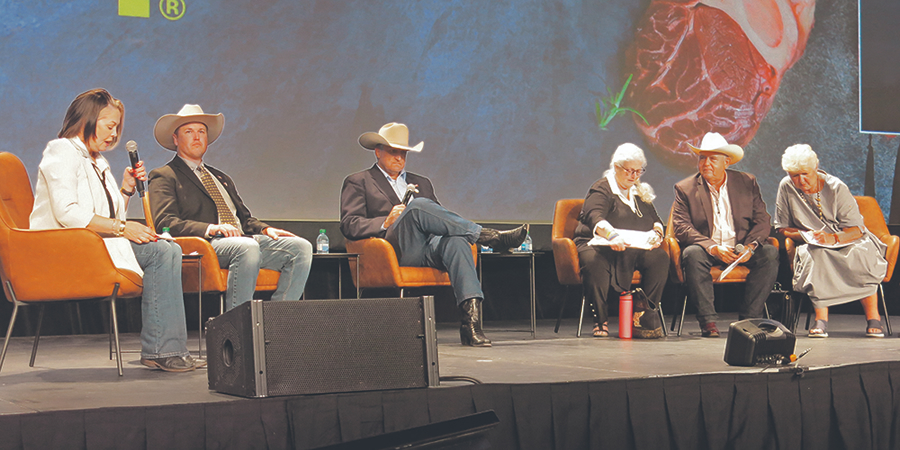
Wilkinson spoke as part of a panel discussion by the presidents of the national beef cattle organisations for Canada, the US and Mexico on the opportunities and challenges across the North American beef industry. It was held on August 16 at the Canadian Beef Industry Conference in Calgary, Canada.
"The US-Mexico-Canada trade agreement is the largest integrated beef market in the world," said Nathan Phinney, president of the Canadian Cattle Association. "Last year, (there was) $3.4 billion worth of trade into the US, our first largest partner, and our third was Mexico at $214 million. That trade is so valuable, we've got to continue to build on that relationship and keep these markets open."
The exchange in beef products is very important to Mexico, said Homero Garcia de la Llata, president of the Confederacion Nacional de Organizaciones Ganaderas (National Confederation of Livestock Producers). Although average exports of live animals to the US from Mexico have declined to less than 900,000 animals, they are expected to grow to 1.25 million, he said.
However, Wilkinson said the threat posed by Brazil represents a unique situation not only for the US, but for North America.
"The NCBA has called on our secretary of agriculture to halt Brazilian imports into the United States," he said. "I recently had a conversation with Secretary (Tom) Vilsack and he promised to go to his counterpart in Brazil and express those concerns. I don't think that commitment rises to the level that we were at."
Mexico, Canada and the US representatives sat together at some meetings and expressed their concerns about FMD and other illnesses, he said.
"And until all of our countries recognise that risk, and close off that risk until (nations such as Brazil) can demonstrate that they are in fact compliant, I think that raises a profound risk to the North American beef herd."
Wilkinson said the US government may allow imports from Paraguay, although that country has "not demonstrated that they have been disease free, or at least demonstrated they have the capacity to test for it for at least 10 years," he said. "And it's those things are the biggest concern to America's producers, and I believe to all of us sitting on this stage. We have billions and billions of dollars at risk, and if we don't protect our North American beef herd from these outside forces, we all run the risk of being put out of business."
Wilkinson praised the Canadian government for its recent government allocation of $57.5 million over five years to create an FMD vaccine bank. Canadian beef producers made it happen, he said.
- Glacier FarmMedia


