


September 18, 2025
IFFO: Marine ingredients remain crucial for aquafeed, with alternatives unable to fully substitute them
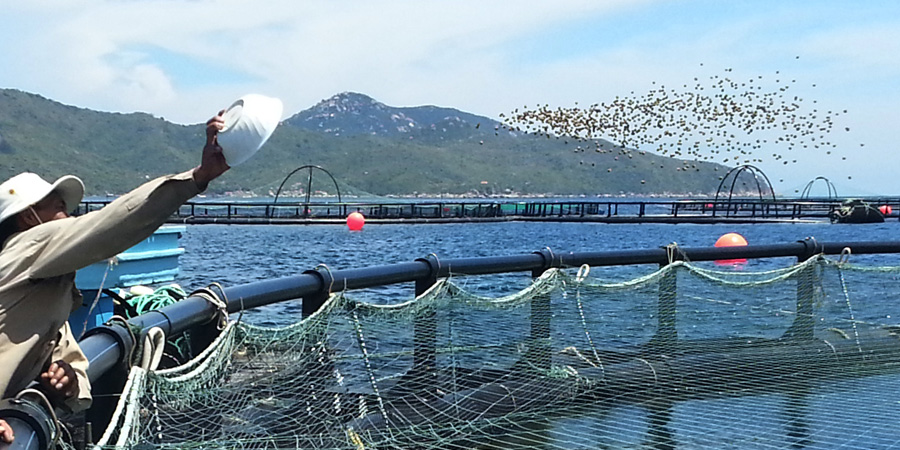
According to the Marine Ingredients Organisation (IFFO), marine ingredients are essential in aquafeed, with novel alternatives better suited to complementing rather than fully replacing them.
The international trade organisation, described fishmeal as the backbone of the global growth of aquaculture, also known as Blue Revolution.
‘When we go back to the development of aquaculture…initially, between 75% and 65% of aquafeed were marine ingredients," said Dr Enrico Bachis, market research director, the Marine Ingredients Organisation – IFFO.
However, in recent years, marine ingredients like fishmeal have been subject to negative publicity and there have been many calls to replace them.
Bachis was speaking at this year's Seafood Expo Asia held in Singapore from September 10 to September 12.
One of the main arguments against using marine ingredients is that fish should be reserved for human consumption.
Bachis emphasised that the industry should not be too quick to tackle criticism at face value.
He highlighted the Peruvian anchovy as an example of a species with very low demand and ends up as aquafeed.
"The Peruvian government spends a lot of time and money every year to promote the consumption of the anchovy in Peru. But unfortunately, the Peruvians don't like to eat anchovy, they prefer other species. And the poorer people in the Amazon, which tend to have protein deficiencies, it's difficult for them to getanchovies because anchovy decays very quickly. And canned anchovies have added cost that these people cannot afford."
While there is growing interest in replacing fish meal with novel ingredients such as insect protein, the current supply of these alternatives is limited, making it difficult to fully substitute marine ingredients in aquafeed at scale.
Quoting data from Rabobank, Bachis said: "Best case scenario was 400,000 megatons of bacterial proteins and 200,000 megatons of insect feed.
Together, we were talking about 600,000 megatons of new protein sources. But remember, fish meal is 5 million. Even with this development, there will not be enough novel ingredients to replace fish meal."
He added that data from Hatch found that there are currently 60,000 megatons of novel ingredients.
"Obviously, we are really far away from replacing fish meal."
One of the strongest arguments against the use of marine ingredients for feed is sustainability.
Bachis said that metrics that assess marine ingredients by their impact on wild fish stocks are overly simplistic, as they overlook broader factors affecting sustainability.
He clarified that IFFO defies sustainability as harvesting at a rate that allows wild fish populations to regenerate, ensuring long-term availability without harming ecosystems.
"It is based on that principle that the Marine Trust introduced a certification label on marine ingredients 10 years ago. We started at around 30% and by 2022, 48% of the production of fish meal and fish oil as responsibly sourced."
Bachis concluded that it was impossible to completely replace marine ingredients with novel alternatives today or in the near future.
Instead, he stressed the importance of using novel ingredients to complement marine ingredients.
"If you look at the SWOT (Strengths, Weaknesses, Opportunities and Threats) analysis of all the ingredients, you will find that all ingredients have strengths and weaknesses. But we can combine the different ingredients together in order to obtain the best aquafeed. What we need to do is work together—complementarity is the key."
- AgTech Navigator


