


September 17, 2020
University researchers to study methods to combat COVID-19 inside meat and poultry processing plants
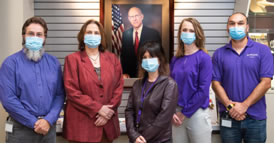
A team of researchers from Kansas State University (K-State), the United States, is using a US$1million grant from the United States Department of Agriculture (USDA) and an additional grant from the state of Kansas to study how to effectively control the spread of SARS-CoV-2, the virus that causes COVID-19, in the nation's meat and poultry processing facilities.
The study "Translating SARS-CoV-2 Research Into Practical Solutions For The Meat And Poultry Processing Industry" sought to protect meat plant workers and their surrounding communities from the spread of COVID-19. The study involved researchers from K-State's College of Veterinary Medicine and College of Agriculture.
As part of the study, US$330,000 from the State of Kansas National Bio and Agro-Defense Facility Transition Fund will be used for research in K-State's Biosecurity Research Institute at Pat Roberts Hall. The BRI is a high-containment research facility.
The key objective of the project will be to verify the effectiveness of the approved cleaners and sanitisers used in inactivating SARS-CoV-2 during plant processing and sanitation operations.
"Nationally and internationally, many facilities that produce meat and poultry products have been temporarily closed because of COVID-19 outbreaks," A. Sally Davis said, an assistant professor of experimental pathology in the College of Veterinary Medicine and project director of the K-State grant. "This has put a major strain on food production, limiting the amount of meat and poultry on grocery store shelves and disrupting food and feed supply chains across the globe. Research is necessary to understand why SARS-CoV-2 is such a problem in meat and poultry processing environments and how we can mitigate the problem."
Davis said: "Infections with SARS-CoV-2 are primarily thought to occur by exposure to infectious micro-droplets in the air and contaminated surface.
"We are investigating the conditions within the meat and poultry processing environments, such as low temperatures, relative humidity, increased air movement and workers being in close proximity to one another, to help identify areas and surfaces that are at high risk for contamination and spread of infectious SARS-CoV-2."
The team will evaluate potential sources of exposure and determine the amount and longevity of an infectious virus that is present during and after meat processing and packaging activities. The team seeks to identify, develop, validate and deliver practical cleaning and disinfection strategies. It will also develop mathematical models to predict and reduce the risk of SARS-CoV-2 exposure in meat and poultry processing facilities.
Joining Davis on the research team are food safety faculty from K-State's Food Science Institute, including Randall Phebus, co-project director and professor of animal sciences and industry, and Jeanette Thurston, director of the Food Science Institute and co-investigator on the project. The project also will rely on input from an industry advisory board.
"Our advisory board will be regularly updated on research progress," Thurston said. "We will communicate with them in real time to make sure we are on the right track with our research and recommendations, and ensure that our findings are rapidly deployed across the processing sector."
The industry advisory board is composed of senior-level directors of food safety and plant operations at Hormel Foods, Smithfield Foods, National Beef Packing Company, Cargill Protein North America, JBS USA, Wayne Farms, Jennie-O Turkey Store, Tyson Fresh Meats and Costco Wholesale.
Collaborating with the K-State team are co-project directors from the University of Georgia poultry science department, Harsha Thippareddi and Manpreet Singh, who will provide extensive poultry experience and industry connections and lead the grant's industry outreach efforts.
Valentina Trinetta and Sara Gragg, members of the food safety faculty from the Food Science Institute, are co-project directors. Co-investigator Anke Richter, a public health-focused operation research specialist at the Naval Postgraduate School, will lead the risk assessment driven by mathematical modeling. Co-investigators Yunjeong Kim and Erin Schirtzinger of the K-State College of Veterinary Medicine and Daniel Vega of the Food Science Institute's round out the project team.
- National Hog Farmer


