


CORPORATE NEWS
FOCUSED ON FEED SOLUTIONS
Alltech Coppens Aqua Centre opens in Netherlands

The Alltech Coppens Aqua Centre officially opened its doors in Valkenswaard, the Netherlands, following extensive refurbishment.
The innovation centre will be a leading international aquatic research facility focused on excellence in feed solutions for aqua producers around the world, according to Alltech.
The centre received more than EUR600,000 (US$720,100) in investment and will be home to an expanded team of aqua researchers focused on quality, innovation and the development of new applications in aqua feed. The new facility will also boost Alltech and Coppens International's aqua research capabilities whilst continuing to provide a practical platform for product development and solutions to meet the challenges of modern aqua producers.
This demonstrates the long-term commitment from Alltech and Coppens International to the aquaculture industry.
According to the 2017 Alltech Global Feed Survey, the aquaculture industry experienced a 12% increase in feed production in 2016, reaching 39.9 million metric tonnes. Coppens International expects this uptick to continue, and this trend underlines the importance of investment in aqua technologies, according to Patrick Charlton, CEO of Coppens International.
"The centre will further develop our already strong aqua research programmes and allow us to significantly increase the amount and type of aqua innovation we embark upon", said Charlton.
Coppens International is already collaborating with Guabi, a leading fish feed producer in Brazil. Guabi, a 43-year veteran in the animal feed business, entered into a strategic partnership with Alltech earlier this year. Alltech is linking the two leading aquaculture feed producers from opposite sides of the world together to accelerate solutions for the aquaculture industry and demonstrate the company's commitment to developing a global aqua nutrition offering.
"The Alltech Coppens Aqua Centre will enable Coppens International to become a global hub of excellence for aqua research," continued Charlton. "To date, our research centre has enabled us to achieve global recognition for our recirculating aquaculture systems (RAS), and the refurbishment will allow us to continue to build upon this and to expand our work into different species, such as saltwater fish".
As the company intensifies its R&D efforts, works are already in place to increase manufacturing. Coppens' feed production facility in Nettetal, Germany, is currently undergoing expansion work and is set to open early next year.
One of Coppens International's primary objectives is to replace fish oil DHA with algae. Over the course of the last 12 months, Coppens International has progressively replaced the fish oil source of DHA in its diets with Alltech's innovative, DHA-rich algae technology, ForPlus®. The inclusion of ForPlus allows for a fully traceable, sustainable source of DHA omega-3 and a fish oil replacement. Neo Green, a high-quality, sustainable trout feed, is one of the many new products developed to provide customers with a sustainable alternative to fish oil and inorganic trace minerals as well as functional additives to support fish health and performance.
BENCHMARKS FOR SEAFOOD INDUSTRY
BioMar rated No. 1 salmon sustainability fish feed company…

BioMar has topped the chart for the most transparent reporting of sustainability for independent salmon feed companies, adding strength to its core strategic focus of driving and leading sustainable practices within the industry.
Bertrand Charron, editor and author of SeafoodIntelligence.com and author of the recently released 2017 benchmark report on salmon industry transparency said, "Although our range of benchmarking reports covers a broad sector of the seafood and aquaculture industries, we still issue an individual salmon farming and feed benchmark report because this particular industry has historically been under particular media and stakeholders' scrutiny. I believe this benchmark can benefit not only other salmon and feed companies, but also the global seafood industry which, in general, displays a lesser degree of transparency."
BioMar was the first feed producer to offer fish feeds containing alternative marine fatty acids sourced from highly sustainable microalgae.
"We take pride in driving the sustainability agenda of the industry and are pleased to be the first feed producer to bring this new feed ingredient to our customers while ensuring economies of scale. We believe AlgaPrime™ DHA will be a significant contributor to the further development of salmon products with a desirable nutritional profile", said Jan Sverre Røsstad, vice president and head of salmon division at BioMar Group.
BioMar, in partnership with Aker BioMarine, said the krill they source is of the highest quality and harvested sustainably. Aker BioMarines has earned the Marine Stewardship Council (MSC) certification and an "A" rating from the Sustainable Fisheries Partnership (SFP).
"Sustainability has always been at the core of BioMar operations; however, only in recent years have we seen the importance of qualitatively reporting what we have done and what we are planning to do. Being open and transparent is important not only to our customers but is one of our corporate guiding principles", said CEO Carlos Diaz, BioMar Group.
Charron wrote in the report that "many C-executives in the seafood industry would do well to read their [BioMar] report (together with those of a few other sustainability-focused firms) to get inspired and embark upon sustainability reporting".
BioMar believes that a solid sustainability performance is a prerequisite to winning contracts. BioMar also sees that operating sustainably has a positive impact on their employees. "More than one third of BioMar employees have been at the company for over 15 years. This considering we increased our workforce by more than 25% in the last year", said Diaz.
The benchmark report states that BioMar has a "can and must do" attitude toward sustainability. Vidar Gundersen, the company's global sustainability director, explained: "It'sactually very simple. If we don't take care of the oceans, lakes and forests, we won't have a job tomorrow. In the worst-case scenario, we won't even have a world to live in. It's our heritage, it's our future, and it's our responsibility".
…As it celebrates 10 years of strategic sustainability with BioSustain

At the recent Aqua Nor 2017, the BioMar Group celebrated the 10th anniversary of its BioSustain™ concept with a rooftop party at its new offices in Norway.
BioSustain helps to firmly established BioMar as a forerunner in driving sustainable innovation through collaborative partnerships in the aquaculture industry.
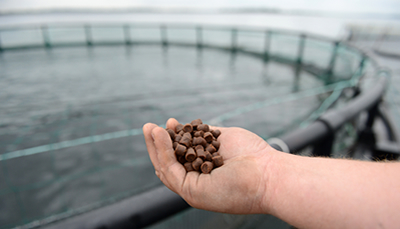 "At BioMar we are proud of our long history in sustainability", said Carlos Diaz, CEO of BioMar Group. "Over a decade ago, we recognised the need to find sustainable solutions to fishmeal and fish oil, and believed that "profit through sustainability" was possible".
BioMar pioneered the introduction of extruded fish feed in the 1960s, which enabled a significant reduction of the negative impact on the local water environment.
The company created ECOLINE: the first fish feed in the world to be declared environmentally friendly and which won the Danish Environmental Award in 1988.
In 1997, sustainability became a core strategic pillar of BioMar and with the launch of the BioSustain concept in 2007 at the Brussels seafood exhibition, BioMar had established themselves as innovators in the fish feed industry.
The BioSustain concept is the foundation for BioMar's extensive work and covers sustainability across all three dimensions—economy, environment and society.
BioSustain is a dynamic platform that continues to adapt to the fluid environment of stakeholder demands in the aquaculture industry. It was developed in collaboration with BASF and in parallel with DNV's ProSustain programme.
The project was borne out of the need to reduce the dependence on marine-based fishmeal and fish oil, and the original concept focused on fish feed solutions for salmon.
"It has long since been possible to replace fishmeal with other protein sources but we didn't stop there. We continue to push innovation and today, we can produce fish feeds with zero inclusion of marine ingredients, where the fish oil is replaced with microalgae, omega-3 in their native form", Diaz explained.
The next evolution in the BioSustain programme is the creation of a fully integrated tool for tracking and measuring sustainability at the sourcing aspect of the value chain.
"We are currently working on "Triple S" (Sustainable, Solution, Steering), which will fundamentally change the way we source raw materials and give us full transparency so that we can measure sustainability at the origin of the value chain", Vidar Gundersen, global sustainability director of BioMar Group, said.
When completed, Triple S will be the first of its kind in the aquaculture industry and will continue BioMar Group's tradition of being at the forefront of aquaculture sustainability.
LOW MORTALITY LEVEL
Cermaq: Robust sustainability performance in 2nd quarter

Cermaq's quarterly sustainability results for April-June show low mortality level for the last 12 months, the salmon producer said.
The mortality level was 4.4 % in Norway, 5.9 % in Canada, and - ranging between three species - 3%-6.8% in Chile.
In Chile, there were two incidents of escape involving 47,500 fish. Both incidents were caused by holes in nets. Norway and Canada, on the other hand, reported no escapes.
Cermaq has published quarterly sustainability results on key indicators related to fish health, environmental and social topics in its operations since the beginning of 2016.
"We believe a company which openly reports its results also has a better overview of risk and opportunities, a stronger basis for dialogue with stakeholders and a better ability to actually make progress on material topics", Wenche Grønbrekk, head of sustainability and risk in Cermaq, said.
The fish health performance in the second quarter was robust with no use of antibiotics in Norway, and significant reductions in Chile and Canada compared to the same period in 2016.
"Still, we aim for further reductions", Cermaq stated. "There was no use of treatment against sea lice in Norway and a significant reduction in Chile and Canada compared to the same quarter last year".
Cermaq's OHS performance continues to be strong. Absence rates are low, spanning from 4.6% in Norway to 1% in Canada. In addition, lost time injury rate was zero in Norway and in Canada, and six in Chile.
THERESE LOG BERGJORD
Nutreco appoints new managing director for Skretting

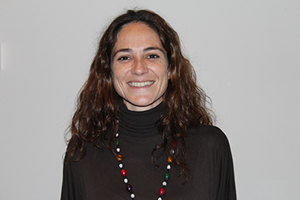
Nutreco has appointed Therese Log Bergjord as the new managing director of Skretting (Global Salmon and Fish Feed Southern Europe).
She will take over this position from Steven Rafferty, who resigned from this role earlier this year.
Log Bergjord is currently managing director (Nordics) of Compass Group and will take up her new position on November 1, 2017.
As part of her responsibilities, she will also join the Nutreco Executive Committee. Based in Stavanger, Norway, she will report to Knut Nesse, CEO of Nutreco.
Log Bergjord has a background in finance and business administration. Having previously acted as vice president (commercial) for Pan Fish, and global sales director for Skretting, she has considerable expertise in the aquaculture industry.
She was also member of the Board of Directors of SalMar, a position she will step down from.
"I am really excited to rejoin Skretting in this new position," Log Bergjord said. "Aquaculture is a dynamic and thriving industry, and I look forward to make my contribution to the further growth of Skretting as the global leader in innovative and sustainable nutritional solutions."
Nutriad sponsors Asia Pacific Aquaculture 2017

 Nutriad, a leader in specialty additives for fish and shrimp, sponsored the Asia Pacific Aquaculture 2017 (APA) exhibition, which was held recently in Kuala Lumpur, Malaysia.
During the event, Nutriad health expert Isern Subich (pictured, right) made a presentation on "Health Management for Profitable and Safe Aquaculture Production".
APA, which is organised by the World Aquaculture Society (WAS), is the biggest aquaculture exhibition in Southeast Asia.
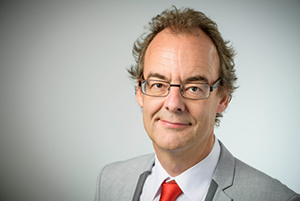 Nutriad sponsored the scientific session entitled "Functional Feeds for Disease Prevention". At this session, chaired by Dr. Peter Coutteau (pictured, left) and Prof. Rossita Shapawisurely, speakers from the industry and the academic sectors, touched on hot topics related to health management and farm practices in Thailand, functional feed additives to prevent fish and shrimp diseases, effects of soymeal on tissue cholesterol status and molting relative gene expression in white shrimp, and effects of garlic against Aeromonas hydrophila in Nile Tilapia.
The topics of these sessions, which were sponsored by Nutriad, allowed attendees to learn more about current market developments and new findings regarding health management.
Said Dr. Coutteau, Nutriad's business unit director of aquaculture: "Nutriad is committed to working in the field with producers and in labs with scientists to provide practical solutions to challenges producers face. We feel it is important to share our knowledge and join industry professional from all over the world each day in making aquaculture production more sustainable, more efficient and more profitable."
DIVIDEND OF 41 CENTS PROPOSED
Marine Harvest of Norway achieves record gains in Q2
Norwegian seafood giant Marine Harvest achieved an operational EBIT (earnings before interest and taxes) of EUR198 million (US$234.3 million) in the second quarter, compared with EUR149 million ($176.3 million) in the same quarter last year.
Supported by the good results, a strong market outlook and a solid financial position, the board has proposed a quarterly dividend of NOK3.20 (41 US cents) per share.
"Driven by high salmon prices on strong demand, we achieved record high operational results in the second quarter. I am pleased to see strong operational performance and reduced cost in Marine Harvest Scotland and Marine Harvest Ireland. It is also encouraging to see that production costs decreased for Marine Harvest Chile", said CEO Alf-Helge Aarskog.
Marine Harvest Group reported operational revenues of EUR 884 million (as against EUR 832 million last year) in the second quarter. Total harvest volume was 78,612 tonnes in the quarter (as against87,159 last year). Harvest guidance for 2017 has been reduced from 403,000 to 377,000 tonnes as a result of biological issues in Norway.
"I am pleased that operational improvements in Marine Harvest Consumer Products have resulted in yet another good quarter. Several of our processing plants are now performing better than at the same time last year", said Aarskog.
HIGHER SURVIVAL AND GROWTH
Calysta introduces new shrimp feed product FeedKind

Shrimp fed a diet including FeedKind® protein, a product of Calysta Inc., had equivalent or higher survival and growth when compared with shrimp fed a standard fishmeal-based diet.
Calysta last week announced trial results of the FeedKind protein—a family of natural, sustainable and traceable feed ingredients for fish, livestock and pets--at AquaNor, the world's largest aquaculture technology exhibition, held in Norway on Aug. 15-18.
The trial is Calysta's first study in warm-water aquaculture, and represents an entry into the 6- million-metric-tonne global shrimp feed market. The trial was performed at Auburn University in conjunction with Texas A&M University.
In the trial, post-larvae Pacific white shrimp (Litopenaeus vannamei) were fed a commercially representative control diet containing fishmeal as a primary source of protein. Test diets were prepared where FeedKind protein replaced up to 100% of the fishmeal in the diet on a one-for-one basis. The animals were fed either the control or a test diet for eight weeks in a controlled environment.
At the end of the study, shrimp survival was significantly improved in all FeedKind diets (93-97%) compared with the control diet (84%). In addition, the total shrimp weight in all FeedKind diet groups was shown to be equivalent to or improved versus the control fishmeal diet.
"This is a significant expansion of the global market opportunity for FeedKind", said Dr. Josh Silverman, Calysta founder and chief product and innovation officer.
"FeedKind is being developed to meet the world's growing demand for food and feed, and this trial demonstrates FeedKind's potential to improve the diets in some of the world's most challenging aquaculture species. These results show that FeedKind protein can significantly improve current aquaculture feeds, producing comparable or better results while reducing the overall environmental footprint and improving traceability and quality control in the supply chain", he added.
Ronnie Tan, a member of the Calysta advisory board and vice president of Blue Archipelago, the largest shrimp enterprise in Malaysia, shared that shrimp remain one of the most valuable seafood commodities within aquaculture, with global trade of more than $20 billion per year. "Innovative products such as FeedKind will be important new market entries as demand grows in emerging countries for new sources of protein", he said.
FeedKind is a non-animal source of protein approved for sale in multiple countries, and has been shown to use 77-98% less water and 98% less land than alternative ingredients such as soy or wheat proteins.
Calysta said samples are currently available for global customers and partners in markets including the EU, the US, China, Japan, Southeast Asia and Australia.
Calysta, based in Menlo Park, California, USA, is an innovator in sustainable products to improve worldwide food security.
PARTLY DUE TO HIGH SALMON PRICES
Norway's SalMar reports higher EBIT in 2nd quarter
Helped by high salmon prices, Norwegian salmon farmer SalMar achieved a strong result in the second quarter as its operational EBIT (earnings before interest and taxes) totalled NOK983 million (US$126 million), up from NOK670.7 million in the previous quarter and from NOK731.8 million in the same quarter last year.
Overall, the SalMar Group achieved an operating profit per kilogramme gutted fish of NOK28.12 ($3.60), up 10% on the previous quarter and a hike of 24% compared with the second quarter last year.
"SalMar's strong results derives from continued good operations and yet another quarter with high salmon prices. The biological situation was slightly better than in the same period last year, but managing the sea lice issue remains challenging", SalMar's CEO Trond Williksen said.
He said that SalMar had implemented several initiatives to improve the situation, in combination with a continued increasing focus on fish welfare. "Measures to manage the lice situation are costly, and a high treatment frequency rate will negatively affect production costs in coming quarters".
The company said it generated gross operating revenues of NOK2.9 billion ($371.83 million) in the second quarter, up from NOK 2.3 billion in the same period last year.
The Group harvested 35,000 tonnes of salmon, compared with 32,200 tonnes in the second quarter last year and 26,300 tonnes in the first quarter this year.
For 2017, SalMar plans to harvest around 131,000 tonnes in Norway, with 83 000 tonnes being harvested in Central Norway and 48,000 tonnes in Northern Norway. Norskott Havbruk (Scottish Seafarms) and Arnarlax are expected to harvest 30,000 tonnes and 10,000 tonnes, respectively.


