


September 12, 2025
With no orders from top buyer China, US soybean farmers brace for tough harvest
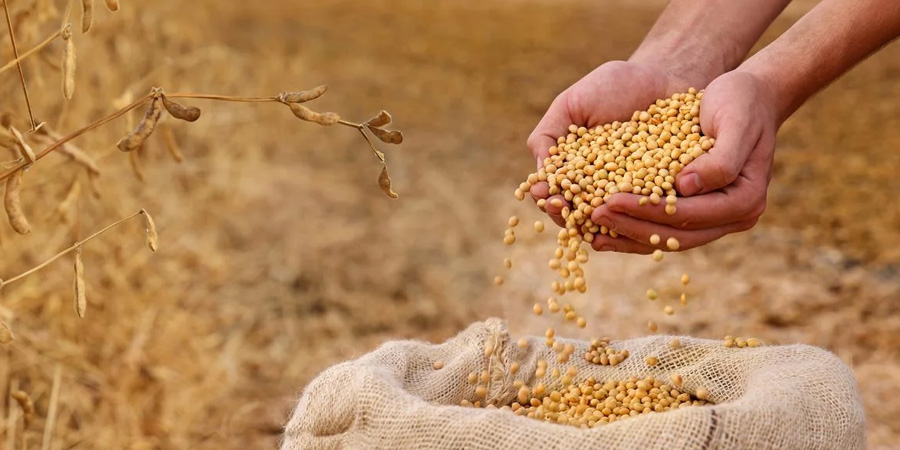
As harvest season begins, American soybean farmers report no orders from China — once their largest buyer — sparking concerns over the agricultural sector's stability and potential ripple effects on the US economy.
Caleb Ragland, president of the American Soybean Association and a ninth-generation farmer from Kentucky, issued a stark warning about the crisis facing the nation's 500,000 soybean growers. "Right now, we're in a very dire situation," Ragland said in a TikTok video that has drawn national attention to farmers' plight.
In a separate CNN interview, Ragland emphasised the scale of China's importance to American agriculture: "China takes more of our soybeans than all other foreign customers combined," he said, noting that 50% of US soybeans are exported and China represents a quarter of total demand.
The absence of Chinese orders represents a dramatic departure from normal trading patterns. China typically accounted for over 25% of total US soybean purchases, with roughly one-third of annual sales to the country normally booked by this point in the season. This translates to approximately 8%-9% of the entire US crop that would typically be sold to China by now currently sitting at zero.
The trade dispute has pushed already-struggling farmers to the brink. Ragland told CNN that soybean prices have fallen 40% from their levels three years ago, while production costs and interest rates have risen. "We're looking at basically losses for the upcoming year if commodity prices don't improve," he said.
Current soybean futures prices reflect the uncertainty, trading around US$10.10 per bushel for September contracts—well below estimated production costs of approximately US$11.03 per bushel. Ragland's own farm is currently generating $750,000 in losses, forcing him to rely on loans to bridge the financial gap.
"Right now we're planting a crop that looks like it will be produced at a loss," he told CNN. "By fall, when the soybeans are harvested and ready to sell, we're gonna need a drastic improvement in our markets or it's gonna get even tougher for farm families all across this country."
The financial pressure extends beyond individual operations. "There's not much room for error right now in the budgets," Ragland said, emphasising that all 500,000 soybean farmers nationwide face similar challenges.
The implications extend far beyond individual farms. Agriculture contributes US$9.5 trillion to the US economy annually, representing 18.7% of total national economic output. The agricultural sector directly and indirectly supports over a million American jobs, with soybean exports alone generating more than 231,000 jobs across farming, manufacturing, transportation, and related industries.
Ragland highlighted these broader economic connections in his CNN interview: "That trickles down to our rural communities. Our rural communities are a lot of folks across this country. And that impacts small business. That impacts just the whole infrastructure within our communities."
In 2023, every US$1 billion in US agricultural exports supported approximately 5,997 jobs. Soybeans and corn bulk exports alone supported over 212,520 jobs. The economic multiplier effect means disruptions to soybean trade ripple through manufacturing, logistics, and rural communities nationwide.
The standoff stems from ongoing US-China trade tensions, which have fundamentally altered global soybean trade patterns. US soybeans currently face a 20% retaliatory tariff disadvantage compared to South American competitors, pushing the total duty rate on American soybeans to 34% when combined with other taxes.
China has responded by dramatically increasing purchases from Brazil. Chinese soybean imports hit record highs in July, driven largely by Brazilian exports. Brazil exported approximately 15.7 million tonnes of soybeans in March 2025, with three-quarters destined for China—the highest monthly volume ever exported to China. In 2024, China sourced 71% of its total soybean imports from Brazil, up from previous years.
The American Soybean Association warned in an August 19 letter to President Trump that "China has contracted with Brazil to meet future months' needs to avoid purchasing any soybeans from the United States."
Despite his support for Trump, Ragland has become increasingly vocal about the need for immediate trade resolution. "We desperately need to get something rectified quickly with China, our biggest export customer," he told CNN. "We wanna encourage the administration to get a proactive trade deal done."
When asked about the administration's calls for patience, Ragland emphasised the time-sensitive nature of the crisis. Farmers are "planning a crop that looks like it will be produced at a loss," and without market improvements before harvest, the situation will deteriorate further.
The broader agricultural sector is experiencing what industry groups describe as an economic crisis. The National Corn Growers Association reports corn prices have fallen more than 50% from their 2022 highs, with production costs declining only 3% over the same period. This agricultural downturn comes as the 2025 US soybean crop is forecast at nearly 4.3 billion bushels, the country's sixth-largest harvest in history. However, without Chinese demand, this abundant supply threatens to further depress prices and worsen farmers' financial distress.
The situation echoes the 2018-2020 trade war, during which US agriculture lost $26 billion, with nearly US$20 billion in soybean losses alone. Soybeans accounted for 71% of agricultural losses experienced by American farmers during that earlier conflict.
The urgency reflects the seasonal nature of agricultural markets. As harvest approaches and storage facilities fill with unsold grain, prices typically face additional downward pressure. Without resolution soon, farmers may be forced to sell their crops at deeply discounted prices or face expensive storage costs through the winter months.
Current trade dynamics show limited progress toward resolution. While President Trump signed an executive order in August extending the current tariff truce with China by 90 days through November 10, the extension primarily addresses broader trade issues rather than agricultural-specific concerns.
Ragland framed the crisis in terms of national strength: "We want to keep this nation strong. We're the backbone of America," he said.
Despite acknowledging that he believes Trump "loves farmers" and is "trying to do what's right for this country," he emphasized the need for immediate action: "We gotta make sure that we survive through these tough times."
- CNN/ Fortune


