


September 12, 2024
Pasteurisation machine made by Canadian graduates aims to help Kenyan dairy farmers produce safe milk
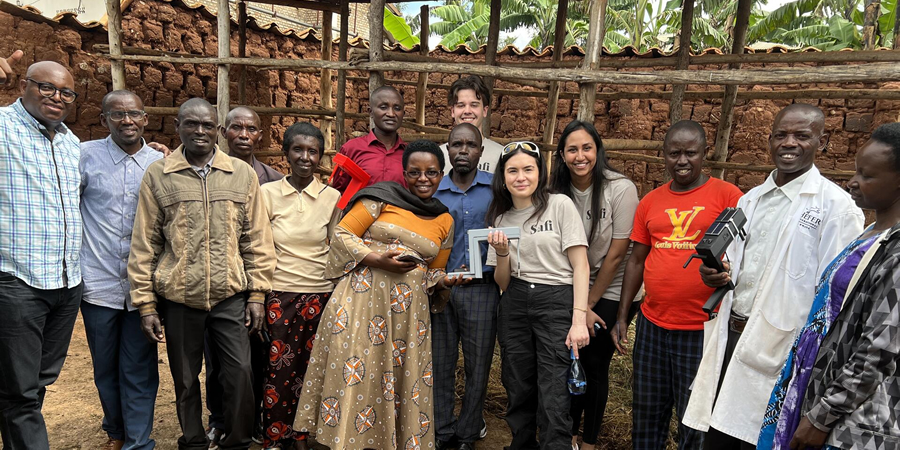
Canadian university graduates have developed a portable, affordable pasteurisation machine that could help farmers in Kenya cheaply sterilise dairy products and reduce milk-related disease.
Miraal Kabir, head of the startup, Safi, said her technology provides health and economic benefits to users and milk consumers.
"It solves two problems. The main one being the problem of unsafe milk," she said. "It allows all of the milk being sold in the market to be safe, which isn't the case right now. That's leading to a lot of deaths, a lot of diseases, especially for children under five. And then on a secondary problem that it's solving, right now in the dairy supply chain, the people who are winning the most are these large processors. They sell milk extremely cheap to these processors who then sell it at a huge premium. And so by allowing small scale farmers to pasteurise the milk themselves and earn the premium of pasteurised milk themselves, we're actually empowering them financially as well."
The device is placed on top of a pot. It has a whisk to stir the milk and ensure that it is heated uniformly. It also has a screen and LED lights, which guide the user through pasteurisation. A temperature sensor tells the user when the milk is ready.
Moses Sitati is a dairy farmer in western Kenya. His cows produce 60 liters of milk per day, of which 10 liters spoil, meaning it is not suitable for human consumption.
"I can sell milk, people can just buy milk and take it at the same time without going and boiling it fast," said western Kenya-based dairy farmer Moses Sitati, who owns cows that produce 60 liters of milk per day and has been using the pasteuriser for 12 months. "Now you know when you boil, wait until again by tomorrow so you boil, you are losing the milk, the first thing and also the nutrients. Now the pasteuriser helps to at least store the milk, it helps at least to preserve the milk for a long time."
In addition to farmers losing their income, raw and unpasteurised milk contains harmful bacteria like salmonella, E. coli, Brucella, tuberculosis, and Q fever.
Sitati is among the 20 farmers and vendors in Kenya and Rwanda who have purchased the pasteuriser developed by the Safi team.
"The first (version of the pasteuriser) could pasteurise milk from two to 10 liters, but (the latest version) pasteurised milk from two to 20 liters," he said. "The first one didn't have a lid, so when pasteurising the milk, it could spill out, so they improved this to put a lid so that there is no milk spilling out when you are pasteurising. The first one used electricity, and this one uses solar energy. When you charge, you can use it for four hours."
According to Kabir, the pasteuriser tracks pasteurisation data, letting farmers prove milk safety and helping regulators monitor it.
"We've also incorporated the data software side of things," Kabir said. " Our device is actually able to capture all the key pasteurisation data and provide it to the farmer themselves or the vendors so that they can prove that they have pasteurised their milk to their customers, but then we're also able to aggregate all of this data and provide it to governments. Governments and regulators, they're able to see where milk has been pasteurized, when it was pasteurised, where safe milk is being sold."
Safi said it hopes to find a good manufacturer to start producing the device next year and make billions of liters of milk disease-free.
- VOA


