


September 11, 2025
State-run think tank presses Philippine government to fast-track Animal Industry Competitiveness Bill
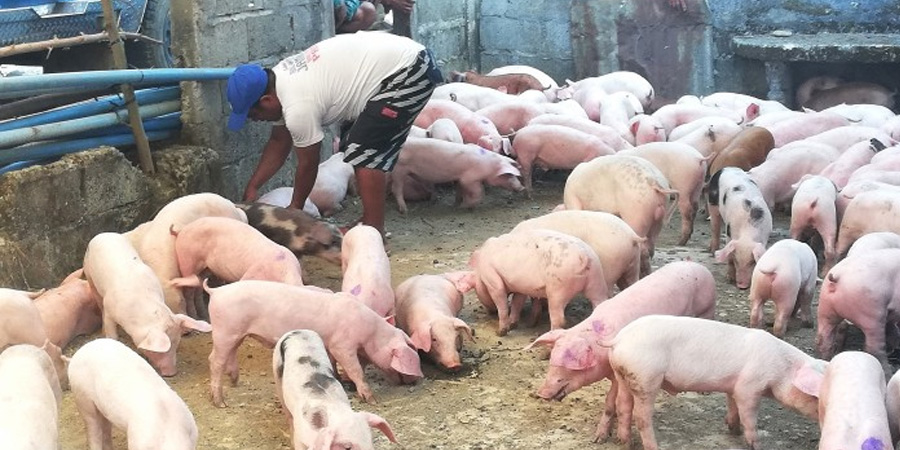
The Philippine Institute for Development Studies (PIDS) is urging President Ferdinand R. Marcos Jr. to enact the consolidated Senate and House versions of the Animal Industry Development and Competitiveness Act, highlighting its potential benefits for the livestock sector.
In comments submitted to the Office of the Deputy Executive Secretary for Legal Affairs under the Office of the President (OP) on Sept. 5, PIDS senior research fellows Roehlano M. Briones and Sonny N. Domingo both welcomed the enrolment of Senate Bill (SB) No. 2558 and House Bill (HB) No. 11355, expressing support for their passage into law.
According to Briones, the measure aims to strengthen the animal industry by establishing strong regulatory and development institutions and providing sufficient resources to support production, particularly for small farmers and producers.
Briones emphasised that the reorganisation of the public animal industry agencies is long overdue and marks a significant milestone under the proposed law.
He added that it provides assured funding for livestock, poultry, and dairy—sectors that are collectively larger than the rice sub-sector, which has traditionally received the bulk of government support.
Briones noted that the proposed law brings two key reforms: first, the consolidation of five Department of Agriculture (DA) agencies and programmes related to the animal industry to strengthen coordination and efficiency.
It also establishes the Animal Competitiveness Enhancement Fund (AnCEF), modeled after the Agriculture Competitiveness Enhancement Fund (ACEF) under Republic Act (RA) No. 8178 and the Rice Competitiveness Enhancement Fund (RCEF) under RA 11203, to provide sustained support for the livestock, poultry, and dairy sectors.
"AnCEF amounts to ₱20 billion (US$349.81 million) annually over the next 10 years, to be funded from tariff collections of livestock, poultry, and dairy imports... Tariff collections in excess of ₱20 billion will still go to AnCEF for animal industry purposes, including capitalization of NDA [National Dairy Authority], direct financial support to farmers, etc.," Briones noted.
However, Briones raised concerns about AnCEF's "very large" allocation, noting that it could limit the fiscal space available for other government programmes.
"Perhaps the DA should review its budget request for a separate NLP [National Livestock Program], even considering its outright abolition," he added.
Meanwhile, Domingo said the bill seeks to strengthen animal industry institutions and channel resources into repopulation, genetic improvement, disease control, farmer support, and research and development (R&D).
"The proposed legislation is very much welcome since the country's animal industries, despite contributing a third of the agricultural sector's output, have been mostly private sector-led with minimal government support," he said.
"The livestock, dairy, and poultry commodity systems are key drivers in Philippine agriculture, yet compared to other commodities, they have received limited attention and development assistance from the government," he added.
Domingo noted that issues of competitiveness and the impact of biosecurity concerns over the past decade necessitate urgent change.
"Premium must be placed on the organisation, retooling, and capacity building of smallholder growers," he said. "Having a dedicated unit with this mandate within BAI's [Bureau of Animal Industry] extended organizational structure would be ideal."
Domingo also said the Philippine Carabao Centre (PCC) and NDA working under one bureau could strengthen the local dairy industry by pooling complementary expertise, though safeguards are needed to balance regulatory and commercial roles.
As for the proposed AnCEF, he said this annual funding can boost technology adoption and productivity if insulated from political influence, managed sustainably, and implemented with flexible fund allocation to avoid rigid earmarking.
The enrolled bill was earlier transmitted to Malacañang, where the President has 30 days to either sign it into law, veto it, or allow it to lapse into law without a signature.
- Manila Bulletin


