


September 11, 2024
Brawijaya University, Indonesia develops high-yield hybrid corn seeds for animal feed
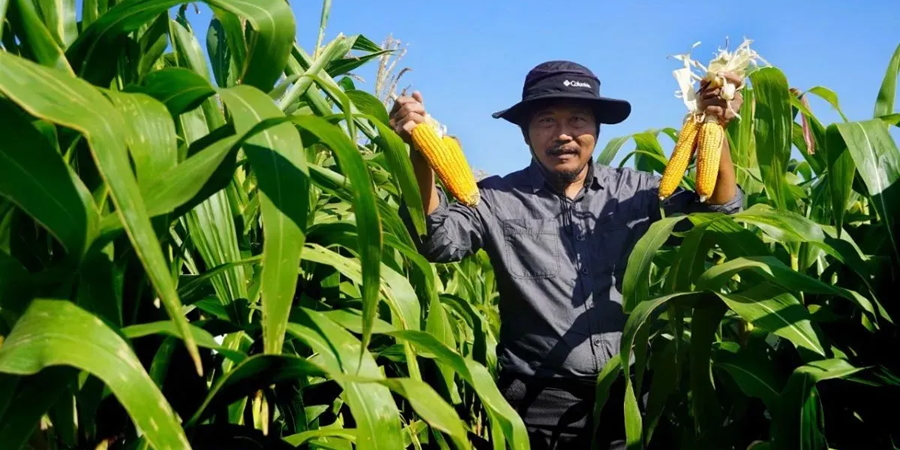
An expert from the Faculty of Agriculture at Brawijaya University in East Java, Indonesia, Professor Arifin, has introduced hybrid corn seeds aimed at improving yield and reducing the harvest cycle for animal feed, ACN Newswire reported.
Arifin explained that the new Brawijaya Nusa corn seeds could significantly increase productivity. "If the average corn productivity is only 9 tons per hectare, using Brawijaya Nusa corn seeds could result in a productivity increase of over 30%," he stated. Two hybrid seed varieties, Nusa 1, and Nusa 3 have been developed under this initiative, both of which offer higher productivity than standard corn seeds.
"Brawijaya Nusa corn seeds can yield up to 12.9 tonnes per hectare and 13.7 tonnes per hectare, compared to the typical 9 tonnes per hectare for conventional corn seeds," Arifin elaborated. Initially, five types of seeds were proposed, but only two passed the release test conducted by the Ministry of Agriculture. These seeds were found to be suitable for dry land areas, particularly in NTT (East Nusa Tenggara), including Sumba and Timor.
Arifin further pointed out that NTT holds significant potential for corn cultivation, but current productivity levels are relatively low. "To meet the national average of 5.8 to 5.9 tonnes per hectare over the next few years, improvements in productivity are necessary, as the region currently averages only 2.3 tonnes per hectare," he explained. The innovative technology from the Maize Research Centre (MRC) is expected to boost national corn production for animal feed.
The development of these hybrid seeds began in 2022 in NTT. Following this, Arifin and his team applied the technology for seed production and cultivation among local farmers. This year, the farmers have started to experience the benefits of these field corn seeds.
Arifin emphasized the importance of collaborating with the private sector to ensure the successful management of business operations involving the seeds, varieties, and technology developed by the university. He also stressed the need to involve farmers in this partnership for effective management.
He added that the corn developed in NTT is a sweet and glutinous type of field corn. "We call it field corn because 70% of it is used for cattle feed, but that doesn't mean it is unsuitable for human consumption. Like people in Africa, Indonesians also rely on corn as a staple food, especially in regions like Madura and the eastern parts of the country," Arifin explained.
- CAN Newswire


