


September 11, 2023
Aquaculture industry in Newfoundland and Labrador province, Canada rebounds amid environmental concerns
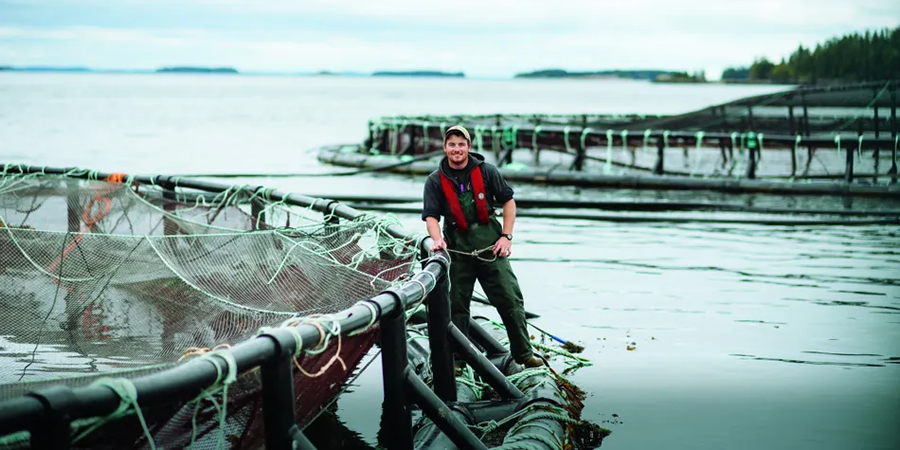
The aquaculture industry in the eastern Canadian province of Newfoundland and Labrador is experiencing a resurgence following a challenging period, with industry leaders and government officials expressing optimism about its future, despite ongoing environmental concerns, Canadian Broadcasting Corporation reported.
This was the prevailing sentiment at the Cold Harvest 2023 conference in St. John's, which marked its return after a four-year hiatus.
Elvis Loveless, Minister of Fisheries, Forestry and Agriculture in Newfoundland and Labrador, affirmed the government's unwavering support for the industry's recovery, despite lingering environmental apprehensions. In 2020, salmon production plummeted by 45% due to a combination of mass die-offs and global market difficulties brought on by the COVID-19 pandemic.
The industry has been on a path of recovery, and industry leaders are once again speaking optimistically about its prospects. Sheldon George, president of the Newfoundland Aquaculture Industry Association (NAIA), said that the aquaculture sector is now thriving, boasting improved disease management and advanced technologies to prevent fish escapes into the wild.
George also emphasised the industry's commitment to environmental stewardship, underscoring that protecting their ecosystems is essential to their operations.
The Newfoundland and Labrador aquaculture industry primarily focuses on salmon farming, but the provincial government is investing in diversifying the sector by exploring other species and plants.
In 2021, aquaculture production surged to nearly 20,000 tonnes, marking an almost 90% increase over the previous year. The industry's value also rose to CAD 189 million (~US$138 million; CAD 1 = US$0.74) in 2021, according to the latest data from the Fisheries Department.
This growth trajectory is expected to continue, with Grieg Seafood Newfoundland anticipating a harvest of at least 5,000 tonnes of salmon in Placentia Bay this fall.
Despite this optimism, critics continue to raise concerns regarding disease outbreaks, pesticide usage, and fish escaping from sea-based cages. However, Fisheries Minister Loveless dismisses these concerns as the voices of naysayers, asserting that the industry will thrive and contribute to global protein demands.
Moreover, the provincial government is determined to see annual production reach 50,000 tonnes, a goal that NAIA President George believes is attainable, albeit possibly taking longer than anticipated.
In a bid to further diversify the industry and promote responsible aquaculture production, Minister Loveless announced a new multi-species research and development fund. The fund, offering up to CAD 150,000 (~US$110,000) annually for the next three years, will support research into cultivating plants like seaweed and new aquaculture species such as wolf fish and sea urchins. Farming companies, research groups, and Indigenous organisations can apply for grants of up to CAD 50,000 (~US$36,700) to explore the feasibility of these ventures.
- Canadian Broadcasting Corporation


