


September 10, 2025
Israeli poultry farmers warn chicken imports could devastate local industry
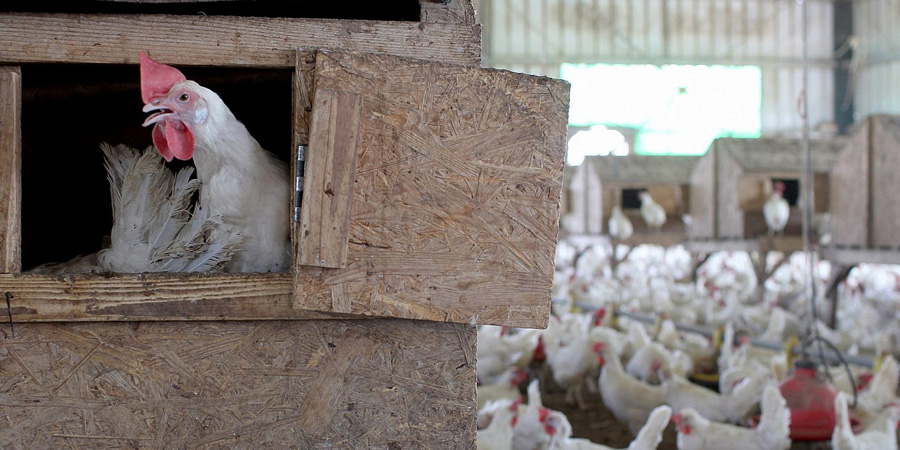
Poultry farmers in Israel are protesting a major food and beverage company's plan to begin importing frozen chicken, warning that the move could cost jobs—particularly in the war-hit northern and Gaza border regions—while also threatening food security and public health.
Baladi Group, based near the southern city of Kiryat Malachi, imports, manufactures, and markets food products, especially meat, fish, and frozen vegetables.
It informed the Tel Aviv Stock Exchange earlier this year of a five-year deal it had signed with a Brazilian factory for the production and marketing of kosher chicken, saying it would be investing ₪ 21 million (US$6.25 billion) in adaptations.
In a statement to The Times of Israel, it said, "We operate out of social and economic responsibility, and are committed to bringing the Israeli public kosher, high-quality chicken at a fair price. Fair competition in every industry, including chicken consumption in Israel, will benefit consumers."
But the Association of Poultry Farmers fears the potential impact to such an extent that it is running a radio campaign against it.
Moti Elkabetz, secretary of the Poultry Breeders Association, charged that Baladi would "collapse the market in Israel and make us dependent on Brazil, whose president wouldn't even approve the Israeli ambassador." (Last month, Israel announced it was downgrading ties with Brazil after the South American country reportedly refused to approve the credentials of Jerusalem's nominee to serve as ambassador to Brasilia).
Beef is imported to Israel because the local industry is unable to meet demand.
But Israel produces a surplus of chicken meat, according to Elkabetz, raising some 260 million broiler chickens annually, in an industry with an annual turnover of ₪ 10 billion (just under US$3 billion).
Israel boasts the highest per capita consumption of chicken meat — 58.2 kg per capita per year.
If prices were high in Israel, the problem lay with the retail chains, Elkabetz charged, echoing complaints by fruit and vegetable growers. "In the best case, the chain pays ₪ 6.5 (just under US$2) per kilogram to the farmer, when the costs are ₪6 ($US1.78) over the 40 days needed to grow a chicken. The slaughterhouse is paid something similar, but when the chain charges ₪20 per kilogram, it is making a profit of ₪8 (US$2.40), while the state enjoys the VAT."
Elkabetz explained that freezing surplus chickens was the only tool the industry had to prevent the chains from pressuring slaughterhouses to sell chicken meat at a loss. Around 30% of Israeli chicken was frozen. It was sold to institutions such as hotels and IDF kitchens, and made available to the public on rare occasions when Arab workers, the majority of slaughterers, could not work, such as on the Muslim holiday of Eid al-Fitr.
"Imported frozen chicken will take away this tool for regulating prices," Elkabetz said, adding, "It won't bring down the cost of living."
Elkabetz continued that he expected Baladi to only import profitable parts of a chicken, such as thighs, leaving farmers unable to supply cheaper wings if they couldn't compete on the costlier parts.
He said there were 600 large chicken farms in Israel, all in kibbutzim and moshavim, with most situated on the Lebanese and Gaza borders.
Smaller farmers had been forced out of business over the years due to small profit margins, he added. Several of the 20 kosher slaughterhouses for poultry were also located on the border, he went on, in places such as Kiryat Shmona and Shlomi in the north and Sderot in the south.
Approximately 6,000 people were connected to the industry through branches such as slaughter, transportation, and the supply of chicken feed.
"The Agriculture Ministry supports us," Elkabetz said. "It understands that the sector in Israel will collapse if there are unlimited chicken imports."
In a statement, the Agriculture Ministry said, "There is no shortage of chicken meat production in Israel. The broiler industry constitutes a central pillar of national food security, both as a source of fresh, high-quality, and safe chicken for the public and the institutional market, and as a strategic industry that provides broad employment in the periphery and infrastructure for the independent production capacity of the State of Israel."
By contrast, the Finance Ministry said it "supports expanding the import of frozen chicken as part of an effort to reduce the cost of living." But it added that this would only be possible with regulatory changes from the Agriculture Ministry and the Chief Rabbinate.
The latter has reportedly delayed granting the Brazilian plant kosher certification and declared that there is no need to import chicken.
In July, Baladi filed a petition with the High Court demanding that the Rabbinate either apply the existing rules for slaughtering poultry abroad or publish alternative procedures.
- The Times of Israel


