


September 5, 2017
CP Foods continues efforts to combat climate change

Charoen Pokphand Foods PLC (CP Foods) has implemented practices to reduce water and energy use in its production line, the company says in a press release.
The moves are purposed to help mitigate impact on the climate. In combating climate change, the company also launched more than a hundred energy management projects.
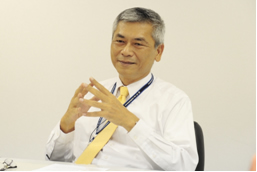 CP Foods, according to Suchart Wiriya-apha (pictured, right), its senior president for safety, health, environment and energy (SHE & EN), is committed to environment sustainability, which is based on reduction and optimisation of energy and water consumption. The company has in fact implemented better use of biomass, water and waste at all sites in order to cut down the amount of water during operations.
In addition, CP Food has set a five-year strategic goal (2015-2020) to encourage all businesses to "carry out activities and create innovation." Its strategies are based on considerations of environmental impacts as well as balancing profitable growth and improved operations in accordance with the UN's Sustainable Development Goals (SDGs).
By 2020, the company aims to reduce greenhouse gas emission by 5% per production unit, 10% for water use per production unit, and 30% for waste per production. CP Food's "SHE & EN" standards will be implemented to all manufacturing plants in 16 countries this year.
Wiriya-apha added that the company has engaged in sustainability by operating its business in an environmentally friendly manner. CP Foods also introduced the 4Rs (Reduce, Reuse, Recycle, and Replenishment) principle throughout its processing lines. These actions complies with both Thai regulations and international standards including ISO 14001, ISO 50001 and OHSAS 18001 as well as Global Water Tool, Local Water Too and GHG Reporting.
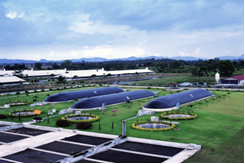 All energy optimisation measures put in place by farms, feed mills and processing plants involve the use of renewable energy, management and value creation of waste throughout the process, CP Food said. In addition, reduction of resource use in packaging are carried out to stem greenhouse emission.
The company has launched 104 new projects in 2016, cutting energy waste and greenhouse emission by more than 80,000 gigajoules and 72,000 tonnes of carbon dioxide equivalents, respectively. These efforts led to cost savings of more than THB50.6 million (US$1.5 million), a 7% cut-down of water consumption per production unit, and a 17% reduction of disposal waste to landfill.
One successful CP Foods' project involves the installation of new PVC curtain walls (ISOWALL) at broiler farms so as to maximise the efficiency of ventilation systems and enhance control of temperature inside farms. The feed conversion ratio (FCR) of chickens is thus improved, along with lower bird loss, a 8% cut in electricity and decreased water usage of 6,300 cubic meter a year.
Furthermore, CP Foods has collaborated with Thailand Greenhouse Gas Management Organization to register and certify the Low Emission Support Scheme (LESS).
Currently, 169 of CP Foods' factories and farms are registered in the LESS project and have helped the company to reduce greenhouse gas emissions by 739,734 tonnes of carbon dioxide equivalents.
- CP Foods


