


August 29, 2023
US university research team seeks quicker ways to detect salmonella in chicken supply
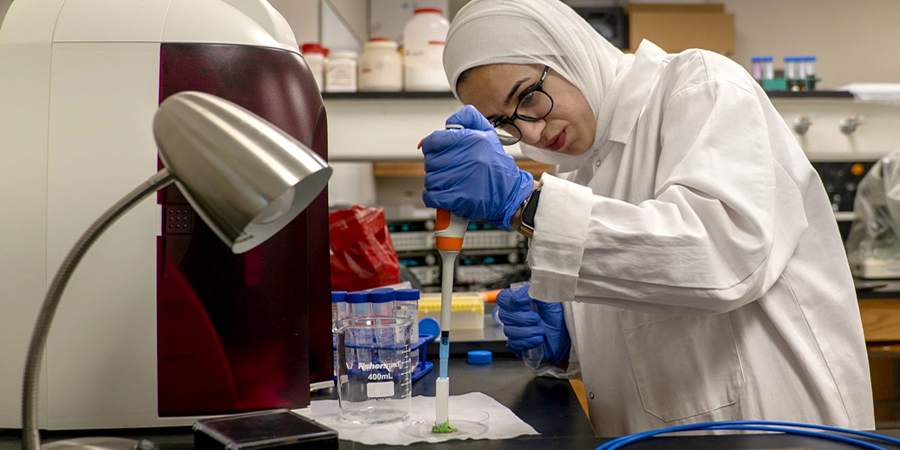
A research team led by the University of Missouri (US) is responding to the threat of salmonella by developing ways to more quickly detect the pathogen in the entire chicken supply chain.
"We just want to make a safe food supply for everyone," said Kate Trout, one of the project's principal investigators at the University of Missouri. "(Including) rural communities, low income communities, which we now have higher rates of salmonella infections."
Trout explained the research aims to take the results from sensors that rapidly detect small amounts of salmonella and pair them with data on food production, animal health, population health and other geospatial data. This lines up with the United States Department of Agriculture's (USDA) goals for mitigating salmonella in the food supply, she added.
While the United States' chicken supply chain is relatively safe with few notices of contamination, experts said the current testing process often takes several days.
"People are constantly looking for better ways to sample, better ways to test and get faster results," said Jim Dickson, a professor in Iowa State University's animal science department. "The quicker a processor gets results, the quicker they can react to them."
The USDA Food Safety and Inspection Service tests for the bacteria, and major poultry processors also typically test their chicken every day too, he said. But testing laboratories are often off-site, and preparing a sample before it can be tested can take a day or two.
"Realistically, in most cases we're talking about three days from the time of the sample to the time of the result,"Dickson said. "By the time they get results back, that product is gone. It's already been shipped."
The team's research, funded by the National Science Foundation's Convergence Accelerator, addresses the issue of timing by developing new portable and easy-to-use sensors that can quickly detect small amounts of contamination.
"One that allows us to do testing basically within one hour," said lead principal investigator Mahmoud Almarsi. "The second one, the optical one, we are testing within 10 minutes and probably even lower than 10 minutes."
Almarsi added that the team is also creating a third sensor that will be able to detect the specific kind of salmonella present in a sample.
"There are maybe 2,500 different types of salmonella," Almarsi said. "But not all of them are in poultry." This level of granularity would go further than the current industry standard, which only detects salmonella in general, said Kantha Channaiah, an assistant professor of food science at Mizzou.
"This is going to play an important role in saving a lot of resources and time," he said. "For industries, for commercial manufacturers, time is money."
- KCUR 89.3


