


August 28, 2025
Thailand's livestock sector optimistic on record exports despite tariff uncertainty
In the latter half of 2025, experts and forecasting agencies predict that the Thai economy will remain under strain from US import tariffs, geopolitical tensions, volatile energy prices, and a slowing global economy—all posing significant challenges.
However, the livestock sector, which is the country's food security and a key export product, will continue to grow and is expected to reach a record high value of ฿333 billion (US$10.25 billion) this year, according to Dr Somchuan Rattanamangalanon, Director-General of the Department of Livestock Development.
Dr Somchuan stated that Thailand's livestock exports during the first six months of 2025 (January-June) totaled 1.78 million tonnes, an 8.36% increase compared to the same period in 2024. Exports reached ฿163.934 billion (US$5.05 billion), a 3.78% increase. He expects continued growth this year and will contribute to at least 4% year-on-year growth, reaching approximately ฿333 billion, a record high for the second consecutive year. This is primarily due to the government's policies, under the supervision of Atthakorn Sirilathayakorn, Minister of Agriculture and Cooperatives, and Akara Prompao, Deputy Minister of Agriculture and Cooperatives. These policies aim to elevate agricultural products to meet international standards of quality and safety, in line with trading partner countries' requirements. Negotiations are ongoing to open new markets for Thai agricultural products.
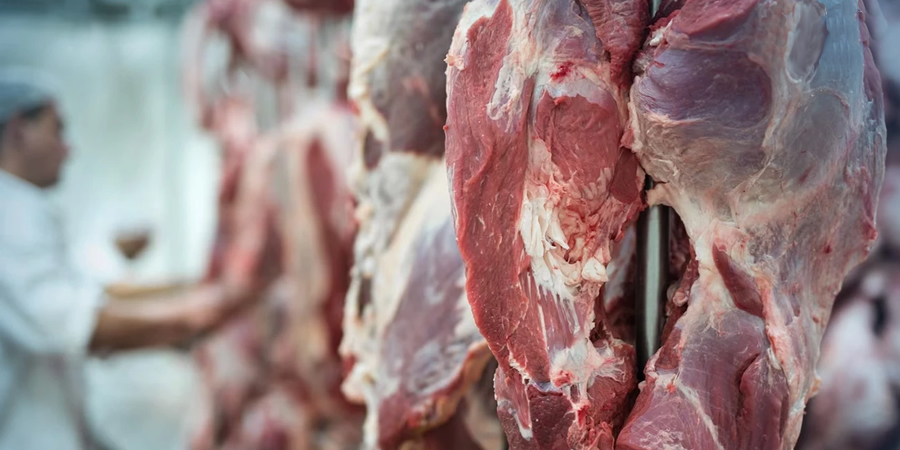
Among livestock products, the top exports during the first six months were chilled, frozen, and processed meat, valued at ฿83.979 billion (US$2.58 billion), a 5% increase from the previous year. Frozen meat accounts for 50% of overall exports, particularly poultry, which continues to enjoy high demand in key markets such as Japan, the United Kingdom, the European Union, China, Malaysia, South Korea, and Singapore.
Dr Somchuan added that livestock exports are still capable of sustained growth due to the increasing demand for protein sources for consumption, in line with the growing global population. This, coupled with climate change and the emergence of major animal epidemics in various regions of the world, impacts global livestock production. These factors are all contributing to the expansion of Thai livestock products in the global market.
"The Department of Livestock Development works collaboratively with relevant government agencies, the private sector, and producers to maintain production standards and ensure disease-free status, preventing impacts on international trade and maintaining competitiveness. This enables continued retention of existing markets and expansion into new markets. This success is the result of continuous supervision of food safety for livestock products throughout the production chain, from farms, slaughterhouses, processing plants, and distribution centers. This ensures traceability and continuous production processes, ensuring high quality and hygiene standards, using Good Manufacturing Practices (GMP) and HACCP systems, in export establishments."
In addition, the Department also collaborated with relevant agencies to promote export negotiations and open markets for key livestock products, including frozen poultry, processed meat, eggs and egg products, and pet food. This is expected to attract increased acceptance from various trading partners. For example, the opening of the chilled and frozen pork and free-range chicken eggs market to Singapore, pork and beef markets to Malaysia, and cooked poultry and poultry to countries such as the Philippines and New Zealand.
- Thansettakij


