


August 28, 2023
Veterinary official hints strong potential of emergency animal diseases entering Australia
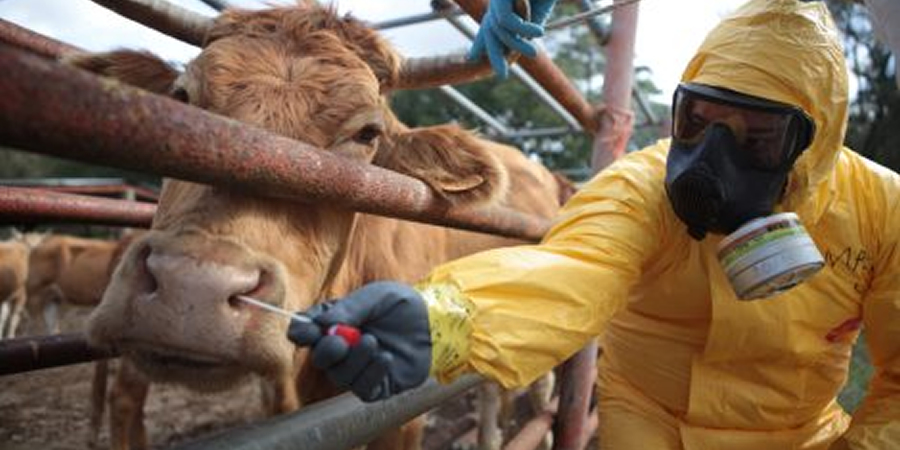
The increasing longer term global risk and 'inevitability' of foot and mouth disease (FMD) reaching Australia was highlighted to saleyard managers at a conference in Bendigo, Victoria, Australia, on Augsut 24.
At the Australian Livestock Saleyards Association conference, Victorian chief veterinary officer Graeme Cooke said the bad news is that feared, critical animal diseases like FMD, lumpy skin disease (LSD), African swine fever (ASF) and avian influenza (AI) "are increasing in risk globally."
"What Australia is seeing to our north is essentially a symptom of that," he added. "The bad news also, and I've had to deal with foot and mouth twice in my career, is these are feared diseases because they are not easy to get rid of… there is no real magical solution, you just have to get on and do it."
Likening an emergency animal disease (EAD) incursion to a very tough football match he said the good news is also that Australia, and especially Victoria, were "very much more match fit."
Dr. Cooke said event delegates were strategic assets in an EAD outbreak. He pointed out that plenty of countries with developed economies and good veterinary and border systems have had FMD, including the United Kingdom, and saleyards were central to the outbreaks, with normal trading seeding the disease's spread.
"And this is Australia's problem and Victoria's problem," he remarked.
Dr. Cooke explained the global risk of an EAD outbreak is increasing globally because when the world goes into a global cost of living crisis, the potential for illegal movements is much higher.
Climate variability is also affecting the way the diseases are spreading. The effects of social and economic migration and the breakdown of borders were also factors. Dr. Cooke noted there has been a 30% increase in container traffic into Australia in the last four years.
He said Indonesia has announced that it does not expect to get rid of FMD for about 13 years, lengthening the period of risk to Australia's north "for quite some time."
Despite describing the increased global risk, Dr. Cooke recited a June 2022 structured expert judgment by the Centre for Excellence for Biosecurity Risk Analysis of a 56% combined estimated probability of a major EAD occurring in Australia by 2027.
He said Victoria's density and variety of agriculture and the number of movements from saleyards lent itself to the rapid spread of an EAD should there be an incursion.
He added that Australia was moving to a space where the level of risk of an EAD outbreak was "plausible to probable", rather than being a 'black swan' event.
"So we have to be prepared," he advised.
According to Dr. Cooke, there had seen no decrease in interest across the industry and government in getting prepared for an EAD incursion, despite a Roy Morgan poll indicating a halving of concern among farmers about biosecurity in the past year.
He said his key message was that Australia was now so much better prepared for an EAD incursion.
Dr. Cooke also outlined the various federal and Victorian biosecurity measures being taken to lift preparedness for an EAD outbreak and described what would happen in the first 72 hours after the confirmation of a FMD outbreak in Australia.
In a later statement, Dr Cooke said a range of factors means the risk to Australia from a range of EADs will remain high.
"That is why it is right for both government and industry to put a large effort now into preparedness for possible outbreaks of such diseases," he said. "Preparing for a possible emergency animal disease detection is the number one priority for Agriculture Victoria.
"Victoria manages biosecurity threats with regular preparation and scenario-based work carried out by Agriculture Victoria, including examining the very significant needs if there were an emergency animal disease outbreak."
- Beef Central


