


August 14, 2024
Norwegian salmon industry faces harsh winter and El Nino
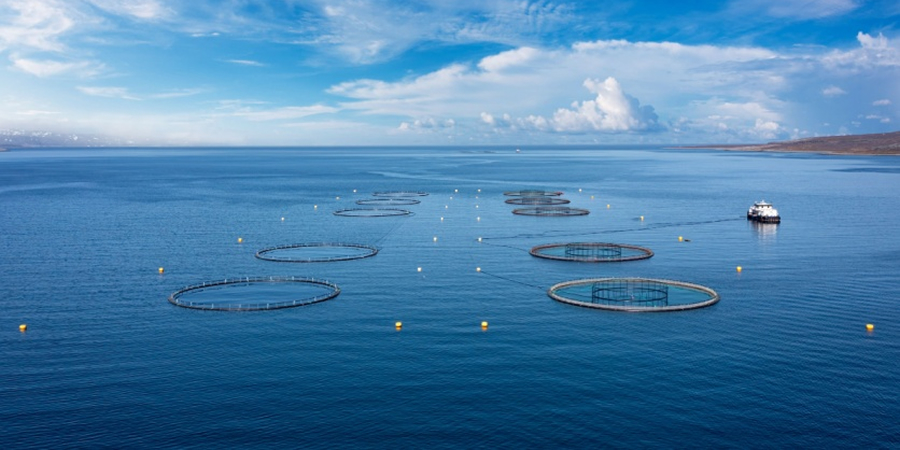
Norwegian salmon farmers are grappling with severe challenges stemming from an unusually harsh winter and the El Nino climate phenomenon, Reuters reported.
These conditions have led to record fish mortality rates and raised concerns about the industry's outlook as the warmer summer months approach.
The Norwegian Veterinary Institute reported that fish mortality has reached an unprecedented 16.7% so far this year. This increase has been driven by a combination of El Nino, which raises global temperatures, followed by colder waters and the highest jellyfish attacks in 20 years.
Carnegie analyst Philip Scrase described the situation as "something close to a perfect storm for the industry when it comes to challenging farming conditions."
Norway, which is the largest producer of farmed Atlantic salmon, accounting for 50% of the global market, is hopeful that the summer will bring some relief after a difficult start to the year. However, the record high temperatures and warmer waters forecast for the coming months are expected to heighten the threat of sea lice infestations, a significant concern for salmon farmers.
DNB analyst Alexander Aukner noted that treating sea lice with vaccines often stresses the fish, potentially compromising their welfare and resilience to other diseases. To address this issue, companies like Leroy Seafood are experimenting with special underwater cages designed to keep the lice at bay by placing them deeper in the sea.
To protect their stocks, some farmers are keeping young salmon longer in land-based facilities to shield them from harsh environmental conditions. However, this approach has not yet resulted in improved mortality rates. In fact, some facilities are experiencing excessively high temperatures, causing fish to outgrow their organs and die when introduced to seawater, according to Christian Olsen Nordby and Kristoffer Haugland from Arctic Securities.
Salmon exports are a significant contributor to Norway's economy, accounting for approximately 2% of the country's annual GDP. Last year, Norway exported 1.2 million tonnes of salmon valued at US$11.2 billion, according to the Norwegian Seafood Council.
To protect the industry's reputation, Norway has implemented a ban on the export of wounded fish, classified as low-grade salmon. This policy has forced farmers to increase domestic processing of low-grade salmon into premium products like fillets or smoked goods, which can then be legally sold abroad.
Before the ban, unprocessed fish were often exported to European markets, bypassing tariff barriers. Now, farmers must sell the surplus injured fish at a discount to third-party processors, Scrase explained. Companies with filleting capacity, such as SalMar, are facing inefficiencies due to a shortage of workers needed to manage the higher volumes.
In response, major producers like Mowi and smaller rival Grieg Seafood are upgrading their processing facilities to better handle the situation. However, Scrase pointed out that salmon spot prices are declining as the availability of premium salmon increases, easing supply constraints.
Despite these efforts, analysts are sceptical about the industry's ability to maintain harvest volumes. SalMar lowered its 2024 volume guidance earlier this year, while other major players have kept their projections unchanged. Kontali, an aquaculture data provider, has revised its 2024 volume growth estimate for Norway and the global market to just 1%, reflecting lower sea biomass.
Aukner and Scrase anticipate that many farmers will struggle to meet their volume targets this year, with the summer being a critical period for determining full-year outcomes. Nordby and Haugland added, "We are yet to see material downgrades in harvest volumes, but the 'buffer' in volume guidance has definitely been eaten into and reduced."
- Reuters


