


August 13, 2025
Scientists race to prevent invasion of aggressive, flesh-eating flies in the US
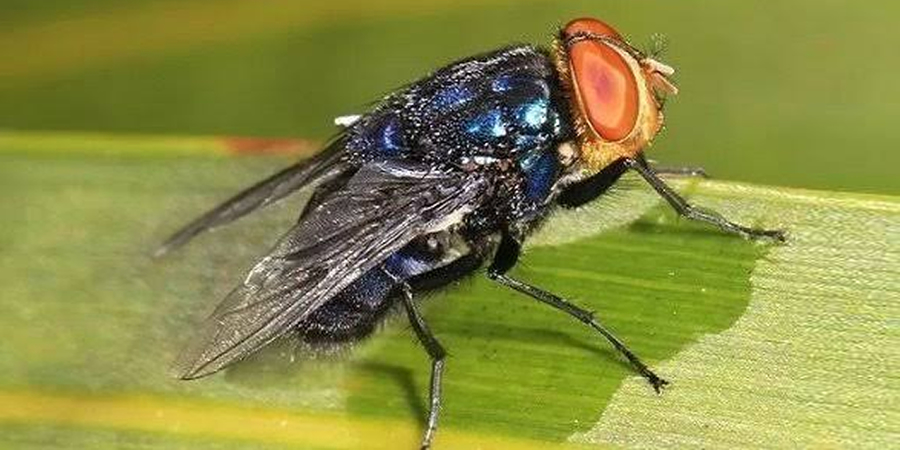
Packs of flesh-eating New World screwworms (NWS) may soon invade the United States, but the state of Texas is mounting a strategy to stop them.
The life-threatening maggots that prey on the open wounds of mammals pose a massive risk to ranchers and farmers nationwide.
The New World screwworm has been prevalent near the Gulf Coast and the Pacific Ocean.
The parasites are poised for a US invasion, according to Agriculture Secretary Brooke Rollins, but America has been working with Mexico to eradicate the bugs before they hit the country.
The Texas Department of Agriculture announced last week it will deploy a synthetic bait called "Swormlure" to attract the flesh-eating flies with a scent similar to open wounds.
The trap "will kill up to 90% of flies on contact," the state said.
The Texas plan also includes a new feed additive for livestock and deer, as well as the development of a vaccine that can kill screwworm larvae.
"When it comes to safeguarding Texas' US$15 billion cattle industry, we need to focus on action rather than words," Texas Agriculture commissioner Sid Miller said in a statement.
"Texas ranchers deserve better than outdated practices and bureaucratic complacency," he added. "We're taking real action with effective solutions to stop NWS in its tracks."
The New World screwworm can threaten cattle, livestock and, in rare cases, humans.
The parasitic fly exploits open wounds to feed its spawn.
Female flies can drop hundreds of eggs on wounds. The screw-shaped larvae will emerge and then twist and dig into the victim before eating them alive and leaving a deadly lesion behind.
Biologists and researchers reported in the journal Emerging Infectious Diseases that the flies have been feasting on mountain tapirs, which were not previously known to be at risk.
This might be a sign that the parasites' appetite is expanding, researchers said.
The United States eradicated the flies decades ago. However, a recent surge in Panama signalled the flies might move north.
The Trump administration announced plans to breed and sterilise billions of flies to airdrop over Mexico and southern Texas to weed out the maggot.
The US Department of Agriculture has a five-point plan that will help detect, control and eliminate the pest.
"The United States has defeated NWS before and we will do it again," Rollins said in a statement. "We do not take lightly the threat NWS poses to our livestock industry, our economy, and our food supply chain."
Former officials have warned that the Trump administration's cuts to agricultural research could make it harder to eliminate the flies, according to the New York Times.
"Screwworm's a pretty specialised thing, right?" Kevin Shea, a former administrator of the Animal and Plant Health Inspection Service, told the New York Times. "Not too many people know about it or ever worked in it, and if you lose people who have that expertise, that's a big problem."
Humans are at risk of myiasis, an infestation of maggots in the human tissue caused by the screwworm, according to the Centres for Disease Control and Prevention.
People who travel to South America and the Caribbean, where the parasites are typically located, are most at risk.
"You are at higher risk for NWS if you travel in these areas, are around livestock in rural areas where the flies are, and if you have an open wound," the CDC says.
The CDC says that infestations are "very painful" where you see maggots around an open wound. "They could also be in your nose, eyes, or mouth," the CDC says.
Other symptoms include skin lesions that don't heal, wounds that get worse over time, bleeding from open sources and feeling larvae move "within a skin wound or sore, nose, mouth, or eyes."
- Axios


