


August 13, 2024
Ireland sees 37% drop in number of liquid milk producers
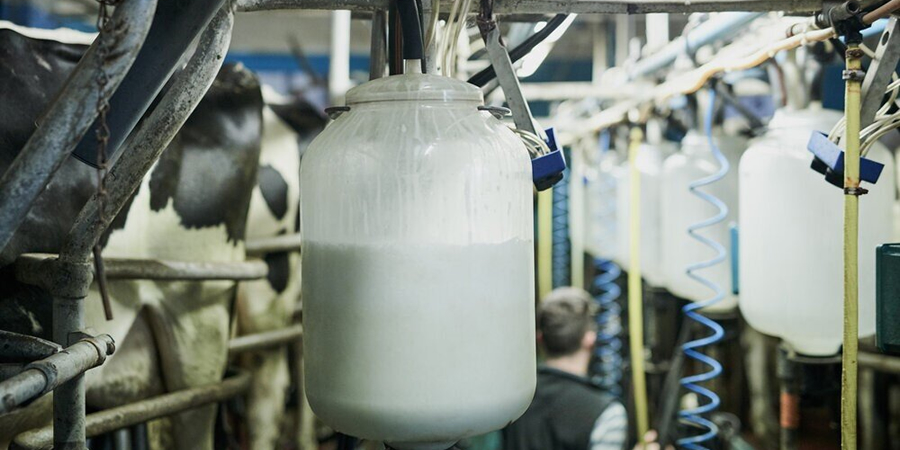
The number of liquid milk producers in Ireland has fallen by 37% or 688 farmers in the past decade, according to the country's National Milk Agency.
The agency's annual report reveals that the number of registered milk supply contracts in 2022/23 decreased to 1,228, a drop of 58 contracts or 5% on the previous year. In the current 2023/24 milk year, a further 49 producers have exited, bringing the total number of registered producers to 1,179.
Since the establishment of the agency, the number of registered contracts has fell by 65% from 3,344 in 1995. Data shows that last year, the number of All Year Round (AYR) contracts declined by 51 to 1,102 while the number of winter contracts decreased by 7 to 126.
The difference in 2023 between the national average liquid (43.45c/L) and manufacturing prices, based on an equal solids content, was an estimated 2.73c/L, compared to 2.09c/L in the previous year.
Denis Murphy, chair of the National Milk Agency, said that the agency is concerned by the "continuing decline in the number of registered producers and in their annual milk supplies".
"Many traditional long-term registered producers are exiting the fresh milk supply chain and are not being replaced," he said.
Murphy added that many suppliers are "reviewing the economic benefit of producing all-year-round supplies of milk for the domestic fresh milk market".
He said that the agency is also concerned about the impact of nitrates changes on liquid milk suppliers.
"Stocking rates per hectare are a key driver of profitability in Ireland's pasture based system of milk production," Murphy stated. "Given this reduction in stocking rates under the nitrates derogation, many registered producers are reviewing the sustainability of their all-year-round milk supply business model.
"Generational succession, lifestyle changes, and labour availability are further factors which confront the all-year-round milk supply model in a sector where seasonal milk production is the norm."
The annual report outlined that domestic milk supplies to creameries and pasteurisers in 2023 were 8,459 million litres, a decrease of 366 million litres or 4% on 2022. This was the first decrease in domestic milk supplies since EU milk quotas were abolished in 2015, the agency said.
Milk supplies fell in every month in 2023, except February, with a dramatic fall of 19% in the winter months of October to December 2023, compared with the same period in 2022.
95% of domestic milk supplies were utilised in the manufacture of dairy products, which were mainly for export, while 5% of supplies were processed for liquid consumption on the domestic market.
National consumption of fresh milk last year was 572 million litres, an increase of five million litres or 1% on the previous year.
Sales of whole milk represented 64% of fresh milk sales, while sales of low-fat and skimmed milk represented 36% of sales.
The annual report noted that the market share of domestic producers and processors declined to 71% in 2023.
- Agriland


