


August 12, 2022
A look into recent trends in India's animal nutrition
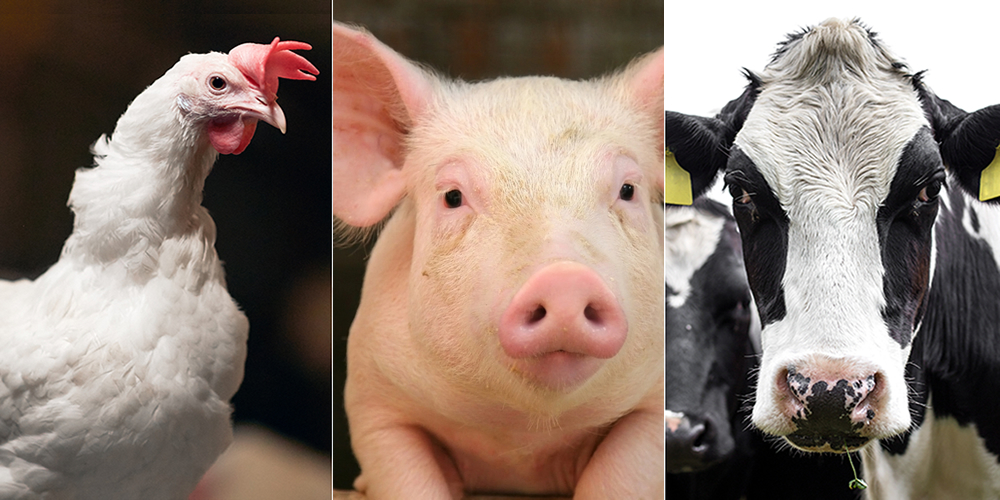
India is a global leader in dairy with a record milk production of 210 million tonnes in 2021 with a growth rate of 6.50%.
The expected target for 2025 is 240 million tonnes. Over the past two decades, India's milk production has almost tripled. This phenomenal increase could happen due to several policy and technological initiatives.
Feeding accounts for more than 70% of recurring cost of milk production under local conditions. With this growing demand for milk and milk products, there will be a greater pressure on feed resources for achieving the target.
As per available national data, India is facing a shortage of 11%, 35% and 28% of dry fodder, green fodder and concentrate, respectively. In fact, there have been several research initiatives and innovations that would help address feed deficit.
Some of the major technological innovations in livestock feeding are discussed in this article.
Green and dry fodders
Fodder is a vital component of dairy production. The area under green fodder cultivation in India has slightly increased from 4.5% to 5.5% due to continued efforts of developing new fodder varieties with higher biomass, improved protein value, multi-cut cereal varieties (sorghum) and drought tolerant characteristics.
A good amount of research has been done on improving the quality of dry fodder. However, benefits from this area have not been adopted by many end users.
On the other hand, with the introduction of new grain varieties targeted for higher grain yield, there is a sharp decline in the quality of straw. Moreover, due to problems in labour and water availability, farmers are focusing on commercial crops in place of cereals, resulting in a deficit of straw in some regions.
Fodder cultivation
The production of green fodder can be further increased with the appropriate selection of fodder crops and their varieties along with adoption of improved cultivation practices.
As crop residues continue to be the major source of roughage for livestock in India, there is a need to improve their nutritive value. The supplementation of dry fodder with nitrogen, energy and minerals would help in improving the rumen fermentation and microbial activity, thereby improving feed utilisation.
The nutritive value of dry fodder can be increased through nitrogen-energy enrichment. The nutritive value of such treated straw will be almost similar to medium quality green fodder.
Improving fodder availability
Some ways to improve fodder availability includes:
- Evolving suitable variety of fodder crops and hydroponics;
- Developing awareness on fodder cultivation among farmers;
- Expanding land for fodder production;
- Establishing local fodder markets or fodder banks;
- Judiciously using green fodder and dry fodder.
Hydroponic green feed: The germination of grains like maize, barley, oat or wheat through the hydroponic technique produces consistent quantities of 'green feed' throughout the year at a rate of about 4-5 kg per 1kg of seed within a 10-day period. 'Green feed' has been found to substantially increase milk yield in dairy cows when fed as a key supplement.
Technologies for nutrient management
Bypass protein: For high-yielding dairy animals, it is desirable to incorporate protein sources which are rich in bypass protein (in the concentrate mixtures), especially during the early lactation stage. Ingredients (such as cotton seed cake, solvent extracted coconut cake, treated groundnut or soybean meal, maize gluten meal, brewer's grain and legume/tree leaves) are good sources of bypass protein. It is necessary to maintain a minimum of 45-50% of bypass protein within a total crude protein content. The feeding of bypass protein has shown positive effect on milk yield, milk quality and fertility.
Micronutrients: Most infertility and low immunity problems in dairy animals have been attributed to the deficiency or imbalances of micronutrients (particularly trace minerals like Cu, Zn, Mn, and Co). Providing area-specific mineral mixture based on the deficiency of minerals in soil, plant and animals in different agro-climatic zones is the most appropriate and cost effective method of mineral supplementation. This approach has been found to improve reproductive efficiency and health in crossbred cattle under field conditions. The use of chelated trace minerals during peak production and stress period will greatly help. Research on nano minerals for improving bioavailability is gaining importance.
Total mixed ration (TMR) - For TMR, all ingredients (roughage, concentrate and supplements) are mixed and offered to the animal. This enhances the digestibility of roughages, reduces nutrient loss and results in increased rumen microbial protein synthesis, thereby improving productivity and profitability. Crop residues, fibrous fodders and nutritious, unconventional feed ingredients can be effectively used in TMR. Preparing TMR or complete feed requires machinery, which involves investment. Such machinery are to be installed at the community level and involve cooperative milk societies.
Ration balancing: Livestock diets need to be balanced in terms of fodder, protein, energy and minerals. Depending on local feed/fodder resources and nutrient requirements, various combinations of ration can be formulated to suit the productive potential of animals. Based on the data of nutrient profiles of feed and fodder and livestock production requirements, software programme models have been developed by National Dairy Development Board (NDDB) and National Institute of Animal Nutrition and Physiology (NIANP). A simple tool was also developed at NIANP for ration balancing using dry fodder, green fodder and concentrate mixture.
Methane mitigation: Specific tree leaves for the feeding of ruminant livestock (along with other feed resources) is a strategic approach to supplement critical nutrients and reduce methane emission. There is a need to propagate fodder tree cultivation. Fodder seeds/saplings need to be provided to farmers through local livestock departments and milk unions.
Strategic approaches
As crop residues continue to be the major source of roughage for Indian livestock, there is a need to improve their nutritive value both in terms of their intake and digestion.
Enriching crop residues with urea-ammoniation has shown promising benefits but needs adoption at field level. ICAR-CIAE (Bhopal), in collaboration with ICAR-NIANP (Bengaluru), has devised a method of urea spray while the straw is being baled. This technique is useful to improve nutritive value of straw and help in ease of transportation.
The supplementation of available feed resources rich in nitrogen/protein and minerals would help in improving rumen fermentation and microbial activity, thereby improving feed utilisation. Th catalytic supplementation of most critical nutrients during peak milk production as a special feed mixture is found to improve milk quality and reproductive efficiency and general health in crossbred dairy cows.
Conclusion
Technology development, upscaling and adoption will be key to achieve improved productivity.
There is a need to refine existing feeding practices to make them more economical and sustainable.
Optimum resource utilisation and enhancing the efficiency of nutrient utilisation are the main factors for sustainable livestock farming.
- Dr. Dinesh Bhosale


