


August 8, 2025
Low vaccination rate leaves UK livestock exposed to bluetongue
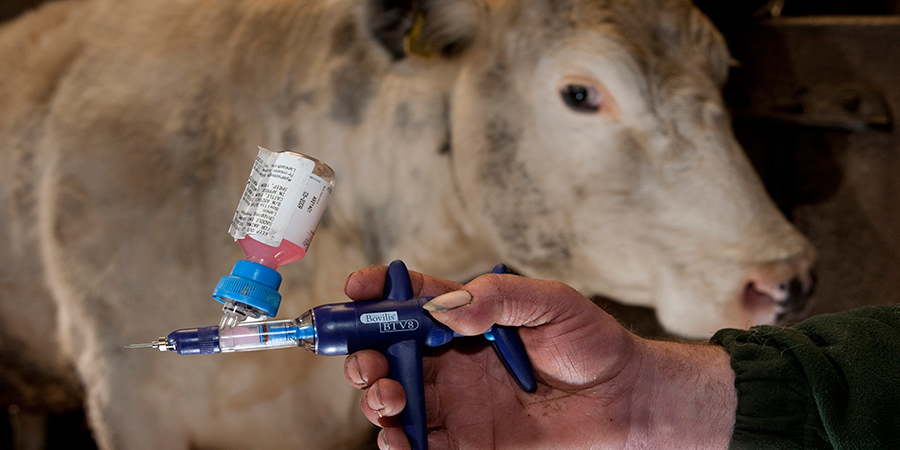
With bluetongue disease knocking on the door, and with less than 3% of ruminant livestock vaccinated in United Kingdom, government and private vets are urging a much more rapid uptake of the protection available.
Bluetongue virus BTV-8 first appeared in Europe in 2007, and reached the UK with a vengeance last year as a new strain, BTV-3.
In total there were 262 cases involving more than 900 animals, with some flocks suffering significant losses – and now the disease is here again.
At time of going to press there had been seven cases, stretching from Norfolk to Herefordshire.
Symptoms, in both cattle and sheep, range from general lethargy, sores and nasal discharge to abortion, foetal deformities and stillbirths. The consequences for affected animals and farm businesses can be severe.
The importance and effectiveness of vaccination was spelled out by the Department for Environment, Food and Rural Affairs' (Defra) head of exotic disease control, Gordon Hickman, in a recent Ruminant Health & Welfare/AHDB webinar.
While the Netherlands has been one of the worst-affected areas for BTV-3 in Europe, Hickman said he was not aware of any cases there in this vector season, with 95% of Dutch livestock said to have been vaccinated.
"There are certainly bluetongue cases in France – both BTV-8 and BTV-3 – and there are cases in Spain. It started in the warmer areas and is spreading north," said Hickman.
"We can expect more, but clearly countries that have vaccinated widely would expect to see much less disease."
According to the experts, UK temperatures have been warm enough for long enough to ensure that the midge population is already infected. The peak number of cases in livestock will likely be in September.
"That is getting close, especially if we are looking to get two vaccinations in and allow enough time for full immunity to develop," vet Sara Pedersen of the Wales Animal Health and Welfare Framework Group told the webinar.
Wales remains particularly vulnerable, despite that fact that the only cases of bluetongue last year came from bought-in animals.
Indeed, the one case seen in Herefordshire last month was in an animal that was destined to move to Wales, and was only kept out due to current movement restrictions.
"We are fortunate that bluetongue hasn't entered any high-density livestock areas yet, particularly down the Welsh border with England," said Pedersen.
"But there is growing concern about the poor uptake of vaccination. We have to be ahead of the virus and give time for immunity to build up."
Efforts to encourage vaccination have been thwarted in part by misinformation on social media, including suggestions that the disease is harmless and that vaccines do not work.
In response, the Wales Animal Health and Welfare Framework Group, in conjunction with the Wales Veterinary Science Centre, launched the #DoNotWaitVaccinate social media campaign in early July.
It aims to encourage livestock keepers to discuss vaccination with their vets, as well as to counter the myths and to get farmers to share their own vaccination experiences.
"Providing this sort of reassurance really is our best way of battling bluetongue," said Ms Pedersen. "Although vaccination rates are increasing, they are still less than 1% in sheep."
She urged producers to take a more proactive approach to vaccination, and spare their livestock the potential ravages of a bluetongue outbreak.
- Farmers Weekly


