


August 4, 2025
Vietnam to introduce multi-storey pig farming
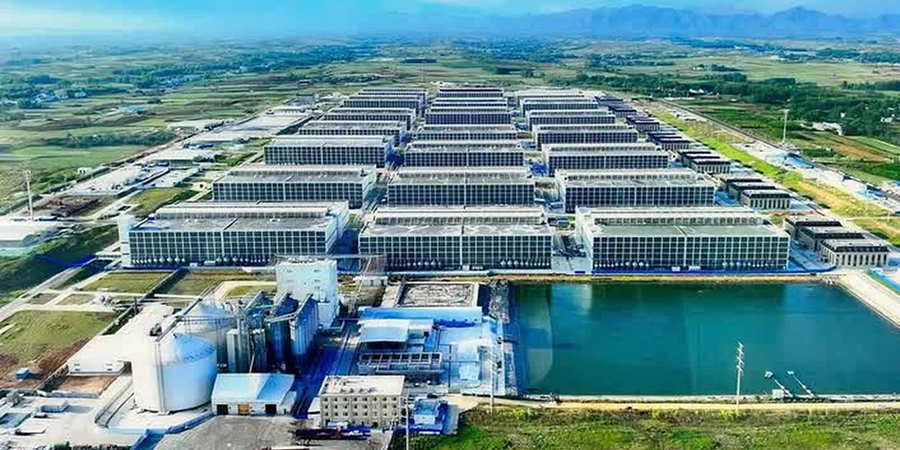
The Vietnamese Ministry of Agriculture and Environment (MAE) has recently submitted a proposal to Prime Minister Pham Minh Chinh, seeking approval to implement a multi-storey pig farming model aimed at improving productivity, ensuring biosafety, and conserving land.
The MAE reported that pig farming currently accounts for approximately 62%-65% of total live meat production, with the output in 2024 reaching about 5.2 million tonnes, ranking sixth globally.
The country's per capita pork consumption in 2024 reached 37 kilogrammes per person, ranking fourth worldwide.
Given the current situation where small-scale farming still represents a large proportion of supply and struggles to ensure biosafety, which previously led to the African swine fever outbreak during 2019-2020 that resulted in the culling of over 9 million pigs and losses exceeding ₫30 trillion (US$1.14 billion), the ministry believes there is a need to transition to a modern, sustainable model.
Currently, two enterprises — BAF Viet Nam Agriculture Joint Stock Company and Xuan Thien Thanh Hoa Joint Stock Company — have proposed implementing the multi-storey pig farming model.
BAF Viet Nam, in partnership with China's Muyuan Group (China), is developing a six-storey farming complex project in Tay Ninh, with a capacity of 64,000 breeding sows, producing 1.6 million meat pigs annually.
The project has a total investment of over ₫12 trillion (US$457.8 million), with expected annual revenue of ₫12 trillion-₫13 trillion (US$495.80 million) once fully operational.
China is currently a pioneer in multi-storey pig farming with nearly 4,500 buildings, supplying approximately 30 million meat pigs annually.
This model demonstrates numerous advantages such as land conservation, labour savings, reduced site clearance time, and improved land use efficiency up to 4.3 times compared to that of traditional farming.
The MAE assesses that the multi-storey pig farming model can meet stringent biosafety requirements, reduce emissions, effectively treat waste, and enhance economic efficiency.
- Nhan Dan Online


