


July 31, 2025
Heatwave hits South Korea's food supply chain as milk and fish face climate pressures
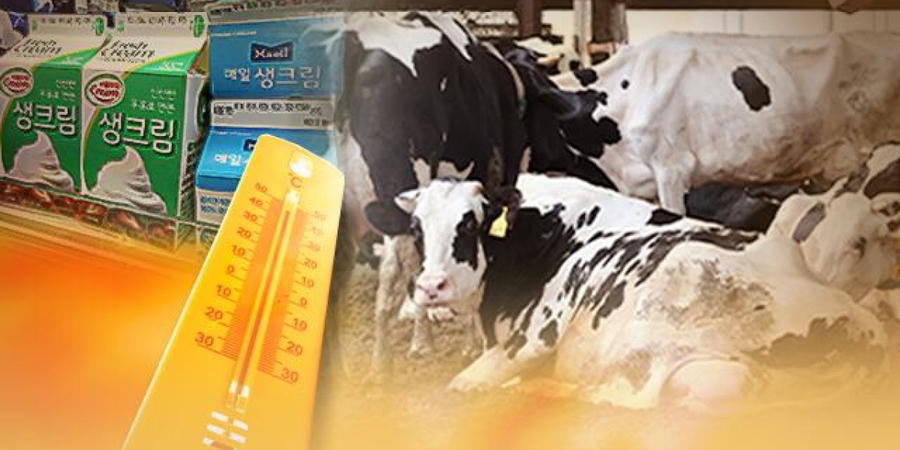
Record-breaking heat driven by climate change is disrupting South Korea's agricultural and aquacultural sectors, with fresh milk production, farmed fish survival, and summer cabbage crops all under threat, raising fears of supply instability and inflation.
According to the Korea Dairy Committee, raw milk output has declined by 5%–10% amid prolonged high temperatures. Holstein cows, which make up the majority of South Korea's dairy herd, are highly susceptible to heat stress, with intake and milk yield dropping sharply above 27°C. Temperatures surpassing 32°C can slash milk output by as much as 20%.
Seoul Dairy Cooperative, the nation's top milk supplier, reported daily milk collection dropping by around 100 tons from the usual 1,900 tons. As a result, whipping cream shortages are already affecting small bakeries and cafés, many of which have resorted to rationing or switching to alternatives.
Industry officials warn that continued heat could eventually impact milk supply across the board, echoing a 2021 disruption when products were pulled from convenience store shelves.
Aquaculture operations are also reeling. Following a brief monsoon, a rapid rise in sea temperatures prompted the Ministry of Oceans and Fisheries to issue a high-temperature alert two weeks earlier than last year.
On July 24, the first mass die-off of farmed flatfish in Jeju was reported, with officials investigating high water temperatures as the likely cause. Emergency fish releases have begun to pre-empt further damage, particularly for species like rockfish and flounder that are vulnerable to thermal stress.
The Korea Institute of Ocean Science & Technology warned that 14 of 37 monitored coastal zones — including parts of the West, South Seas, and around Jeju — have reached dangerous temperatures. Last year, heatwaves caused ₩143 billion (US$110 million) in damage to aquaculture farms, the highest since records began.
The confluence of climatic stressors on dairy, aquaculture, and crop sectors underscores the growing vulnerability of South Korea's food systems in a warming world — and the urgent need for adaptive strategies across the supply chain.
- Korea Bizwire


