


July 27, 2026
Science, People and the Long Game: Leading Phytobiotics Through a Period of Transformation
EXECUTIVE INTERVIEW SERIES
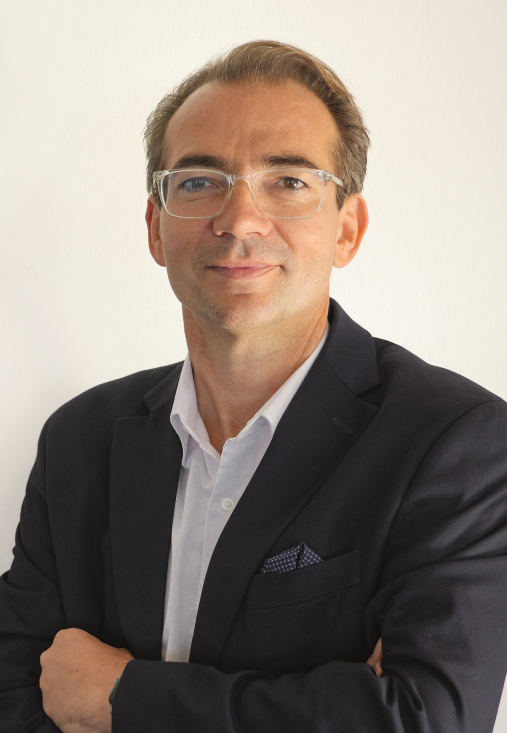
From the third generation of Sangrovit to a new production facility in China, Phytobiotics Managing Director Kurt Wegleitner explains the thinking behind the company's next chapter - and why biological resilience may be the industry's most underestimated challenge.
Interview Subject: Kurt Wegleitner, Managing Director, Phytobiotics Futterzusatzstoffe GmbH
Publication: eFeedLink.com and Livestock & Feed Business
Format: Executive Q&A Feature
CHAPTER 1: LEADERSHIP
Q: Your career has taken you from a decade at Biomin, through more than ten years leading Addcon across Europe and Asia, to Phytobiotics since 2022. Looking back, which experiences or turning points shaped your leadership philosophy the most?
The most important experiences were those that taught me sustainable growth is never created by products alone. At Biomin, I learned the value of scientific credibility and long-term market trust. At Addcon, working across Europe and Asia, I learned how important it is to adapt leadership to different cultures, customer needs and market realities. At Phytobiotics, I have the opportunity to bring those experiences together: grounded in science, entrepreneurial in pace, and with a clear focus on the customer. My philosophy is pragmatic. Set ambitious goals, build the right team, stay close to the market and make sure strategy translates into measurable value for customers.
Q: Across those different roles, what is one leadership principle you have never compromised on, regardless of the company, market or circumstances?
Customer orientation. Strategies, products and organisations can change, but losing the connection to the customer means losing the basis for long-term success. Customer-centricity is not a slogan. It means listening carefully, understanding the real problem behind a request and being honest about where you can create value.
That principle has been tested. When transport costs rose sharply following the conflict in the Middle East, the instinctive response would have been to pass those costs on immediately. Several key customers were already under severe margin pressure. Instead, we engaged in transparent discussions, shared our constraints and worked jointly on phased adjustments and alternative solutions. It was not the easiest path commercially in the short term, but it strengthened long-term trust. Companies that allow internal efficiency or short-term profitability targets to override genuine customer understanding tend to follow the same path: commoditisation and weakened relationships.
Q: If someone worked with you twenty years ago and worked with you again today, what would they notice has changed most about your leadership?
They would notice that I have become far more focused on people and culture. Earlier in my career, I concentrated more heavily on products, markets and marketing. These remain important, but the real multiplier is the team. Hire the right people, give them clarity and build a culture where they take genuine responsibility for customers, and growth becomes far more sustainable. I am still ambitious and performance-driven. But today I am more conscious of how leadership enables others to perform, rather than performing everything yourself.
CHAPTER 2: LEADING PHYTOBIOTICS FORWARD
Q: As Managing Director, where do you believe you create the greatest value for the business?
Connecting ambition with execution. Setting a clear direction is necessary - our ambition is to significantly grow and ultimately double the business - but leadership is about making that ambition operational. My role is to keep the organisation focused on where we are strongest, particularly phytogenics, while ensuring we have the right people, the right structures and the right customer priorities across each region. That means aligning the team, challenging assumptions and concentrating resources where they will have the highest impact.
Q: Phytobiotics recently introduced the third generation of Sangrovit. What challenges does it address, and what does it tell us about the company's R&D direction?
The third generation addresses a clear and specific customer need: natural, science-based solutions that deliver measurable value under practical production conditions. The new generation expands the alkaloid profile and strengthens the product concept around stability, targeted release and performance-relevant benefits including inflammation management, gut health and carcass quality.
It also reflects something important about how we approach R&D. We do not innovate for the sake of novelty. The transition to the third generation was a deliberate response to market feedback. Customers told us they needed more consistent performance under increasingly variable production conditions and stricter regulatory frameworks. Rather than defending the original concept, we took that signal seriously: refining the formulation, raising standardisation and repositioning the product around reliability and measurable outcomes. That is how market signals should translate into product and strategy decisions.
Q: The investment in a new production facility in China is a significant commitment. What does it say about Phytobiotics' long-term strategy in Asia?
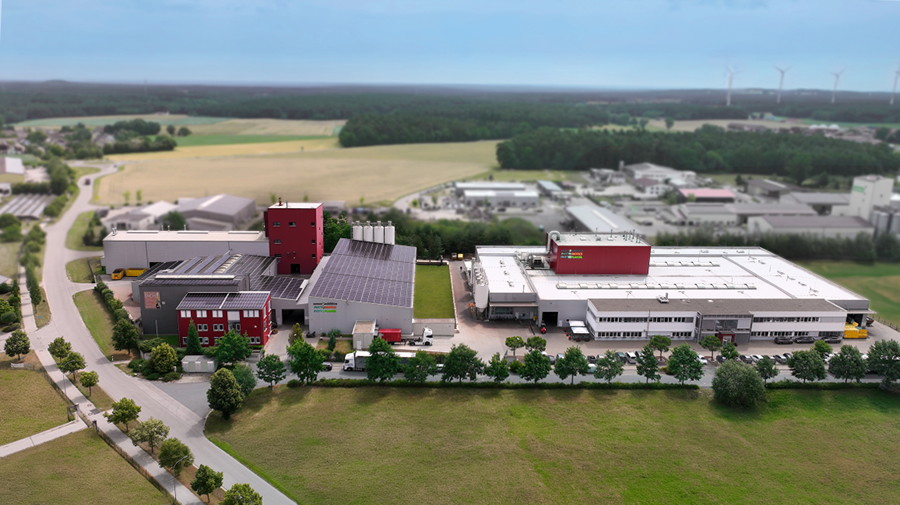
It reflects our long-term confidence in Asia and our commitment to being genuinely close to customers in key growth markets. The decision was based on a combination of strategic and operational factors. China offered the best balance of market size, infrastructure, talent availability and long-term growth potential compared to other parts of Asia. Local presence allows us to respond faster, customise more effectively and meet the regulatory and supply chain requirements that customers expect from Phytobiotics. This was not only a production decision. It was a statement about where we intend to compete and how seriously we take the region.
Q: The phytogenic feed additive market has become increasingly competitive. How does Phytobiotics differentiate itself, and what capability are you most focused on building next?
Differentiation comes from focus, not breadth. Phytobiotics has a strong heritage in phytogenics dating back to when Dr Hermann Roth founded the company in 2000. That remains our core competency. We do not try to be everything to everyone. Our strength lies in combining deep product knowledge, strong scientific evidence and practical customer application.
The next capability we are building is global execution: placing the right people in the right markets, close to customers, able to translate our technology into measurable performance benefits. Science gives us the differentiation. Execution converts it into customer value.
Q: Customer expectations have changed considerably over the past decade. How has Phytobiotics adapted its approach?
Customers today are more specific, more data-driven and more performance-oriented. They are not looking for an additive in isolation. They are looking for a partner who understands their production system and can help solve practical challenges. We have responded by moving closer to customers, strengthening technical support and directing innovation at real market problems rather than internal product priorities.
This changes what we look for when recruiting. We need people who combine scientific understanding with commercial empathy. Technical knowledge without customer understanding does not convert into results.
Q: Phytobiotics has been active on the topic of AI and precision nutrition. Where do you see genuine potential, and where is the hype ahead of the reality?
The genuine potential is where AI and digital tools help connect data, science and decision-making more effectively. In animal nutrition, there is a significant gap between the volume of data being generated and the speed at which it is converted into practical recommendations. That is exactly where we are investing.
We have launched Chicken Checker, a practical digital tool that enables even untrained workers to detect gut health-related problems by photographing faeces on farm. Field observations become faster, more objective and easier to scale across farms and regions. We are also launching an internal chatbot that helps our team search our GIS knowledge database more efficiently, bringing scientific, technical and customer-relevant information to the surface much faster. A new CRM tool is also being implemented to support more structured and value-oriented customer engagement.
The concern arises when AI is presented as a replacement for scientific understanding or field experience. It is not. AI should make good expertise faster, more scalable and more useful for all stakeholders. That is its proper role.
Q: Which challenge facing the industry do you believe remains most underestimated?
Biological resilience. The industry tends to discuss antibiotic reduction, disease pressure, sustainability and feed cost as separate topics. In practice, they are closely connected. Animals face multiple stressors simultaneously: heat stress, pathogen pressure, raw material variability, stocking density and management challenges. Addressing these through corrective interventions after problems emerge is inefficient and increasingly costly. The industry needs to invest more in building resilience before problems become visible. Phytogenic nutrition has an important role to play here, supporting a more stable physiological response and helping animals maintain performance under challenging conditions.
Q: Asia continues to evolve rapidly, but it is far from a single homogeneous market. Where do you see the greatest opportunities, and what will distinguish the companies that succeed?
The greatest opportunities will come from markets where professional livestock production is continuing to intensify and where customers are actively seeking solutions that improve efficiency, health and product quality. Our primary focus over the next two to three years is China, Vietnam and Indonesia, with selective attention to India. These markets combine strong growth potential with rising demand for high-quality, science-based solutions.
What will distinguish the winners is not a global template applied uniformly across the region. Success depends on local understanding, strong technical support, reliable supply and the ability to build trust over time. We place significant emphasis on local adaptation: tailoring our product portfolio, investing in local technical capability and building partnerships that reflect regional business practices. Global standards, locally executed. Asia is not one market, and the companies that treat it as such will struggle.
CHAPTER 4: LOOKING AHEAD
Q: Five years from now, what do you hope people will say about how you led Phytobiotics through this period?


