


July 24, 2025
South Africa held "hostage" by broken system on FMD woes – Agriculture Minister
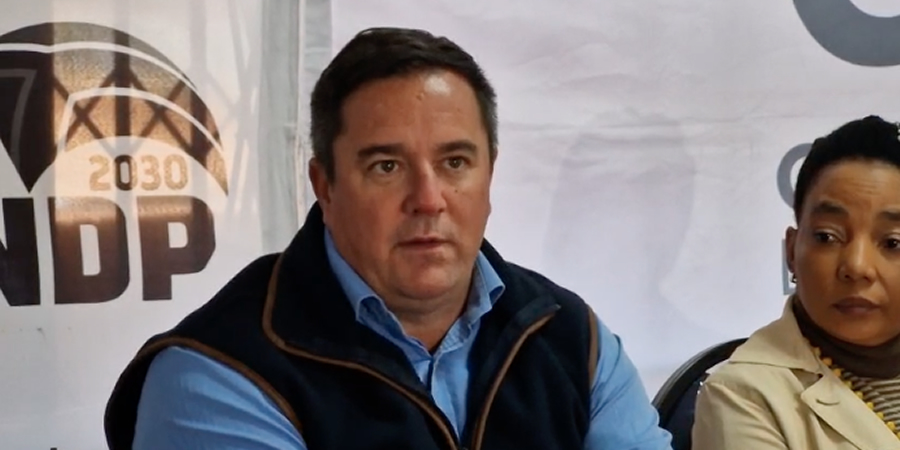
South Africa cannot continue managing foot-and-mouth disease (FMD) outbreaks with outdated structures and fragmented authority, hoping a patchwork of short-term measures will deliver long-term stability, said John Steenhuisen, Minister of Agriculture.
In his opening address at the recently concluded National FMD Indaba in Pretoria, the situation with FMD was the first problem Steenhuisen mentioned in his speech, even admitting the government's shortcomings in dealing with FMD.
It is unacceptable that South Africa takes years to respond to import health questionnaires, delays that have cost us market access and weakened our negotiating position. This is not a regulatory issue; it is a capacity issue, and we are taking steps to fix it."
The FMD epidemic continues to break out in places in South Africa where it has never occurred before and is simply not being eradicated.
The agriculture minister said South Africa needed an innovative approach – one that is science-based, constitutionally aligned and practically implementable. His suggestions for improvement were based on four pillars: Stronger provincial implementation; clearer national coordination; an empowered veterinary cadre; and a private sector that sees biosecurity not as a burden, but as a prerequisite for growth.
At the heart of this new approach is the need to organise the country's disease control framework at a regional level. South Africa lags behind in establishing, certifying and maintaining disease control areas that can be recognised by the country's international partners.
"Let me be clear: The failure to regionalise is not due to a lack of veterinary science. It is due to a lack of institutional coordination, legal clarity and capacity," he said.
To address this, Steenhuisen has appointed two senior veterinarians, Dr Emily Mogajane and Dr Nomsa Mnisi. They have extensive field, government and international trade experience to lead the development of a comprehensive national regionalisation framework.
Another crucial area where the system broke down during the recent outbreak was vaccine availability, said Steenhuisen. He openly admitted that Onderstepoort Biological Products (OBP) currently lacks the infrastructure to produce FMD vaccines at the scale and speed required to respond to outbreaks. As a result, South Africa is compelled to import vaccines from Botswana, which is unsustainable.
"Government is taking this seriously. We are stabilising OBP, but that will take time. In the interim, we are securing imports and working to establish forward-looking supply contracts that will ensure minimum stock levels of FMD and other priority vaccines, before the next outbreak, not after."
But this cannot be done by the state alone, he emphasised. His message to the industry: "If you want predictability, you must also invest."
He called on the livestock industry, especially the red meat, dairy and game sectors, to start co-financing vaccine procurement. "This does not mean you will manage the vaccines or the cold chains. But it does mean that, like in other agro-industries, we establish structured partnerships that ensure we are not caught unprepared again."
Steenhuisen believes the time has come to build a nationally managed but jointly funded vaccine bank, not only for FMD, but for lumpy skin disease, brucellosis, Rift Valley Fever, and all other controlled diseases affecting trade and production.
As long as animals are forced to be moved illegally because of the absence of local abattoirs or feedlots, we will never be able to enforce movement control effectively, Steenhuisen warned.
He promised that government will be earmarking funds in this fiscal year to support the establishment of feedlots and abattoirs within the protection zones, particularly in Limpopo, KwaZulu-Natal and Mpumalanga.
"These facilities will provide alternatives to illicit trade. They will create rural jobs. Furthermore, they will help us enforce the very measures we need to maintain our FMD-free zones."
Lastly, Steenhuisen called for deliberate and sustained investment in scientific research and development. "Government funding alone will not be sufficient. We therefore call upon you, the captains of the livestock industry, to partner with us in this effort.
"To ensure that the outcomes of this indaba are not just aspirational but actionable, I will be appointing a dedicated team immediately after this gathering to consolidate the proposals and insights shared here today. This team will be tasked with finalising a practical, time-bound operational plan, one that reflects both the urgency of our challenge and the collective wisdom in this room. That plan will be presented to me within a defined timeframe and will serve as the blueprint for our implementation going forward."
- African Farming


