


July 23, 2026
Rwanda's black soldier fly sector eyes scale-up as demand for local protein alternatives grows
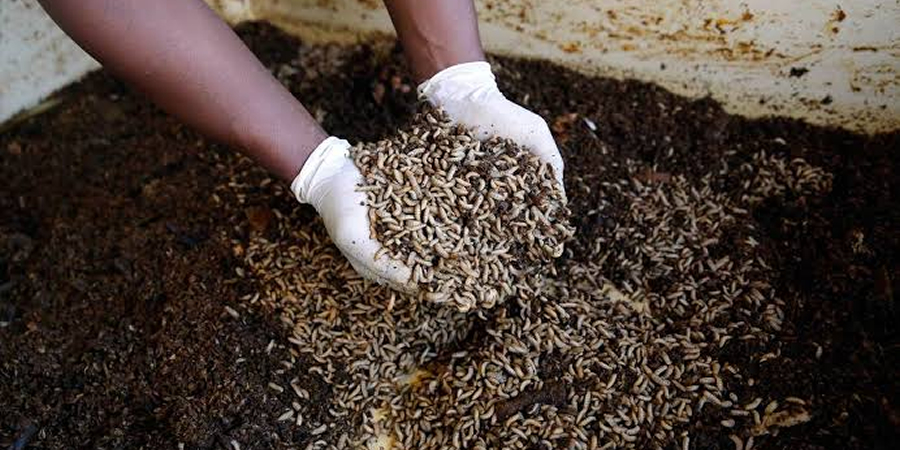
Commercial producers and researchers in Rwanda are calling for greater investment, improved waste supply chains and wider technical training to unlock the sector's potential.
Rwanda's nascent black soldier fly (BSF) industry is expanding steadily, with producers citing feed cost savings of up to 50% compared with conventional alternatives - but limited financing, inadequate organic waste supply and a shortage of trained technicians are constraining output well below installed capacity.
BSF larvae are reared on organic waste such as food scraps and agricultural by-products before being dried and processed into insect meal or incorporated into compound feed. The larvae contain 40-55% protein depending on substrate, comparable to soybean meal at 44-48%, and studies indicate BSF-based feed can cost around 40% less than soybean- or fishmeal-based alternatives.
Mupenzi Mutimura, Senior Research Fellow in Feed Resources and Animal Nutrition at the Rwanda Agriculture and Animal Resources Development Board (RAB), said scaling up production would require coordinated action between government and the private sector. Priorities include expanding farmer training and demonstration sites, establishing multiplication centres for quality starter colonies, developing quality standards and certification for BSF meal, and improving access to affordable credit - particularly for youth- and women-led enterprises.
"Technical training, business incubation, access to starter materials, research support and integrating BSF farming into circular economy programmes that convert organic waste into livestock feed and organic fertiliser are also important," Mutimura said.
He noted that Rwanda has no official national registry of BSF-based feed manufacturers or their combined production capacity, but said adoption is increasing steadily. Existing animal feed manufacturers in the country have a combined installed capacity of around 163,000 tonnes per year, while national feed demand is estimated at 15.9 million tonnes - a gap that underscores the scale of the opportunity for locally produced protein ingredients.
Janvier Twambazimana, Manager of Abusol, described as one of the country's largest egg producers and a manufacturer of BSF-based feed, said the company currently produces 500 kilogrammes of dried larvae per day. At a 5% inclusion rate, 100 kilogrammes of dried larvae can produce two tonnes of animal feed, giving Abusol a current daily output of around 10 tonnes of feed. The company has set a near-term target of two tonnes of dried larvae per day and a long-term goal of 50 tonnes daily - an ambition Twambazimana said will require financing from government, commercial banks and development partners.
"Commercial banks are still reluctant to finance BSF production, yet it is a strategic sector. More than 95% of the protein ingredients used in animal feed, such as soybean meal and fish meal, are imported. Increasing local production would reduce that dependence," he said.
Abusol's processing equipment has a rated capacity of four tonnes of dried larvae per day, but the company is operating at roughly 12.5% of that level owing to limited financing, inadequate waste supplies and a shortage of transport trucks. Twambazimana said operating at full capacity could reduce animal feed prices by 40-50% against conventional feeds.
Twambazimana also called for closer collaboration with waste collection companies and agro-processing industries to reduce logistics costs, noting that siting BSF production units closer to waste sources would lower input costs significantly. On average, one tonne of organic waste yields around 200 kilogrammes of larvae.
Barthazar Masengesho, Production and Operations Manager at Maggot Farm, said demand for BSF products already exceeds supply. The company operates on two to two-and-a-half hectares and produces six to 10 tonnes of organic fertiliser and six to 12 tonnes of protein-rich animal feed per month. Rather than expanding its own production, Masengesho said the company's priority is training more farmers to produce BSF larvae independently, supplying them with starter stock at affordable prices.
RAB research has found that partial substitution of soybean meal and fish meal with BSF larvae can maintain strong growth performance in broiler chickens, and that BSF can supply a substantial share of the protein required in feed for poultry, pigs and fish. Standard operating procedures for BSF farming have also been developed to support wider commercial adoption.
- The New Times


